
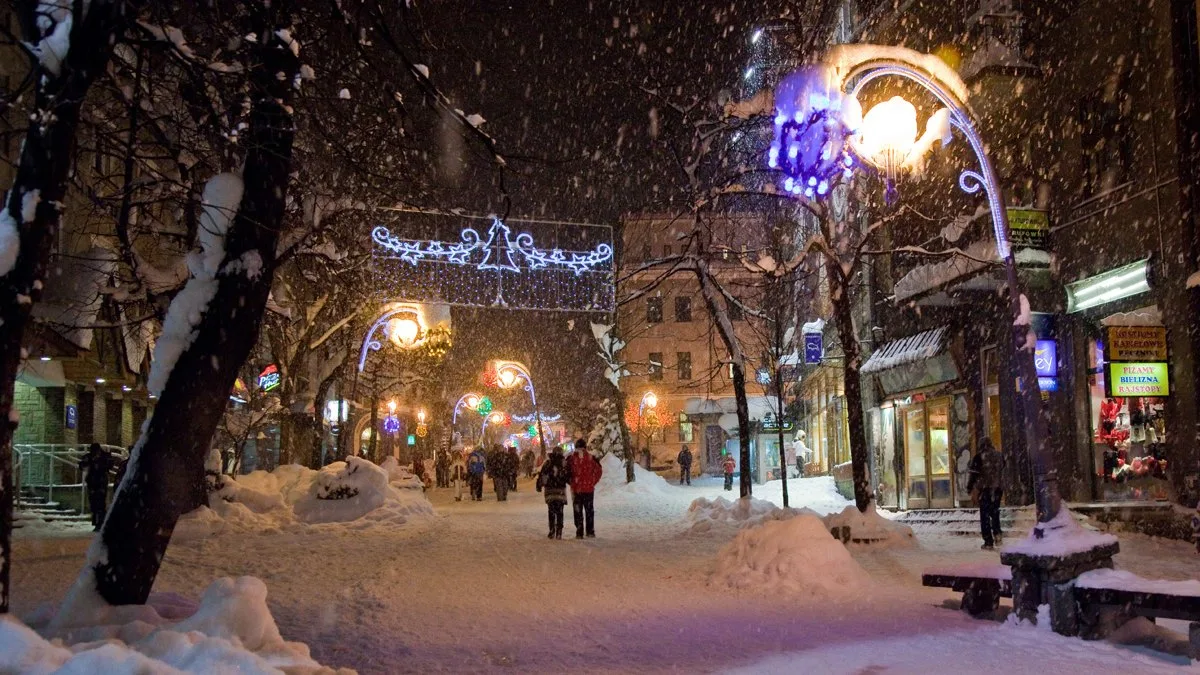
Property owners must remove mud, snow and ice from the pavement located directly along the boundary of their property. Failure to do so may result in a fine, and if someone slips, also in compensation.
Who Is Responsible for the Pavement
The obligation arises from Art. 5 para. 1 point 4 of the Act on maintaining cleanliness and order in municipalities. Property owners ensure order by removing mud, snow, ice and other debris from pedestrian walkways located along the property. Such a walkway is defined as a separate part of a public road intended for pedestrian traffic, located directly along the property boundary.
There are exceptions. The owner does not have to clear a pedestrian walkway where paid parking or parking of vehicles is allowed. If the fees are collected by the road administrator, the road administrator clears it (Art. 5 para. 4 point 3). If the fees are collected by the municipality, the municipality does so (Art. 5 para. 5). On construction sites, the owner’s obligations pass to the contractor performing the works (Art. 5 para. 2). Cleanliness at bus stops owned or managed by the municipality is maintained by the municipality (Art. 3 para. 2 point 12).
The municipal council may take over the obligation to clear snow from pavements from owners. It then sets a fee for performing the transferred obligations (Art. 6a).
Where to Put the Snow
The Act does not specify where cleared snow should be placed. It only states that the road administrator is responsible for disposing of snow and ice removed from pedestrian walkways by owners of properties adjacent to the public road (Art. 5 para. 4 point 2). Additional obligations may be introduced by the cleanliness and order regulations adopted by the municipal council (Art. 5 para. 1 point 5). It is worth checking their content in your municipality.
Snow and Icicles on the Roof
Art. 61 point 2 of the Building Law requires the owner or manager of a building to ensure, with due care, safe use of the building in the event of external factors, including heavy precipitation. This applies where there is a threat of damage to the building that could endanger people’s life or health or the safety of property. The provision does not explicitly mention snow or icicles.
Anyone who, contrary to Art. 61, fails to ensure safe use of a building is liable under Art. 91a to a fine of no less than 100 daily rates, restriction of liberty or imprisonment of up to one year.
What Neglect Can Cost
Anyone who fails to perform the obligations under Art. 5 para. 1, including clearing the pavement of snow, is subject to a fine (Art. 10 para. 2 of the Act on maintaining cleanliness). The Petty Offences Code provides for a fine from 20 to 5,000 zloty, unless the act provides otherwise (Art. 24 § 1). A penal ticket may amount to up to 500 zloty (Art. 96 § 1 of the Code of Petty Offences Procedure). Municipal guards are authorised to impose tickets for offences under Art. 10 paras. 1–2c of this Act.
The village head (wójt), mayor (burmistrz) or city president supervises the performance of obligations. If they are not performed, they issue a decision ordering the obligation to be carried out, which can be enforced through administrative enforcement proceedings (Art. 5 paras. 6, 7 and 9).
Civil liability arises under Art. 415 of the Civil Code: whoever through their fault causes damage to another is obliged to repair it. Whether fault exists on the owner’s side is assessed by the court based on the circumstances of the case.