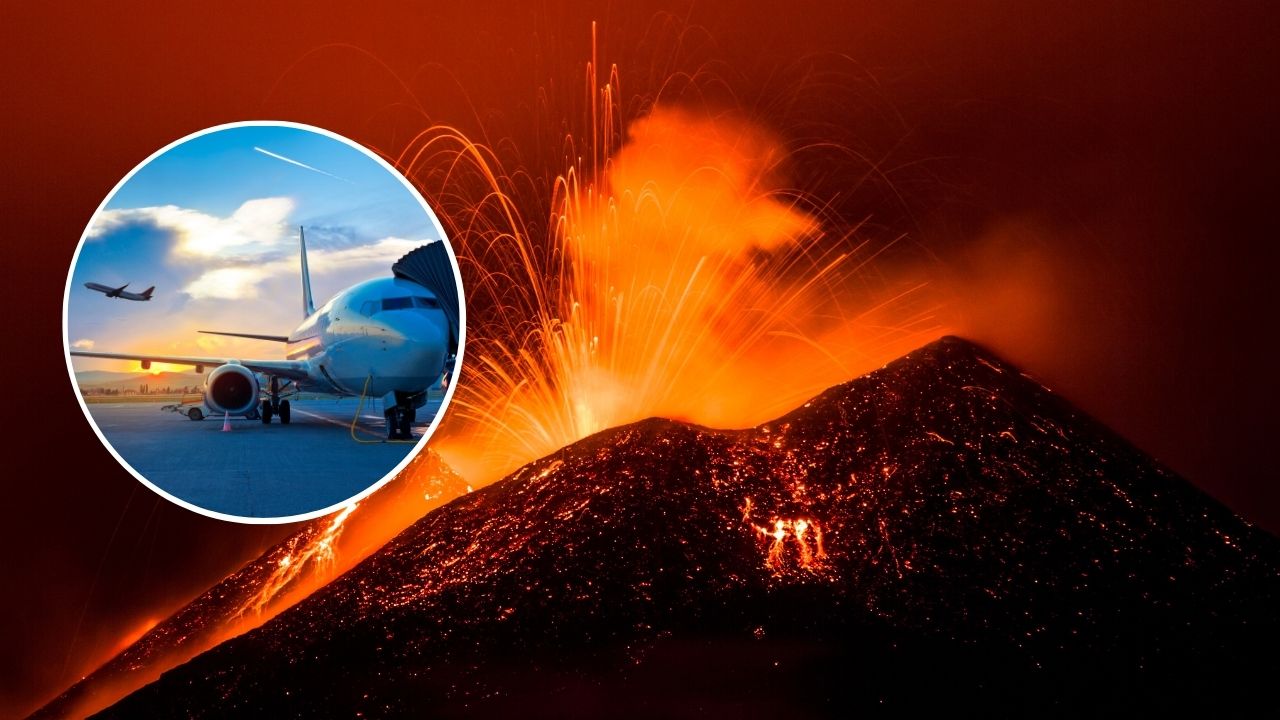
On Sunday, July 5, 2026, Etna, Europe's most active volcano, showed its power. There was a strong eruption paroxysm from the Voravine crater, which caused serious communication problems throughout Sicily in Italy.
What happened?
The eruption began in the morning with an issue of ash, and during the day it progressed into a phase of lava fountains and strong explosions. The pyropastic plump of ash and gases rose to an altitude of more than 1.6 km. Volcano also threw out hot lava fragments.
The Italian Institute of Geophysics and Volcanology (INGV) raised the alert to red – the highest level of threat.
Bad news for tourists
The biggest problems have affected Catania–Fontanarossa airport – one of Sicily’s main airports. Because of the volcanic ash cloud:
- Canceled or redirected dozens of flights (including connections to Poland).
- Thousands of passengers are stuck on the island.
- Air traffic was partially paralyzed.
In addition, the authorities introduced Prohibition of entry above 2500 metres above sea level – i.e. to the upper cable car station. In practice, this means that tourists cannot now approach the craters and admire the eruptions from close range.
Ashes on roads and towns
Ash and volcanic sand sank on the southern slopes of Etna, covering roads and towns. In some places driving conditions were very difficult.
This is another wave of Etna activity in recent weeks – the volcano has been in a phase of increased activity since the end of June.
What's next?
For now, it is not known how long the air paralysis and the bans on entering higher parts of the volcano will last. Services are monitoring the situation on an ongoing basis.
Are you planning on going to Sicily any time soon? Check the status of flights and track the INGV messages and the airports in Catania.