

Spain announces it will withdraw from Eurovision 2026 if Israel takes part in the music contest.
The decision was made by the board of Spanish public broadcaster RTVE, citing protest against Israel’s policy toward the Gaza Strip. It is the first country from the so-called “Big Five” (the largest payers to the EBU) to officially threaten a boycott of Eurovision on political grounds. Other European broadcasters have taken a similar tone and are considering withdrawal if Israel is allowed to take part.
Is Spain Pulling Out of Eurovision? An Overview of the Situation
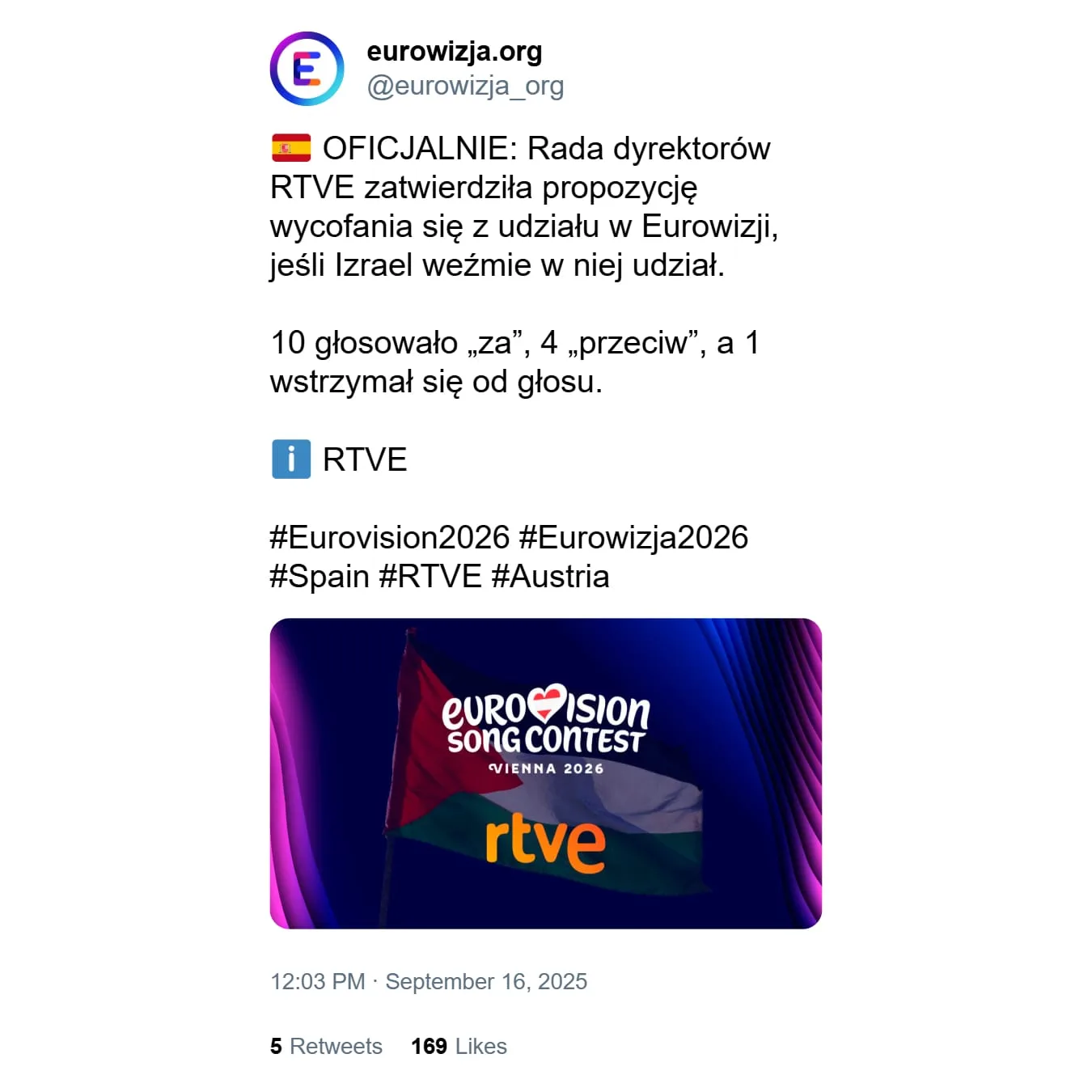
Spanish Culture Minister Ernest Urtasun has publicly opposed Israel’s participation in Eurovision 2026. In his view, the country’s taking part in the contest would amount to normalization of a situation Spain does not want to support, given the armed conflict in the Gaza Strip and Israel’s policy toward Palestine. Although the formal decision on participation rests with the Spanish public broadcaster RTVE, its board has already decided to withdraw the country if Israel remains among the participants.
Political Motivation and Context
Spain’s decision has strong political roots:
- Protest against Israel’s military actions in the Gaza Strip.
- Opposition to the “normalization” of a situation that representatives of Spain and other countries consider unacceptable on the international stage.
- Highlighting double standards in global culture and sport – Russia, among others, was previously excluded following its aggression against Ukraine.
Prime Minister Pedro Sánchez publicly backed the boycott, and the Spanish government imposed an arms trade embargo on Israel.
Spain is a member of the “Big Five” – countries that are the largest financial sponsors of Eurovision and have a guaranteed place in the final. Its withdrawal would be a major blow to the European Broadcasting Union (EBU) and a significant change in the contest’s history.
Other countries, such as Ireland, the Netherlands, Slovenia and Iceland, are also joining the boycott.