
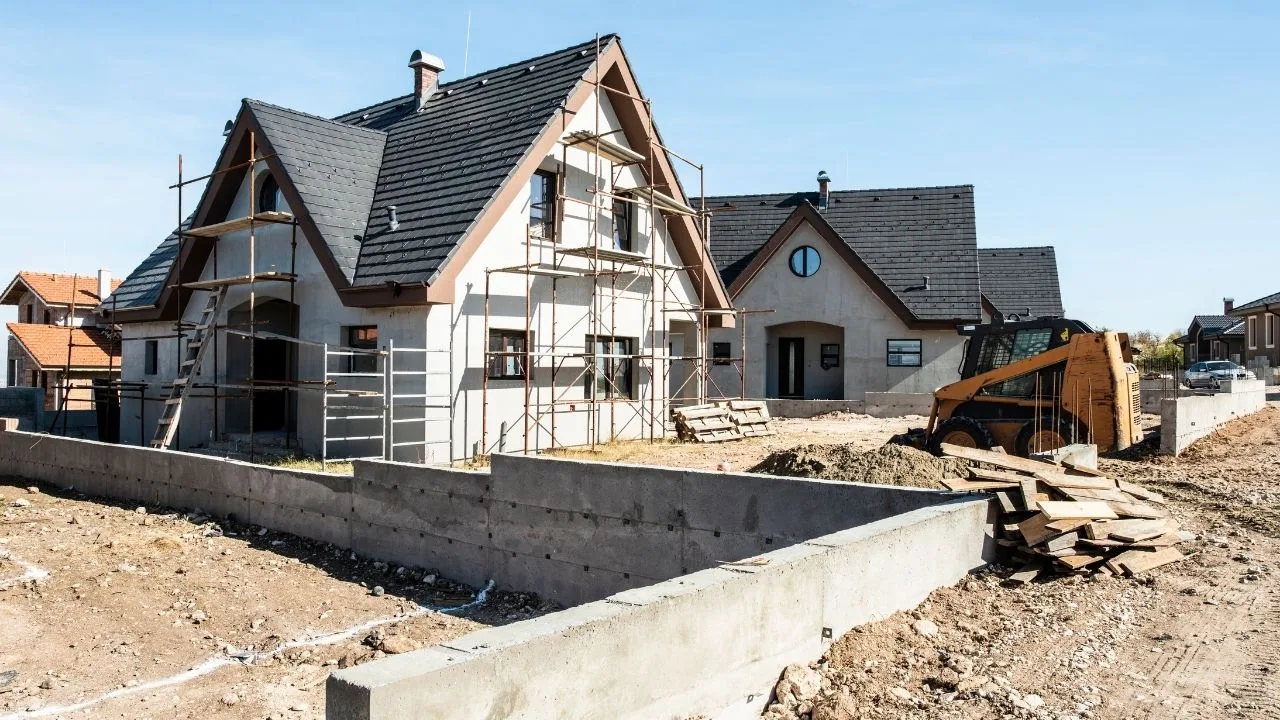
Plot owners and people planning to build a single-family home are facing a crucial moment. Long queues are forming at municipal offices across Poland. People are mass-filing applications for a decision on development conditions, colloquially called the „wuzetka”. They want to secure the possibility of carrying out their investment before the rules change. This race against time will last until 31 August.
The 2023 spatial planning reform introduces new rules. Municipalities are obliged to adopt general plans that will define planning zones. After 31 August 2026, development condition decisions will be issued exclusively for areas of infill development. On other land, obtaining permission to build may become much more difficult or outright impossible. For many plot owners, this means the risk that their savings, loans and projects will lose their value.
So far, only a small share of municipalities – about 11 percent – have managed to adopt a general plan. Most are still in the middle of procedures. The deadline for adopting the plans has already been postponed twice and has finally been set for 31 August 2026. Applications submitted before that date will be processed under the existing rules, based on the study of conditions and directions of spatial development and the principle of good neighbourhood. What counts is the date the application is filed, not the date the decision is issued.
Differences in the validity of decisions are also important. Applications filed before 16 October 2025 result in a decision with no expiry date. From 1 January 2026, new wuzetkas are valid for 5 years from becoming final. Additionally, from 1 July 2026, financial penalties for offices over protracted proceedings have been abolished. This means cases may drag on longer, and investors must keep track of formalities themselves.
Experts and officials warn: anyone planning construction on a plot without a local spatial development plan should submit a complete application as soon as possible. It is worth checking the status of your municipality’s general plan and whether the plot will fall within an area of infill development. The geoportal.gov.pl website and the Public Information Bulletin (BIP) of the municipal office are helpful. An incomplete application or failure to respond to office requests may delay the case or make it impossible to obtain a decision under the old rules.
For thousands of families, this is not just a formality but real protection of their assets. Savings accumulated over years, taken-out loans and commissioned architectural designs stand behind these queues. After 31 August 2026, the rules of the game will become more restrictive. Whoever manages to act in time keeps the chance to build a home. Whoever is late may face having to wait for a new general plan or give up the investment.
After 31 August 2026, the regulations on development condition decisions will be significantly tightened. Wuzetkas will be issued exclusively for plots located in so-called areas of infill development (OUZ), which the municipality will designate in its general plan. Outside these zones, obtaining a decision will become practically impossible, even if the plot previously met the principle of good neighbourhood. An additional requirement will be full compliance of the planned investment with the provisions of the general plan (including the planning zone allowing single-family housing, development parameters, height or building line). If the municipality does not adopt a general plan by this deadline, new wuzetka applications will not be able to be processed under the existing rules at all, which in practice will block investments until the document is adopted.
The principle of good neighbourhood is one of the basic conditions that must be met to obtain a decision on development conditions (wuzetka) on land without a local spatial development plan.
It follows directly from Article 61(1)(1) of the Act on Spatial Planning and Development. It states that a development condition decision may be issued only if at least one neighbouring plot (accessible from the same public road) is already developed in a way that allows the requirements for the new investment to be determined.
Specifically, the aim is for new development to be consistent with what already stands in the area, in terms of:
- development parameters and features (height, number of storeys, dimensions),
- architectural form (roof shape, style),
- building line,
- intensity of land use.
The purpose of this principle is to preserve spatial order. A new investment should not be an „alien body” in the landscape but should harmoniously fit into the existing character of the area. However, this does not mean everything must be identical – administrative courts emphasise that certain deviations are permissible, as long as they do not undermine the coherence and harmony of the whole area.
In practice, the office carries out a so-called urban planning analysis (analysis of good neighbourhood), in which it examines the development in the immediate surroundings and, on that basis, determines what parameters your house may have.
Until 31 August 2026, this very principle is the main basis for issuing wuzetkas on land without a local plan. After that date, the principle of good neighbourhood alone will no longer be enough – an additional, far more restrictive requirement will apply: the plot must be located in an area of infill development designated in the municipality’s general plan.
If you own a plot and are thinking about a home, do not delay. Check your documents, prepare a complete application and file it with the office as early as August. This is one of the last opportunities to act under the existing, more flexible rules.