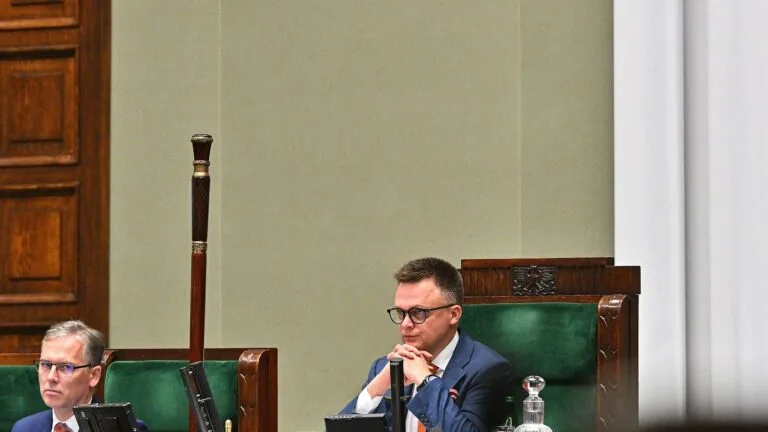
On Tuesday, 27 October, the Council of Ministers adopted a draft amendment to the reimbursement law (UD187), the so-called SZNUR. According to “Rzeczpospolita”, it is intended to remove the effects of 2023 regulations, including the obligation to divide medicines equally among the largest wholesalers.
The full title of the document is the draft act amending the act on the reimbursement of medicines, special nutritional food products and medical devices and certain other acts. It was prepared by the Ministry of Health. After the meeting, government spokesperson Adam Szłapka said it was “a big step towards strengthening pharmaceutical security” and “another step towards increasing the availability and lowering the prices of medicines” – as reported by Rynek Zdrowia, citing PAP.
An end to the 2023 regulations
As “Rzeczpospolita” writes, the draft is meant to reverse the effects of the so-called DNUR, a major amendment pushed through in 2023 by the United Right government. Those rules obliged manufacturers, among other things, to keep three-month stocks of medicines and to declare supply volumes according to an algorithm whose flaws the ministry itself was said to have acknowledged. The obligation to divide medicines in equal quantities among the 10 largest wholesalers in the country was also criticised.
The paper recalls that after the change of government, the health ministry announced the suspension of the most problematic DNUR provisions and promised swift work. The draft went to public consultation at the end of May 2025. According to the Alert Medyczny portal, the ministry has been working on the changes since 2024, and the document contains over 200 amendments.
What the draft provides
- Over-the-counter drugs are to be excluded from reimbursement.
- Patient representatives will gain the right to attend price negotiations with the Economic Commission and meetings of coordination teams.
- A new category of reimbursement availability for drugs used in non-oncological conditions in outpatient specialist care. This is meant to enable the transfer of proven therapies from drug programmes to clinics.
- Individual reimbursement is to be thoroughly overhauled, and target imports fully digitised. Patients are to submit applications for reimbursement of foreign drugs via the Internet Patient Account, and the process will be handled by the Target Import Support System (SOID).
- Orphan drugs – for the first time, a statutory definition of an orphan drug, used in rare diseases, will appear. According to “Rz”, the changes are meant to ease the requirement for studies analogous to those for other drugs, which are difficult to conduct with small patient groups.
The draft also aims to shorten the waiting time before treatment begins in new drug programmes.
Dispute with manufacturers
The government adopted the draft despite opposition from some manufacturers of innovative drugs. According to “Rz”, they believe that rules facilitating reimbursement for generics could limit patients’ access to medicines. Meanwhile, the Polish Pharmaceutical Manufacturers, as reported by Alert Medyczny, called for reimbursement preferences for medicines made in Poland. It is unclear whether this demand made it into the adopted text.
What happens next and what it means
Government approval does not complete the process: the draft will now go to the Sejm, then the Senate, and to the president. No voting date has been given. For patients, this means none of the changes apply in practice yet.
The people most affected will be those buying over-the-counter drugs that are currently reimbursed – once the rules take effect, they will pay the full price for such products. Changes to individual reimbursement and target imports concern patients who need therapies unavailable in Poland. The real benefits will depend on the final shape of the law after parliamentary work.