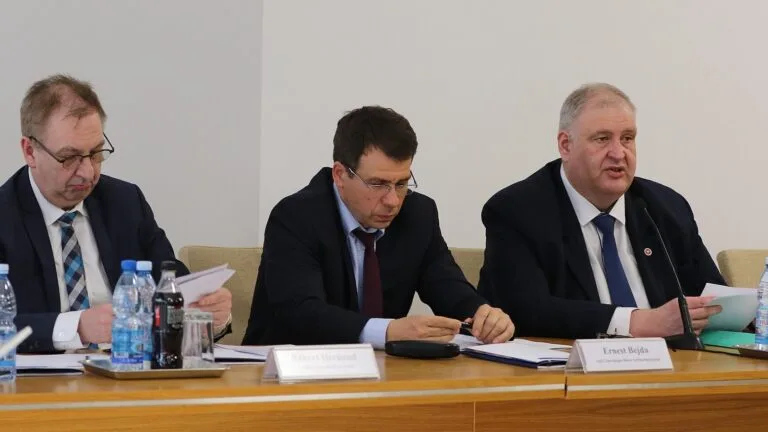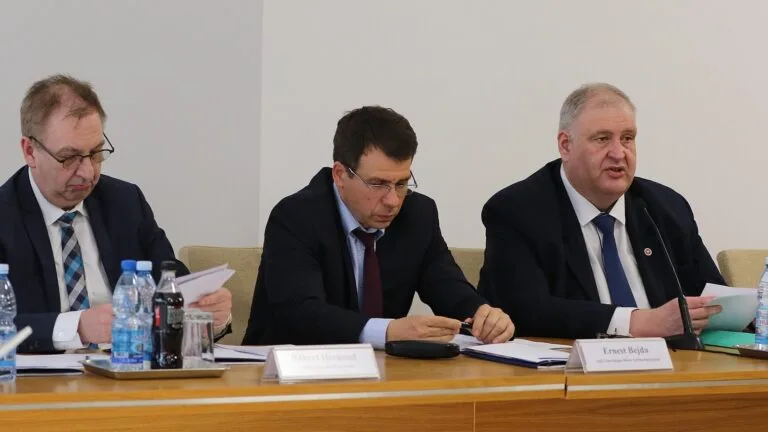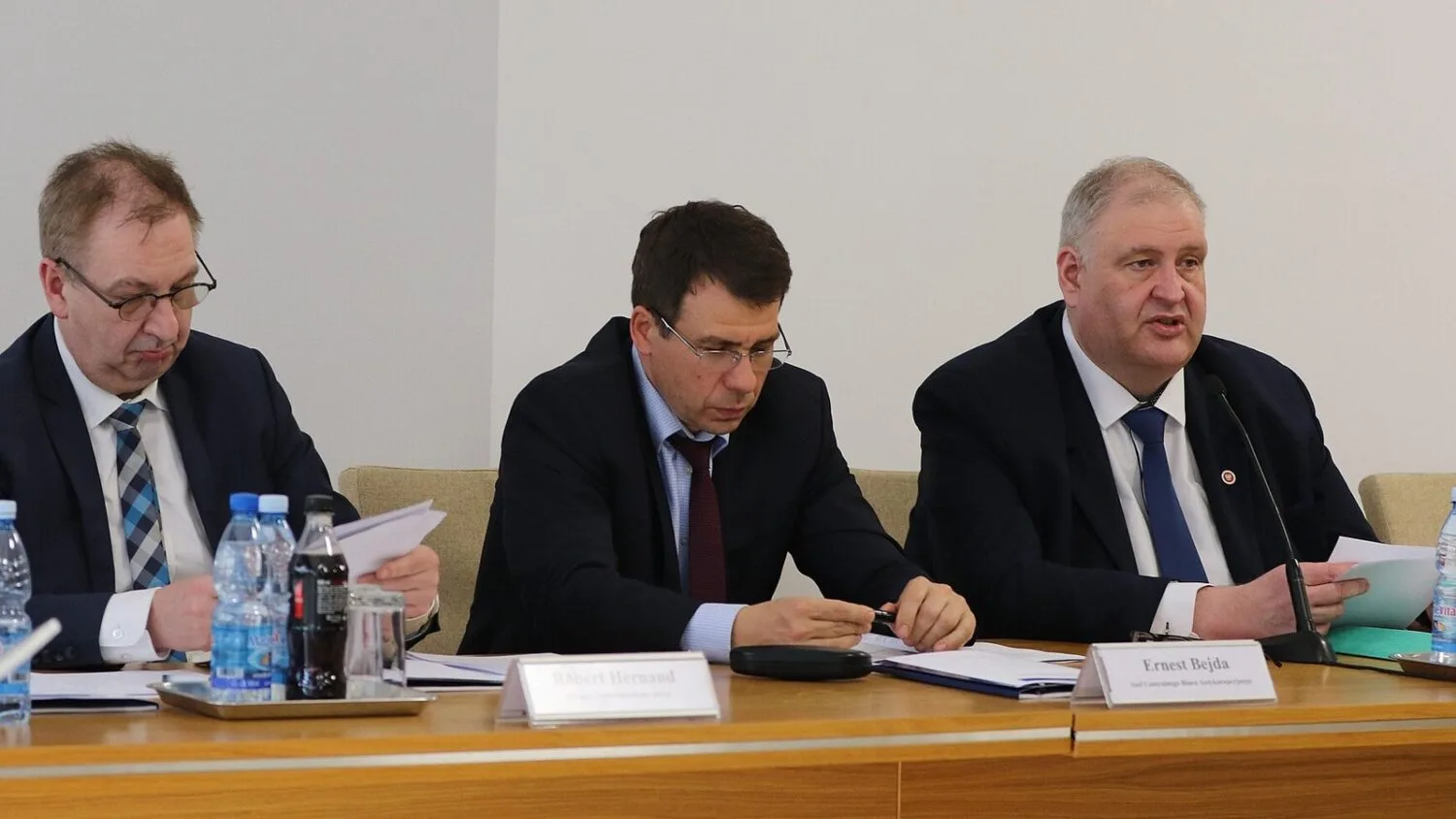
The General Assembly of Constitutional Tribunal judges, convened by Judge Anna Korwin-Piotrowska, consented to the criminal prosecution of Tribunal President Bogdan Święczkowski in four cases, and of Vice-President Bartłomiej Sochański. Święczkowski insists that no assembly or resolutions ever took place.
The resolutions were adopted on Tuesday, 17 November, and the Tribunal published a statement about them on its website on Wednesday afternoon. The assembly agreed to the prosecution of Święczkowski for four acts, covered by three resolutions. They concern, among other things, abuse of power during his time as First Deputy Prosecutor General, including “repeated persistent delegation of nine prosecutors”. Another charge is failing to perform the duties of Tribunal President by not admitting properly elected judges to adjudication. One of the acts is allegedly an infringement of another judge’s bodily integrity.
No consent to detention and arrest
The assembly, however, did not consent to the motion filed in these cases to deprive Święczkowski of liberty through detention and temporary arrest. As for Vice-President Sochański, a single resolution was adopted – consenting to his criminal prosecution for failing to perform duties connected with the office of Tribunal Vice-President.
According to the statement, in each of the three resolutions concerning Święczkowski, the assembly suspended him by operation of law from official duties and reduced his salary by 50 percent. Anna Korwin-Piotrowska was to present the key elements of the reasoning in a statement on Wednesday.
Żurek: prosecutors may bring charges
The Prosecutor General and Minister of Justice Waldemar Żurek posted the statement on X. He wrote that the Tribunal had decided, prosecutors can now bring charges, and that “no one stands above the law”.
Earlier, in an interview with Żurek, he announced that he would see whether Święczkowski cooperates with the prosecution and whether it will be necessary to refile motions for detention and arrest. Żurek sent six motions concerning the president to the Tribunal; we reported on Tuesday that the Assembly was to consider them in our article about the General Assembly session.
Święczkowski: there was no assembly
Asked about the decision outside the Tribunal building, Święczkowski said that “there was no General Assembly at all and no resolutions were adopted”. Since Korwin-Piotrowska took over the Tribunal’s leadership, the president has been questioning her authority, and the Chancellery of the President disputed whether Tuesday’s meeting met the requirements for a General Assembly, as the required number of judges was not present. Święczkowski had earlier called Żurek’s motions slander, as we wrote in our article about his reaction to the immunity motions.
Under the act on the status of Constitutional Tribunal judges, criminal prosecution of a Tribunal judge requires the consent of the General Assembly. The dispute over who legally leads the Tribunal has been going on since the end of October. On Wednesday evening the Chancellery of the President reported talks between political circles on a way out of the Tribunal crisis; the next meeting is scheduled for Thursday at 6 p.m.