

President Karol Nawrocki on Friday, 27 November, refused to sign the amendment to the PIT, CIT and flat-tax laws (Sejm print 3293). As a result, from 2027 the 130k zł threshold, the new 24 percent rate and the higher CIT for the largest companies will not take effect.
The Chancellery of the President announced the decision in a statement covering five laws: the president signed three and vetoed two. The veto concerns the law of 5 November 2026 amending the laws on PIT, CIT and the lump-sum income tax (print 3293). He also vetoed an amendment to the public health law.
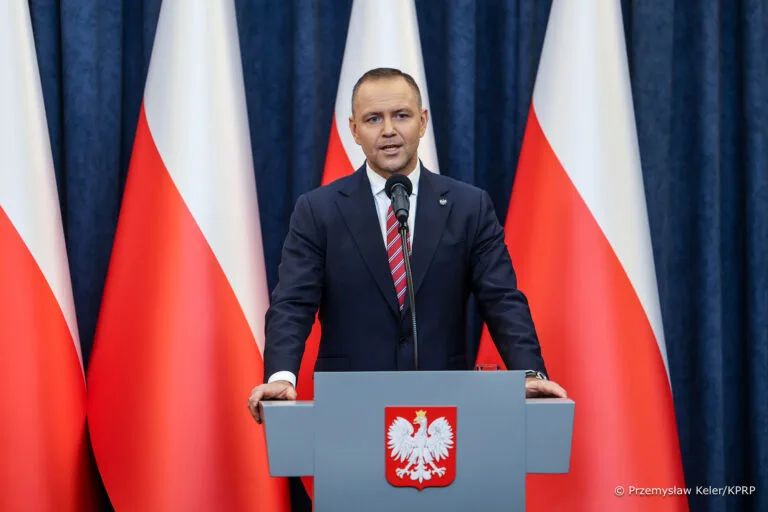
In a recording, the president said he would not sign a law introducing a new 24 percent rate, changing the thresholds and raising CIT for the largest companies to 22 percent. He added: “The state cannot punish people who work honestly and pay their taxes”.
What the veto stopped
The law combined several changes in a single act, so the veto covers the whole package. It concerned:
- raising the first PIT threshold from 120k to 130k zł and a 24 percent rate for income from 130k to 150k zł (above that – 32 percent),
- increasing the solidarity levy from 4 to 5 percent,
- a 22 percent CIT rate instead of 19 percent for companies with revenues above 50 million euro,
- lowering the revenue limit entitling taxpayers to the flat tax from 2 million to 250k euro.
The changes were to apply from 1 January 2027. We described the details of the package in our article on the law awaiting the president’s signature. In practice, in 2027 the current scale remains: 12 percent up to 120k zł and 32 percent above. The maximum annual benefit from the new threshold would have been 3,600 zł.
What the president signed
At the same time, Nawrocki signed two other laws amending PIT and CIT (prints 3137 and 3148) and the law on supporting energy-intensive sector businesses with electricity costs (print 3159).
The Chancellery’s arguments
The Chancellery of the President posted on X that the government presents the reform as relief for the middle class, while it omits “9 out of 10 taxpayers”. In another post, it quoted the president saying that the government “has no money of its own” and that every zloty comes from citizens’ work, entrepreneurs’ activity or debt.
Before the decision, Prime Minister Donald Tusk urged the president to sign, warning that a veto would be a “political suicide” for him. As of publication, the government had not issued an official response to the veto.
Can the Sejm overturn the veto
Overriding a veto requires 3/5 of the votes with at least half of the deputies present. The Sejm passed the law on 5 November with 236 votes in favour and 207 against, as we reported after the vote. Assuming 460 deputies are present, 3/5 equals 276 votes. We described earlier stages of the work in our article on the reform returning to the Sejm.