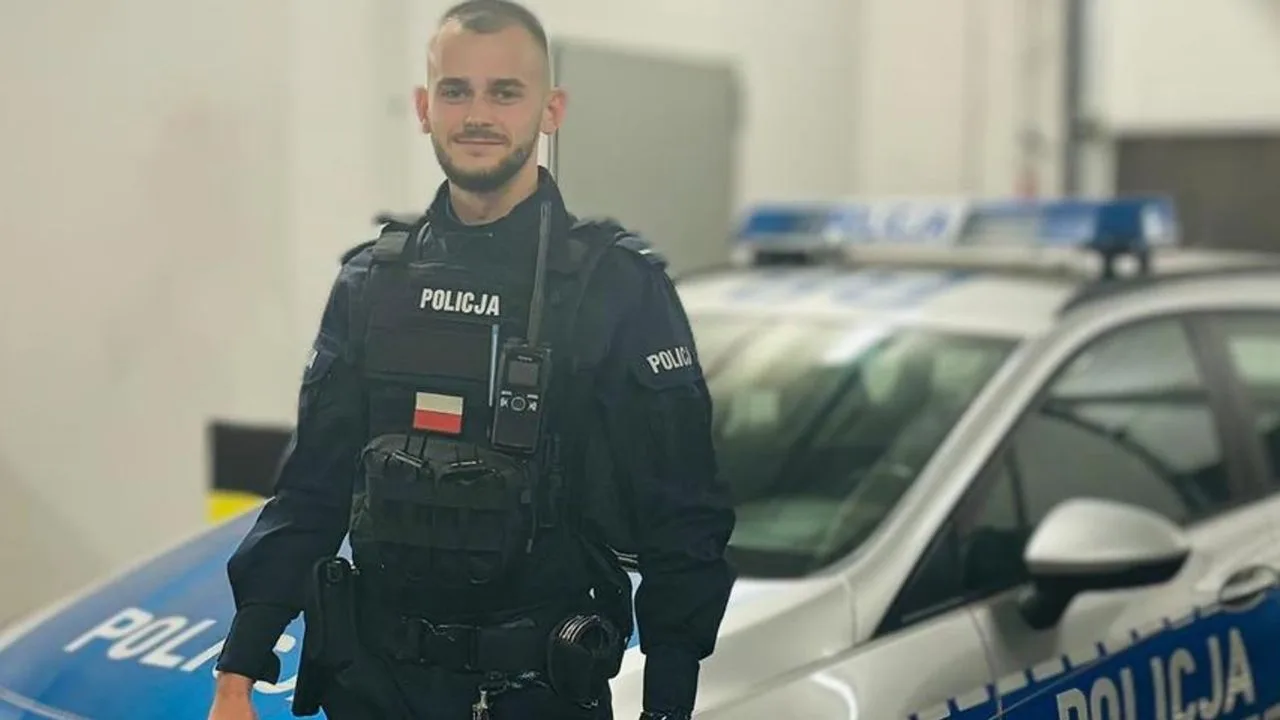
Sergeant Konrad Kuś of the Oława District Police Headquarters has dreamed of serving in the police since childhood. He joined the force in 2021, completed his training and quickly became an example of a dedicated patrol officer. He risked his health and life during interventions, detained criminals, found missing persons and, most importantly, saved the lives of at least five people. The police themselves repeatedly praised his achievements in official statements and on social media.
Heroic interventions
Among Kuś’s most spectacular operations are:
- Rescuing a 3-year-old girl who choked on food and lost consciousness.
- Resuscitating a young woman in September 2024 – together with his patrol colleague (Senior Sergeant Marcin Hibner) they restored her vital functions after she stopped breathing on the pavement. The police published proud statements at the time: “We are proud that the ranks of the Oława unit include people who show that policing is a service that gives enormous satisfaction, including the opportunity to provide help and save human lives”.
- Pulling a 23-year-old man in a suicidal crisis off a bridge after a conversation lasting over an hour.
- Other interventions in which he saved human life and health.
For his service, Kuś was rewarded many times – more than 25 times in Oława alone. His photos and stories appeared on official police profiles.
359 days on sick leave – but mainly due to service
In May 2026, Kuś received notice that the Lower Silesian Provincial Police Commander in Wrocław had initiated administrative proceedings (at the request of the district commander in Oława) to dismiss him “for the good of the service”. The official reason: 359 days of absence on sick leave (L4) between September 2021 and May 2026. The command claims the officer’s absence hinders the unit’s work.
The officer himself and trade unionists stress that the vast majority of these absences resulted directly from injuries sustained on duty:
- A collision with a patrol car.
- Serious spinal injuries requiring surgery (several months out of work).
- The latest dramatic intervention, during which, after tremendous physical exertion, his lung collapsed (pneumothorax). He was taken to the emergency department – a doctor told him plainly that without quick help he could have died.
There was also one period of leave related to caring for his wife after a complicated childbirth. Kuś emphasises that even after injuries he tried to finish interventions and pursuits. He sought a transfer to a post less physically demanding but did not receive approval.
Position of the trade unions
The chairman of the Independent Self-Governing Trade Union of Police Officers (NSZZP) of Lower Silesia Province, Roman Buczkowski, clearly stated that the sick leave was linked to official duties. He highlighted the shocking nature of the latest intervention and the fact that the officer nearly paid for it with his life.
Does the system punish commitment?
Kuś’s case quickly became widely discussed in the media and on social media (including the profiles “Służby w akcji” and Oława Na Sygnale). Many commentators see in it a classic example of a pathological approach in some units: an officer who “does not spare himself” pays with his health and risks losing his job. An officer who minimises risk and avoids difficult interventions would probably have no problems.
The Lower Silesian police confirmed that proceedings have been initiated, but stress that they are ongoing and no decision has yet been made. So far, no one from the direct management in Oława has spoken with Kuś about the matter before the procedure was launched.
What next?
The story of Sergeant Konrad Kuś highlights a broader problem within the Polish Police: how to take care of officers who genuinely put their health at risk on the front line? Should sick-leave statistics be the only criterion when behind them stand on-duty injuries and documented heroic actions?
Public opinion largely sides with the officer. Online, voices of support and calls for a common-sense resolution of the case are growing. The fate of Konrad Kuś will show whether the police truly reward real sacrifice or only formal “protecting the statistics”.
The case is developing.