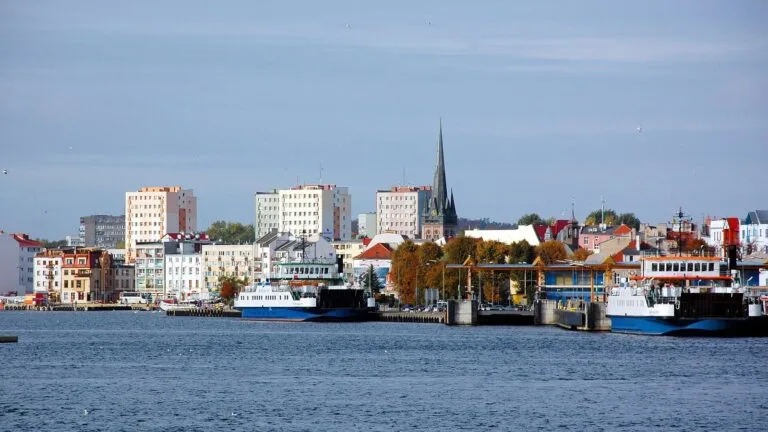

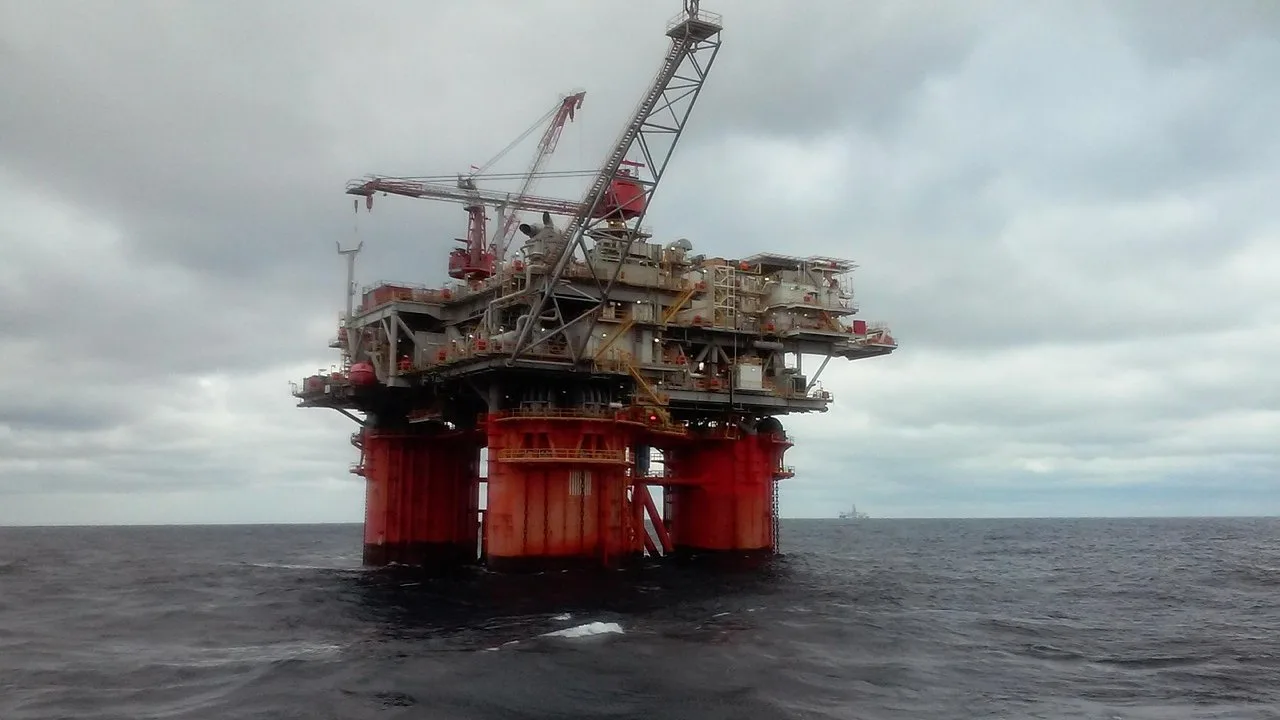
Central European Petroleum (CEP) plans to develop the Wolin East field using an artificial island. The field lies about 6 km from Świnoujście. The company’s head estimates the cost of the investment at up to PLN 7 billion.
The Wolin East field was discovered in July 2025 by the Wolin East 1 well, drilled from a jack-up rig in water 9.5 m deep. According to CEP, the average recoverable resources of oil, marketable gas and gas liquids amount to 200 million barrels of oil equivalent. The company described this as the largest conventional hydrocarbon field discovered so far in Poland. According to the company’s estimates, based on a single well, this is about 22 million tonnes of oil and 5 billion cubic metres of gas.
Island, port and up to 30 wells
According to project documents from the transboundary environmental impact assessment procedure, described by German media, a artificial island of about 10 hectares is planned. It is to host a port, a breakwater and infrastructure for up to 30 wells, as well as a dredged channel for oil tankers leading to the island. Oil would be shipped by sea, without building onshore infrastructure. Consultations on the scope of the environmental assessment ran until mid-October 2026. A full assessment and an environmental decision do not yet exist.
PLN 7 billion and the search for a partner
Rolf Skaar, CEO of CEP, put the cost of developing the field at about PLN 7 billion during a debate in the Sejm on 14 October. So far the company has funded exploration on its own, but it intends to look for a partner for the development of the field.
Formalities and dispute with Germany
The Ministry of Climate and Environment reported that on 7 November 2025 CEP submitted an application for approval of the geological and investment documentation for the “Wolin Wschód” field. The company has held the Wolin concession for exploring and appraising deposits since 2017. It does not have a production concession.
The plans face opposition on the German side of the border, including from the environmental organisations Deutsche Umwelthilfe, BUND and WWF, and the municipality of Heringsdorf. We wrote about this in our article about the dispute over wells near Usedom.