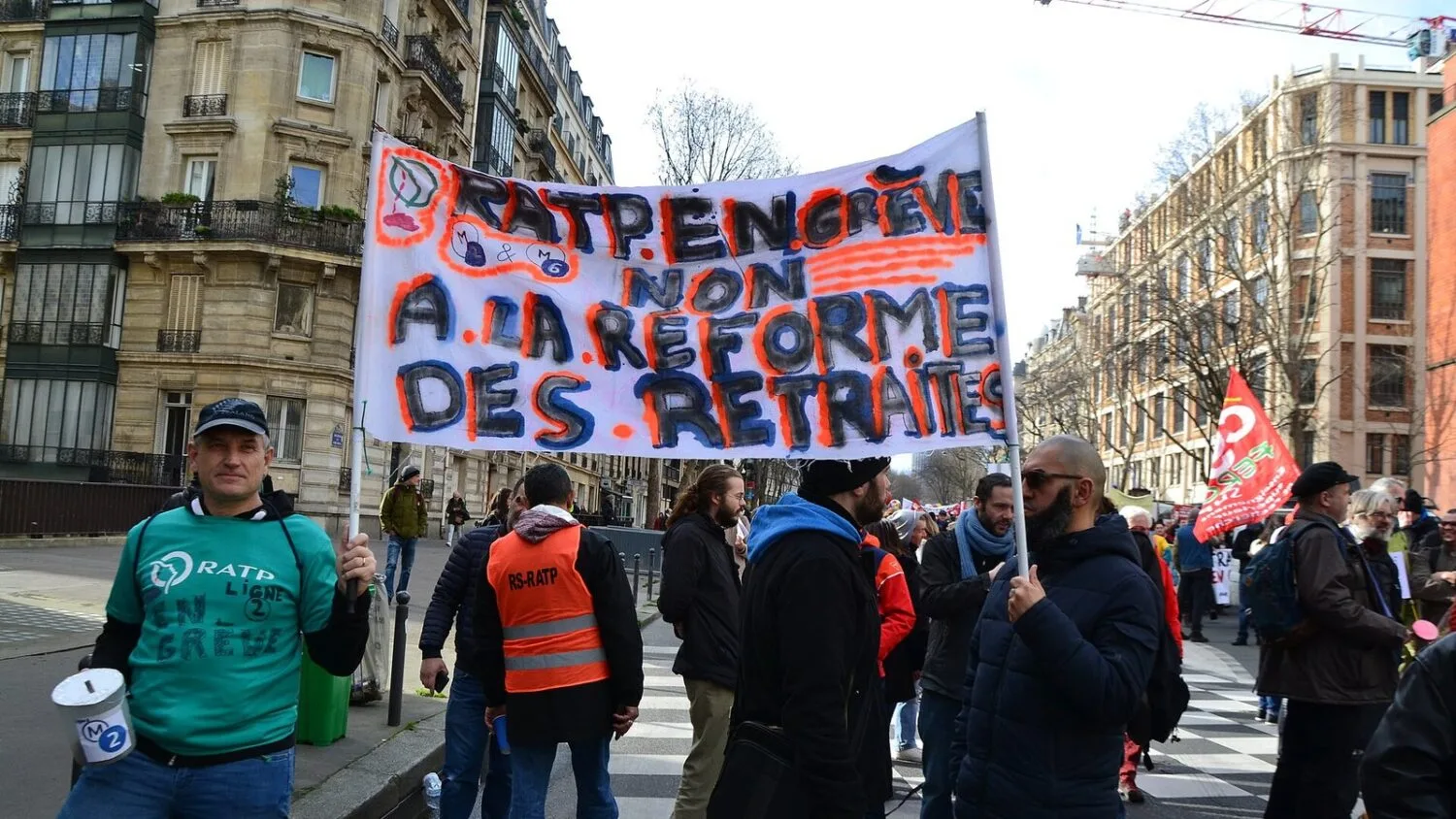
On Thursday, 5 November, the government estimated that between 575,000 and 600,000 people took to the streets of French cities. Trade unions protested against the cost of living and cuts to public services, and in several cities there were clashes with police.
General strike and a dispute over numbers
The strike and demonstrations were organised by the intersyndical coalition L’intersyndicale, which brings together the main French trade union confederations. Strikes were called by organisations representing, among others, teachers, postal workers, doctors, pharmacists and transport workers. High school and university students also joined the protesters.
According to government estimates, at least 575,000 people took part in the demonstrations, while figures released later refer to around 600,000. The left-wing CGT trade union confederation spoke of nearly 1.6 million. CGT leader Sophie Binet said during the day that by 1:00 p.m. more than 250,000 people had protested in almost 70 cities, and added that this was „only the beginning”. According to the Interior Ministry (MSW), 270,000 people demonstrated outside Paris.
Clashes with police and arrests
Around 70,000 police officers were deployed across the country. The Interior Ministry reported clashes with „groups of radical and far-left activists” in Rennes, Nantes, Lyon and Marseille, among other places. Police used tear gas at the end of demonstrations in Bordeaux and Lyon. In Lyon, near the Gallieni bridge, a car was set on fire. In the morning in Paris, police prevented protesters from building barricades out of rubbish bins in front of high schools.
A total of 448 people were detained. The ministry said the day passed without serious incidents, although for almost three weeks, since the protests became violent, the authorities and shopkeepers have been preparing for a repeat of those scenes.
Scale of the strike
According to the Education Ministry, around 13% of school staff went on strike, including 16% of teachers. The strike affected about 19% of primary schools and 18% of lower secondary schools. Roughly one third of universities experienced work disruptions. In hospitals, around 5% of staff went on strike, the Health Ministry said. The Eiffel Tower was closed, and the strike reduced nuclear energy production in the morning. No serious disruptions to transport were recorded, although some trains were delayed.
Background
The wave of protests has been ongoing since September and includes opposition to prices, the state of public services and the education system. Trade unionists have announced a „next level” of mobilisation, and pressure is growing on President Emmanuel Macron in the final months of his term. Recent unrest has also affected the markets, as we reported in our article on French bonds under pressure after weekend riots.