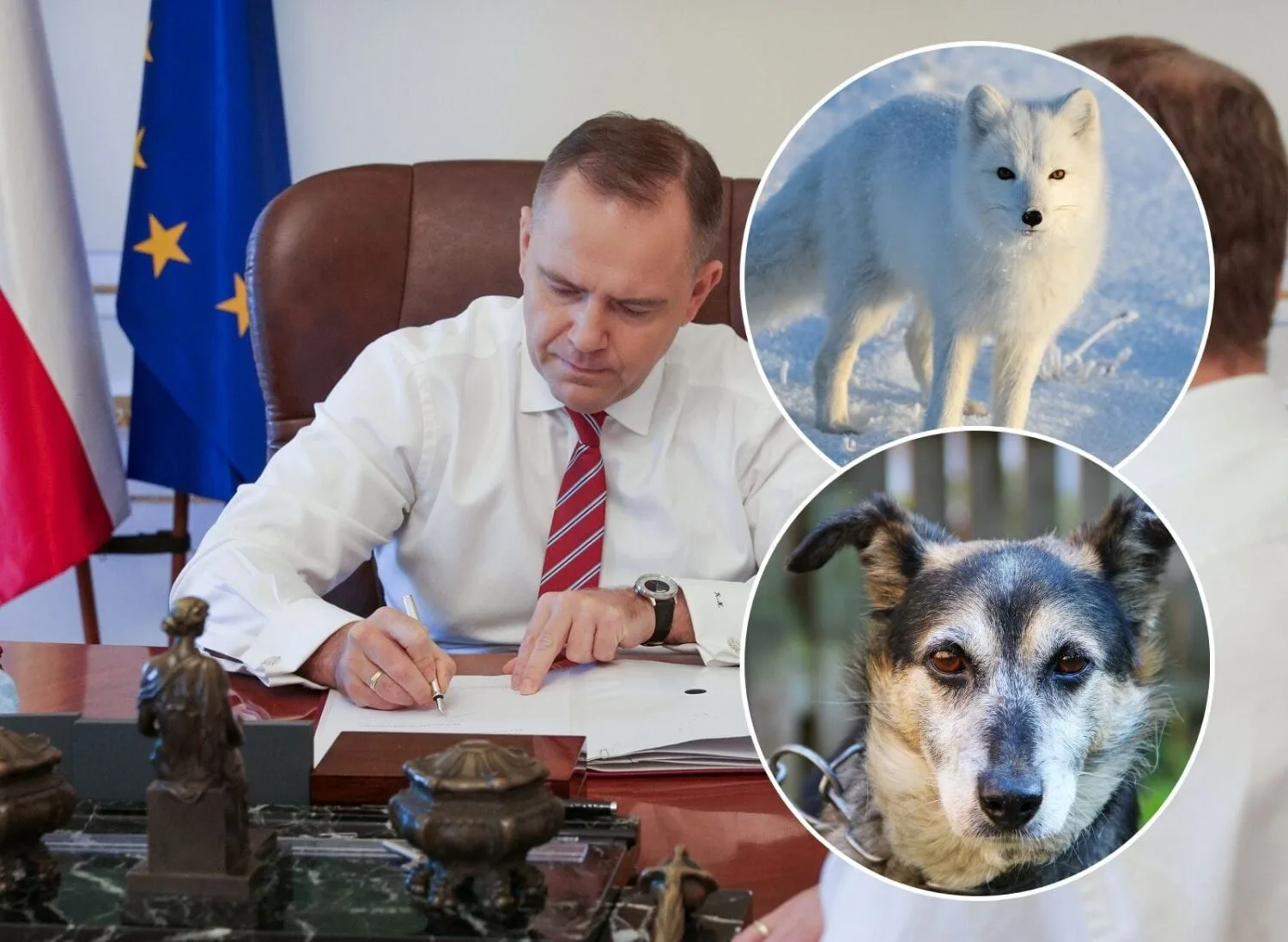
President of the Republic of Poland Karol Nawrocki announced today his decisions on two important animal welfare laws. In a special video posted on the platform X (formerly Twitter), the head of state reported that he had signed the law introducing a ban on fur animal farming, while vetoing the so-called chain law, which would have banned keeping dogs on tethers. These decisions have sparked mixed reactions across society, ranging from enthusiasm among animal rights advocates to criticism from some agricultural and political circles.
The President’s Decisions: Signing the Fur Farming Ban
In his statement, President Nawrocki stressed that he does not shy away from difficult decisions, but is guided by what he considers right. „The president is not there to make easy decisions. He is there to make right decisions,” he said, referring to both laws. Regarding the law on fur animal farming, also known as the „fur law,” the president decided to sign it. As he explained, the facts are clear: more than two-thirds of Poles, including residents of rural areas, support a ban on fur animal farming. „This voice cannot be ignored,” Nawrocki added, addressing his words in particular to farmers and residents of rural areas.
The law introduces a gradual ban on keeping fur-bearing animals, such as foxes and minks, with a transition period aimed at minimising losses for the industry. The president argued that the decision ends an era of suffering for millions of animals and meets society’s expectations. Activists from organisations such as Otwarte Klatki welcomed the decision with enthusiasm. On X, Marta Korzeniak of Otwarte Klatki wrote: „Mr President, this is a groundbreaking moment, and I am extremely glad that you are going down in history as the president who ended the suffering of millions of animals and listened to the voice of society. With all my heart – thank you and huge respect!”
Veto of the Chain Law and Announcement of Own Bill
However, not all of the president’s decisions were welcomed. Nawrocki vetoed the so-called chain law, which would have banned keeping dogs on tethers, deeming it poorly constructed. In his justification, he stressed that while the intention to protect animals is right, the law could have hit the interests of farmers and rural residents without providing adequate transitional solutions. „The chain law is an example of how good intentions can lead to bad consequences,” the president explained. At the same time, he announced that he would submit his own bill on the matter, which is intended to better balance animal protection with the needs of rural communities.
Political and Social Reactions
The president’s decisions quickly became a topic of discussion in the media and on social networks. Łukasz Bok, a well-known political commentator, summed up on X: „President Karol Nawrocki signed the law banning fur animal farming. At the same time, he announced that he had vetoed the law on banning the keeping of dogs on tethers. The president stressed that he is submitting his own bill on this matter.” Reactions were divided – supporters of the fur ban praised the president for listening to society, while critics of the veto on the chain law accused him of lacking consistency in animal protection.
In a broader context, this is another veto by President Nawrocki in a short time since the start of his term. Earlier, he vetoed, among others, the law on cryptocurrencies, arguing that it posed a threat to citizens’ freedom. Politicians from the Civic Coalition (KO) criticise the president for overusing his veto power, comparing his actions to those of his predecessors. Deputy Zbigniew Konwiński wrote on X: „Nawrocki claims that 'the veto is not a tool of destruction, but of responsible state cooperation’. Really? Kwaśniewski, 120 months and 35 vetoes. Nawrocki, 4 months and 16 vetoes. A new definition of 'responsible cooperation’.”
Context and Outlook
The fur law had long been awaited by animal welfare organisations and enjoys broad public support. Its signing marks the end of a controversial industry in Poland, although critics point out that fur production may move to countries with lower standards, such as Ukraine or China. The veto of the chain law, in turn, opens the way for debate on the new presidential bill, which is meant to address the problems better.
President Nawrocki’s decisions highlight the tensions between animal protection and economic interests. As reactions on X and in the media have shown, the topic divides society, but at the same time it demonstrates the growing importance of animal rights in Polish public discourse. The future will show whether the presidential chain law bill gains support in the Sejm and whether it ends the controversies surrounding these issues.