

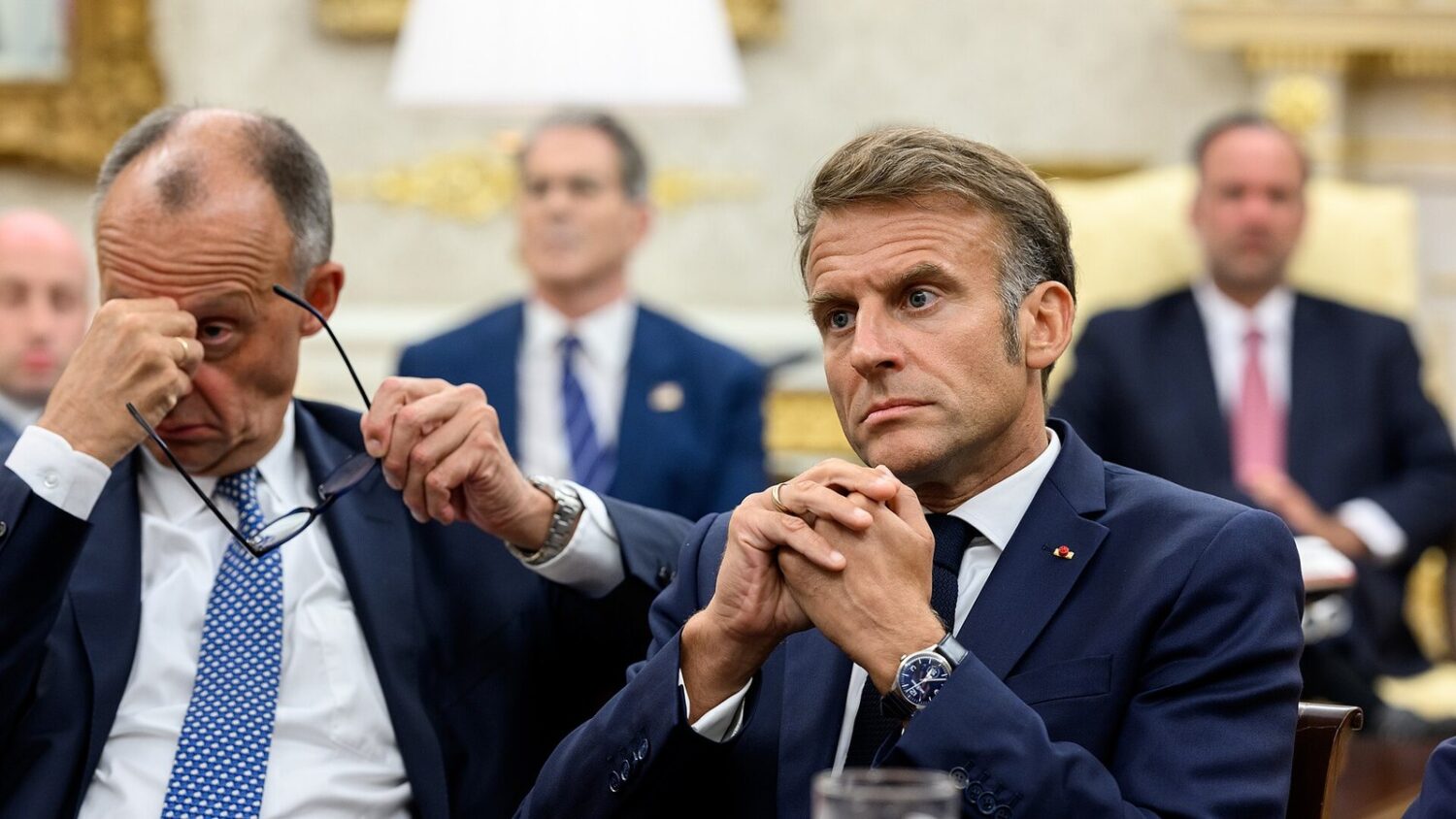
Germany and France agreed on Friday, October 16, on joint proposals for EU emission standards for new cars. They want a less stringent target for 2035 in exchange for a stronger preference for production in Europe.
The federal government and the Élysée Palace jointly said they aim for a “clear reduction of CO2 emissions” while also wanting to strengthen Europe’s capacity to develop and produce a new generation of electric cars (quoted from dpa, translated). President Emmanuel Macron wrote on social media that he hopes the “Franco-German dynamic” will quickly lead to an agreement with the other states, “for our jobs and our industry” (quoted from Politico).
What Berlin and Paris Propose
According to reports by Euronews, Politico and the Electrive portal, which cites Spiegel, both governments want manufacturers to cut the average CO2 emissions of their new car fleet by 90% by 2035, rather than 100% as current rules require. The remaining 10% would not, unlike in the European Commission’s proposal, need to be offset. In practice, this means that after 2035 some new cars with petrol and diesel engines, including hybrids, could still be sold, provided the average emissions stay within the limit.
According to the Spanish portal Todo Alicante, the declaration also provides for recognising vehicles running on renewable fuels as zero-emission, and for averaging emissions over a multi-year period (2030–2031) and a CO2 credit reserve. Politico, meanwhile, writes of an additional 10% margin in exchange for investment in alternative fuels, which would in fact lower the requirement to 80%. The scope of these elements is not consistent across sources.
The Price of Compromise: "Made in Europe"
Germany, until now cautious about protectionist provisions, agreed to a European preference. According to an agency cited by Yahoo News, 70% of car components (excluding batteries) would have to come from Europe, and 10% of battery content from European sources. A source at the Élysée Palace argued that the aim is to prevent factories from becoming “mere assembly plants”. German Environment Minister Carsten Schneider of the SPD said it was a “modern shift” of German industrial policy towards protecting jobs.
Context and Next Steps
In December, the European Commission proposed changing the existing rules, namely allowing the registration of new combustion-engine cars after 2035. Reuters reported at the time on a 90% emissions reduction as an alternative to a full ban. The European Parliament backed the original 100% target in 2022. Now the proposals are being considered by the Parliament and member states. According to Yahoo News, MEPs are due to vote on the Commission’s proposal at the Strasbourg session on November 23. An agreement between the EU’s two largest economies could help build a majority among member states. At the time of publication, no official position from the EU Council or car manufacturers on the joint text had been found.
What It Means
For buyers in Poland nothing changes immediately: these are negotiating proposals, and the rules still require the approval of Parliament and the Council. If adopted, showrooms after 2035 could still offer hybrids and selected combustion models. Meanwhile, Polish parts suppliers for European carmakers may benefit from local content requirements, although the concrete impact depends on the final thresholds.





Komentarze