

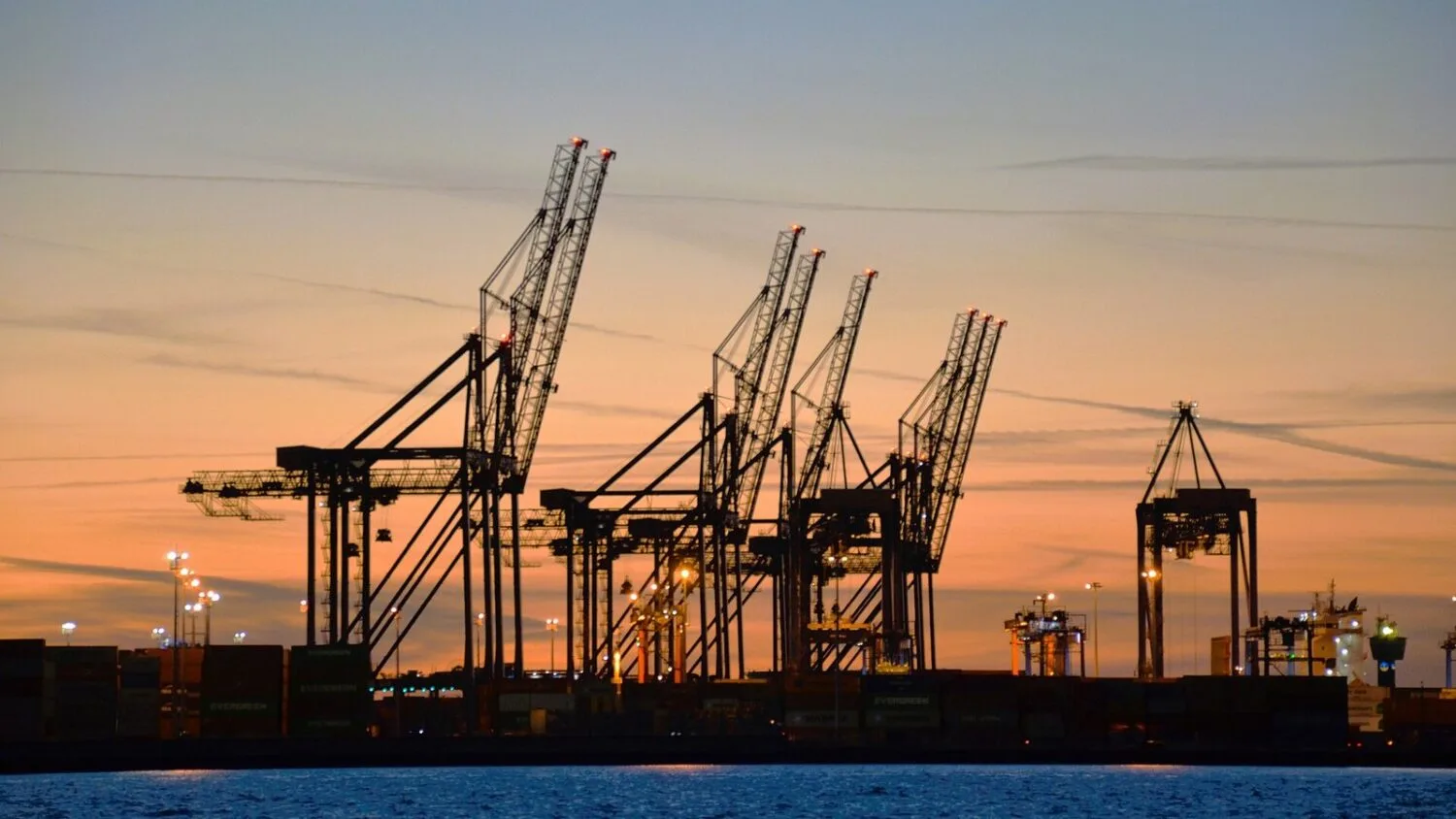
The T5 installation terminal at the Baltic Hub in the Port of Gdańsk is due to be launched on 30 October. It is to support the construction of offshore wind farms in the Baltic Sea, starting with Baltica 2.
The terminal was built as an extension of the T1 container terminal in the outer part of the Port of Gdańsk, on the Gulf of Gdańsk. The investor is Istrana, a company formed by Baltic Hub and the Polish Development Fund (PFR). According to the companies, the project cost PLN 1.2 billion, and the building permit was issued by the Pomeranian Voivode in 2024.
Scale and Parameters
The project involves reclaiming more than 21 hectares; lease documents and the City of Gdańsk website give an exact figure of 21.3 ha, of which nearly half is high-load-bearing surface. As „Rzeczpospolita” describes in a partner piece for PFR, about 3.5 million m³ of sand was used in construction, of which approx. 85 percent was sourced from marine and river sources.
On the sea side, two quays with a combined length of over 900 metres were built, along with a 186-metre dolphin berth. The technical depth of the outbound quay is 17.5 metres. The strongest sections are designed to bear loads of up to 40 tonnes per square metre, which is intended to allow handling of turbine foundations weighing up to 2,000 tonnes. These details come from the PFR material, not from a separate port announcement.
Who Will Use It
The first project will be Baltica 2, a joint venture of PGE and Ørsted with a capacity of 1.5 GW. The port space is leased by the company Elektrownia Wiatrowa Baltica 2. So far, the first monopiles for this farm have been shipped from the port in Rønne on Bornholm.
In June 2025, Ocean Winds signed a reservation agreement to use T5 for the BC-Wind farm. According to the companies’ announcement, the firm intends to use the terminal in 2028. PGE President Dariusz Marzec said at the time that the terminal is also meant to serve other projects, Polish and foreign, for at least 10 to 15 years.
What It Means
For the offshore industry, this means that logistics for part of the investments in the Polish Baltic can be handled from within the country, rather than from foreign ports. It also means contracts for Polish companies: according to PFR, at the peak of construction around 300 people worked on site, and the monthly value of works exceeded PLN 100 million. For energy consumers, there is no direct change in prices. The terminal is one of the conditions for timely construction of farms that are meant to increase the share of renewables in Poland’s energy mix.
Further offshore projects that could use the terminal are planned for 2030–2032. Their implementation depends on investors’ decisions.