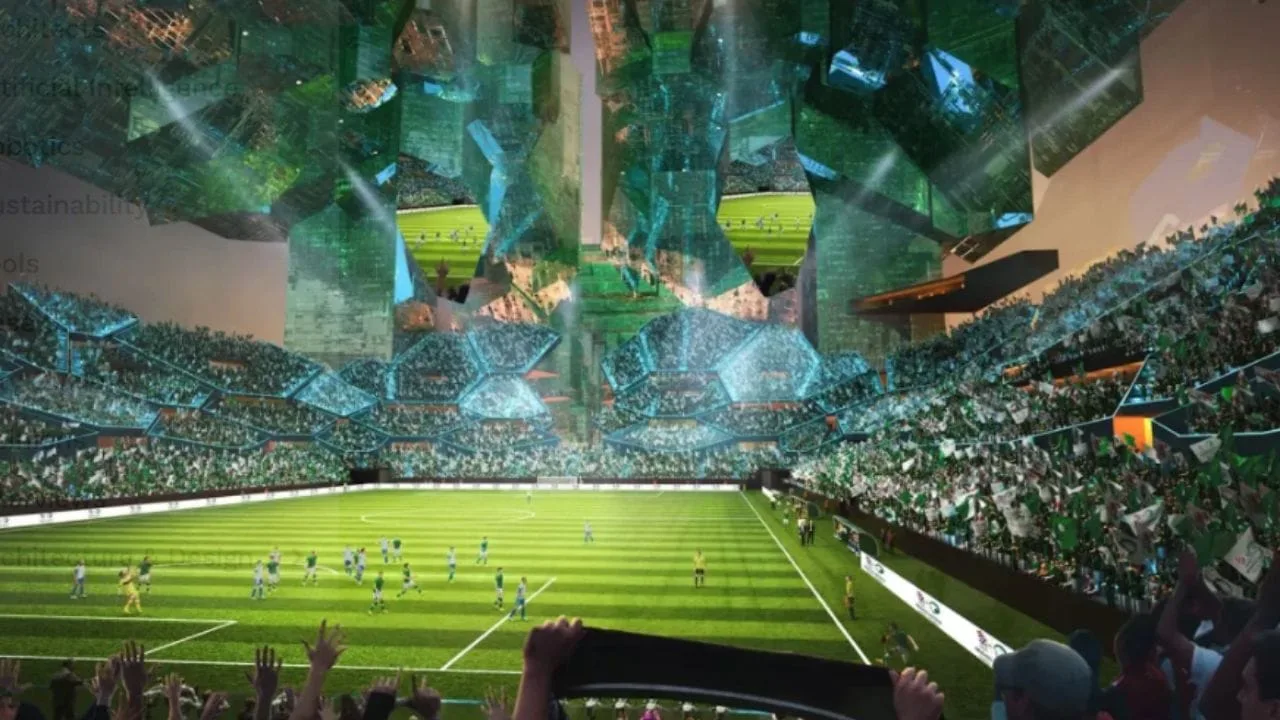
Saudi Arabia is once again stunning the world. As part of the NEOM project, the world’s first stadium suspended in the air will be built – the NEOM Stadium, which will rise 350 metres above the ground and transform the face of sport.
A stadium in the sky – a revolution from the desert
Saudi Arabia has officially announced the construction of the world’s first „Sky Stadium”, a stadium floating in the air. The NEOM Stadium will be located at the heart of the futuristic city of The Line, which is part of the NEOM project worth 500 billion dollars.
The facility is expected to cost around 1 billion dollars and will hold 46 thousand spectators. Most impressive, however, is the fact that the arena will sit as high as 350 metres above the ground, integrated with the roof of the linear city, which is 170 kilometres long.
Futuristic construction
The design is the work of the Danish studio Bjarke Ingels Group (BIG), known for its groundbreaking architectural concepts. The stadium is to be made of mirrored glass and ultralight materials that allow the entire structure to be suspended above the desert.
An eco-friendly powerhouse
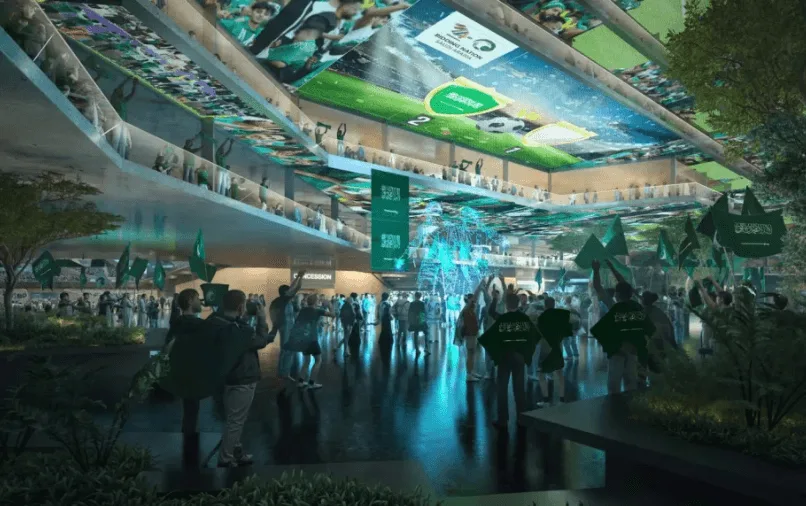
The entire complex will be powered 100% by renewable energy, mainly solar and wind. It will also use artificial intelligence to manage the flow of fans, energy and temperature.
Saudi Arabia is preparing to host the 2034 World Cup, and the futuristic NEOM stadium is to be one of its main venues. Construction is set to begin in 2027, with completion planned for 2032 – just before the tournament starts.
After the championship ends, the stadium will become home to a local football team and a venue for concerts and global cultural events.
NEOM – the heart of Saudi transformation
NEOM is a visionary megaproject that aims to make the Kingdom a leader in innovation and sustainable development. It includes, among others, the cities of The Line, Oxagon and Trojena – all planned to be emissions-free and fully automated.
Through investments such as the NEOM Stadium, Saudi Arabia is not only promoting its futuristic vision, but also building the country’s brand as a centre of global sport, technology and the architecture of the future.