


In 1980 the world learned of Jean Hilliard, who was found completely frozen at minus 30 degrees. Her incredible story is proof of the resilience of the human body and a medical phenomenon.
How did Jean come to be frozen?
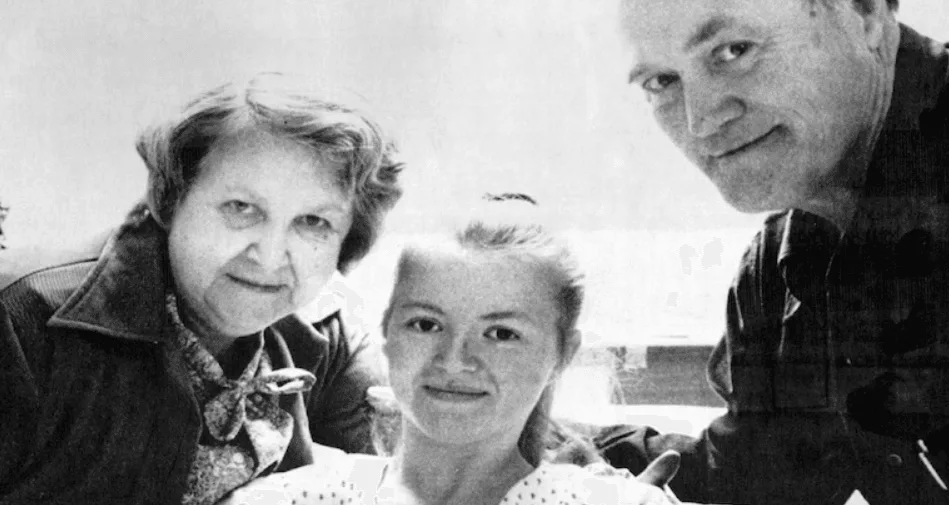
Jean Hilliard was 19 years old when, on a December night in 1980, she was driving home to Lengby, Minnesota. Her car slid off an icy road and got stuck in a ditch. Jean, dressed only in a jacket, cowboy boots and gloves, decided to walk to a friend’s house, despite extreme cold reaching -30°C.
Unaware that she was a step away from rescue, she collapsed and fell into the snow just 15 feet from Wally Nelson’s house. There she lay for six hours – her body literally turned to stone, all signs of life frozen.

A medical miracle: the hospital’s response
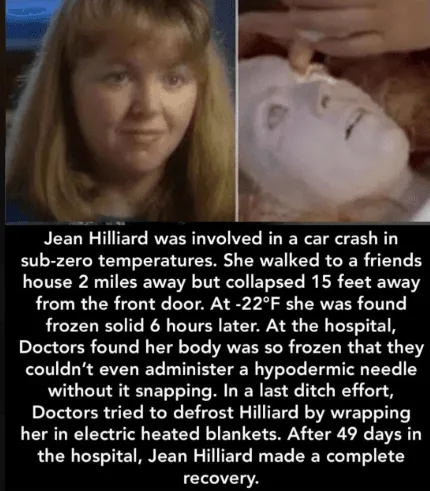
Wally Nelson, who found her in the morning, believed Jean was dead. He took her to the local hospital in Fosston, where doctors were unable to push a needle into her frozen skin. Her pulse was just 12 beats per minute, and her body temperature was too low to measure.
Doctors, convinced this was a fatal case, tried to warm her body with heating pads. To everyone’s amazement, Jean began showing signs of life only a few hours later.
How does extreme hypothermia work?
- The body protects internal organs by restricting blood flow to the skin and limbs
- The skin becomes stiff and white, and the body resembles "meat taken out of the freezer"
- Severe cases can cause muscle stiffening, resembling rigor mortis
Back to life: recovery
Jean Hilliard spent 49 days in hospital. She lost none of her fingers or toes and suffered no lasting damage. She left the hospital healthy, astonishing doctors around the world.
Why does this case fascinate doctors?
Hypothermia specialists stress that although Jean was "completely frozen," her organs suffered no critical damage. It is an example of the so-called "Minnesota phenomenon", in which extreme conditions saved her life by slowing metabolism and minimising tissue damage.
Jean’s case is today part of medical textbooks and the subject of podcasts, TV programmes and scientific articles. Her story reminds us how remarkable the limits of human endurance are – and why hope should never be abandoned.
Sources: NDTV, ScienceAlert, New York Times, Minnesota Public Radio, Apple Podcasts, Unsolved Mysteries.