

On Wednesday, 25 November, Ukraine’s Verkhovna Rada passed in full the law on the market and taxation of virtual assets. The rules are set to take effect on 1 July 2027, while in Poland President Karol Nawrocki has vetoed the law implementing the EU’s MiCA regulation three times.
What the Verkhovna Rada passed
Bill No. 10225-d passed its second reading and was adopted in full. According to reports from Kyiv, 271 deputies voted in favour and eight were against. The Secretariat of the Rada announced the adoption, and Jaroslaw Zelezniak, a member of the finance committee, commented on social media: “The Rada has finally passed No. 10225-d in full”.
The document establishes the rules for the virtual assets market and the requirements for its participants. It also divides supervision between the National Bank of Ukraine and the National Securities and Stock Market Commission. It introduces an obligation for companies to be transparent and to separate client funds from the service providers’ own money. The bill passed its first reading in September 2025.
Taxes and legalisation of older holdings
Taxation is meant to resemble the rules for securities, meaning it would apply to profits from transactions within a year. Earlier versions envisaged 18% income tax plus a 5% military levy. According to Zelezniak, a preferential rate of 5% plus 5% on the full amount will apply until 2028. The law also provides a mechanism for declaring and legalising assets acquired before it takes effect. Danylo Hetmantsev, chair of the finance committee, expects the market to bring the budget an additional 15 billion hryvnias a year.
The bill is based on the EU’s MiCA regulation. On 5 November the National Bank of Ukraine opposed its adoption in the proposed form, pointing among other things to the risk of uncontrolled admission of foreign tokens. The law will now go to the President of Ukraine for signature; as of publication, no date had been given.
The Polish contrast: three vetoes
In Poland, MiCA applies directly, but there is no law designating a market supervisor. President Karol Nawrocki first vetoed the crypto-asset market law on 1 December 2025, citing among other things the possibility of blocking industry companies’ websites. We wrote about the first veto on the crypto market in December. The second veto came on 12 February 2026.
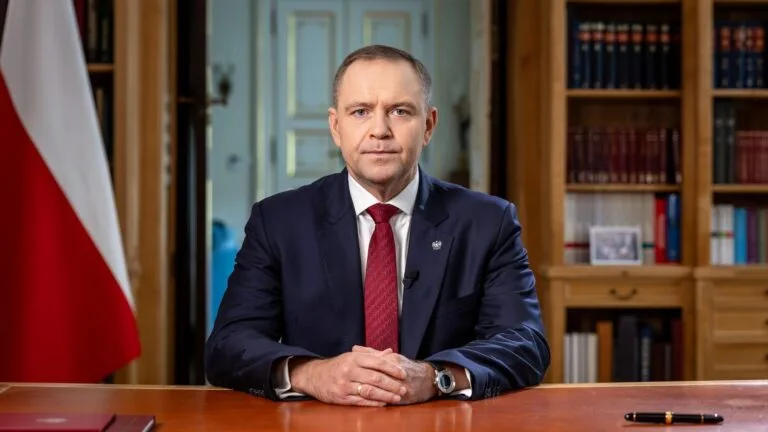
The president announced the third on Thursday, 11 June, in a video recording. He argued that it was overregulation going beyond EU law, which could push Polish companies abroad. He declared: “I am a supporter of regulating this market”, but said he would sign the law after amendments. The government added one amendment to the text – an obligation for the KNF to publish annual reports on the market – while the Chancellery of the President raised 15 other remarks. The Sejm did not override the third veto.