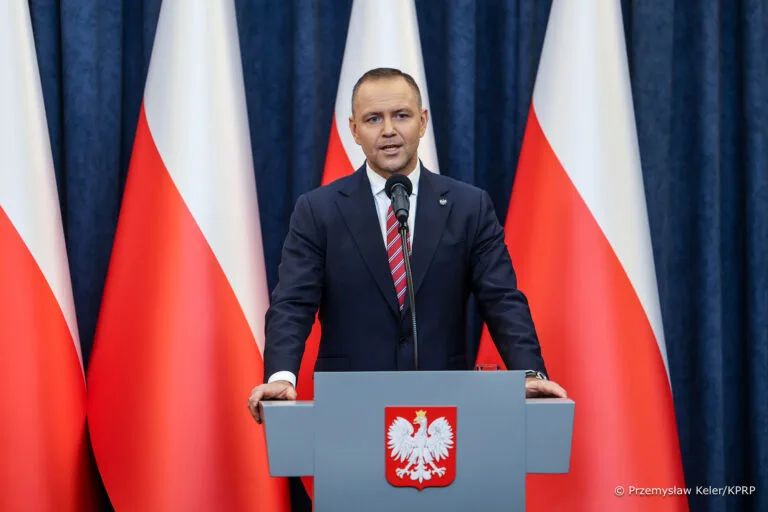
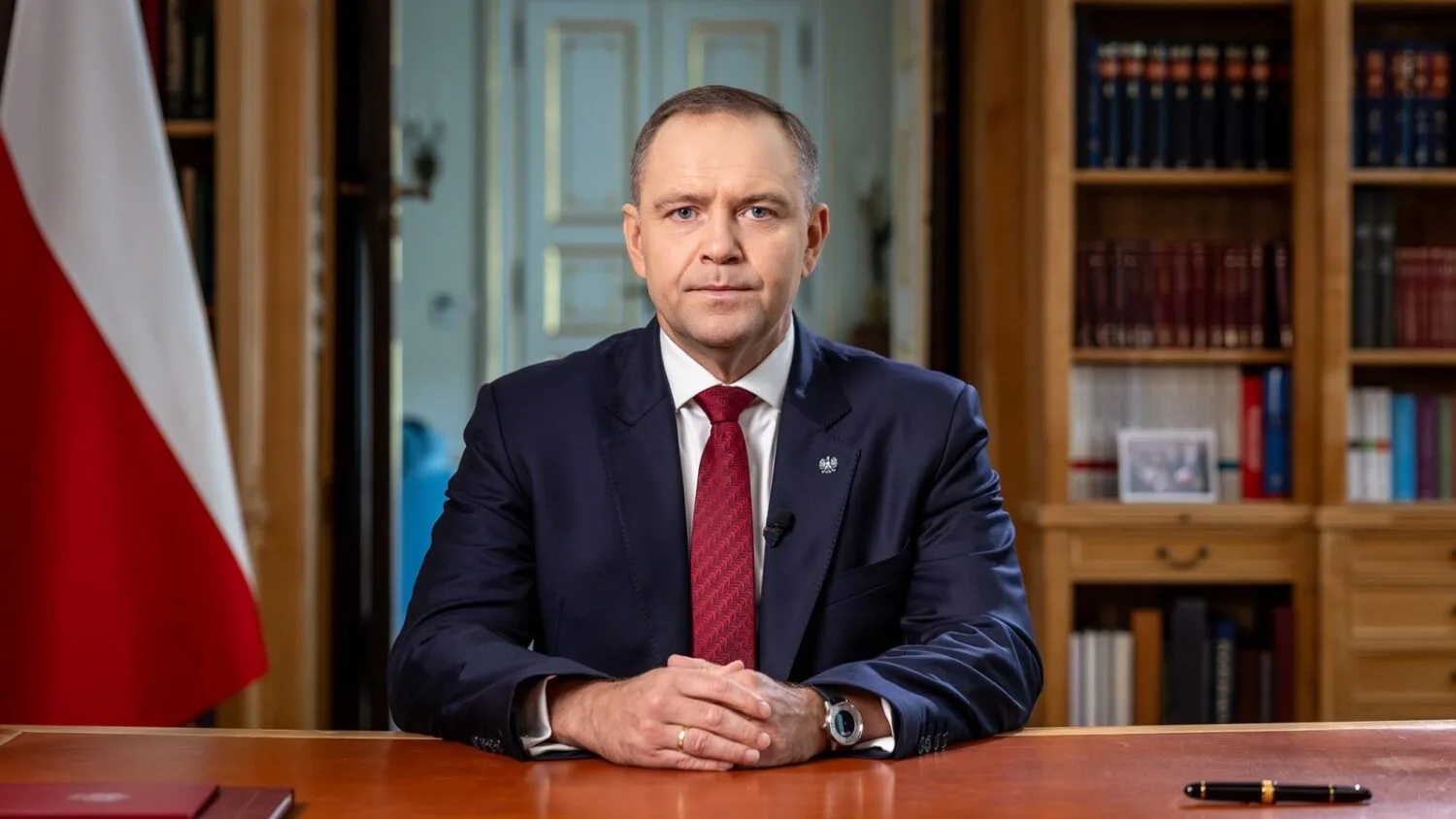
President Karol Nawrocki refused on Friday, 13 November, to sign an amendment to the Act on providing services by electronic means, the second amendment implementing the EU Digital Services Act (DSA). The provisions concerned blocking illegal content on the internet.
The Chancellery of the President said the veto applies to the act of 22 October 2026 (Sejm print no. 2693). On the same day, the president signed six other acts, including on patriotic upbringing, counter-terrorism measures, VAT and the Central Communication Port. Of the decisions the president had announced, this was the only one blocked.
Why the president vetoed the act
In a video published on prezydent.pl, Nawrocki recalled that his first veto on this matter had worked: the government separated the provisions on the national DSA enforcement system from those on the content-blocking procedure. As a result, he signed the act designating the President of the Office of Electronic Communications (UKE) as the Digital Services Coordinator.
However, he accused the Senate of “once again expanding official powers to block content”. According to the president, “the specter of a censor official has returned”, and the assessment of whether content is a crime belongs solely to the courts.
The president also pointed out that the act allowed an entire domain to be entered in the blocking register. In his view, one illegal comment could lead to blocking a whole news or educational service, which violates the principle of proportionality under Article 31(3) of the Constitution. He cited a statement by the minister of digital affairs about shutting down platforms.
Dispute over attacks in schools
Nawrocki accused the government of justifying the return of these provisions with a series of knife attacks in Polish schools. In his view, the tragedy was exploited and “emotional blackmail” was used, while security services had in the following days effectively restricted such content on the basis of existing law. He recalled that Regulation 2021/784 allows terrorist content to be removed within one hour of an order, and that it has been implemented into Polish law.
The president explained that he did not refer the act to the Constitutional Tribunal because “today there is no Tribunal”, and a veto was the only option. He added that during his term he had signed 298 acts and vetoed 48.
Government reaction
The act was prepared by the Ministry of Digital Affairs. Deputy Prime Minister and Minister of Digital Affairs Krzysztof Gawkowski wrote on X that it is a “black day for the safety of Polish women and men on the internet”, and that the president bears “personal responsibility” for the veto.
The Chancellery of the Prime Minister published a post arguing that illegal content can reach thousands of people within moments, which is why tools that act quickly are needed. “Such solutions have just been vetoed”, it said, adding the hashtag #SzkodliweWeto.
The Chancellery of the President published its own video with the slogan “No to Internet censorship!”. The act will return to the Sejm, which may pass it again or override the veto by a three-fifths majority in the presence of at least half of the deputies.