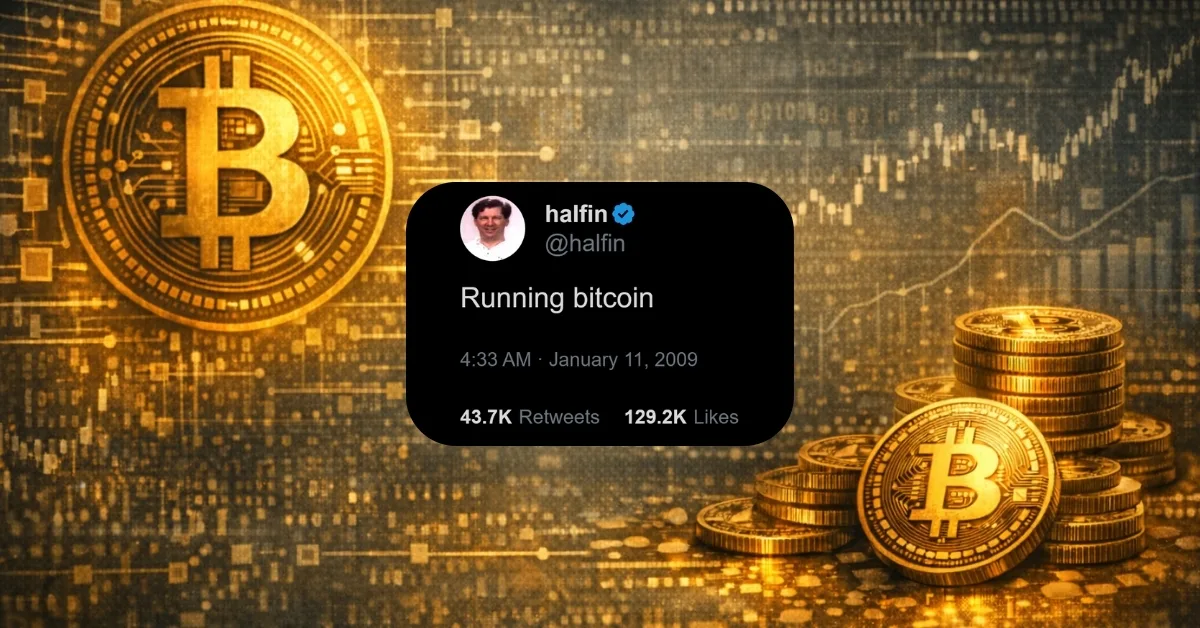
17 years ago, on January 11, 2009 at 04:33, a short, mysterious post appeared on Twitter (not yet X): „Running bitcoin”. Its author was Hal Finney, a brilliant cryptographer and programmer who became one of the key figures in the history of cryptocurrencies. This simple tweet, consisting of just two words, not only marked the launch of the first Bitcoin node beyond its creator, but also kicked off a revolution that today values Bitcoin at billions of dollars. On the anniversary of this event, we recall the fascinating history of Bitcoin and the man who helped it get off the ground.
Bitcoin’s Beginnings: From Idea to Reality
Bitcoin’s history begins in late 2008, when an anonymous creator using the pseudonym Satoshi Nakamoto published a white paper describing a new, decentralized digital currency. The document, titled „Bitcoin: A Peer-to-Peer Electronic Cash System”, proposed a payment system without intermediaries, based on blockchain technology. On January 3, 2009, Nakamoto mined the first genesis block, in which he hid a message: „The Times 03/Jan/2009 Chancellor on brink of second bailout for banks” – a reference to the financial crisis that shook the world.
Bitcoin was then a pure experiment. The software was available for download, but hardly anyone was interested in it. This is where Hal Finney enters the scene. An experienced cryptographer known for his work on privacy protocols and digital currencies (he had earlier co-created the PGP system), Finney quickly recognized the potential of Nakamoto’s idea. He downloaded the source code and ran it on his computer – becoming the first person other than Satoshi to run a Bitcoin network node.
The Mysterious Tweet: „Running bitcoin”
On January 11, 2009, Finney published a simple message on Twitter: „Running bitcoin”. It was not an ordinary post – it was a historic moment. It meant that Bitcoin was no longer just a theory or Nakamoto’s solitary project, but was working in practice. Finney tested the network, mined the first blocks and communicated directly with Satoshi via email and forums.
A day later, on January 12, Nakamoto sent Finney the first Bitcoin transaction – 10 BTC. This event confirmed that the system worked. Finney not only launched Bitcoin, but also contributed to its development by proposing improvements and testing anonymity. In one of his later posts he wrote: „Looking at ways to add more anonymity to bitcoin”, which shows his vision of cryptocurrency as a tool of financial freedom.
Who was Hal Finney? Born in 1956, a Caltech graduate, he worked at PGP Corporation and was a pioneer in cryptography. He was also an enthusiast of extreme sports and transhumanism – he dreamed of cryonics, which became a reality after his death in 2014 from amyotrophic lateral sclerosis (ALS). His body was frozen in the hope of future revival. Speculation that Finney might have been Satoshi Nakamoto still circulates today, although he denied it before his death.
From Zero to Billions: Bitcoin’s Journey
In 2009, Bitcoin had no market value at all – it was worth zero. Finney’s first tweet symbolized the start of something big, but few people then predicted that the cryptocurrency would become a global phenomenon. Today, in 2026, Bitcoin is reaching record prices, is accepted by corporations such as Tesla and PayPal, and its market capitalization exceeds trillions of dollars. The network processes transactions worth billions daily, and blockchain has become the foundation for NFTs, DeFi and Web3.
This tweet reminds us of modest beginnings. As Finney wrote in one of his last posts before his death: „Bitcoin is a revolution that will change the world”. His words proved prophetic – from the 2008 financial crisis to today’s inflation challenges, Bitcoin has become an alternative to traditional systems.
17 years after this historic tweet, Bitcoin still „runs” – the network operates without interruption and the community keeps growing. Hal Finney’s story teaches us that great innovations begin with small steps.