

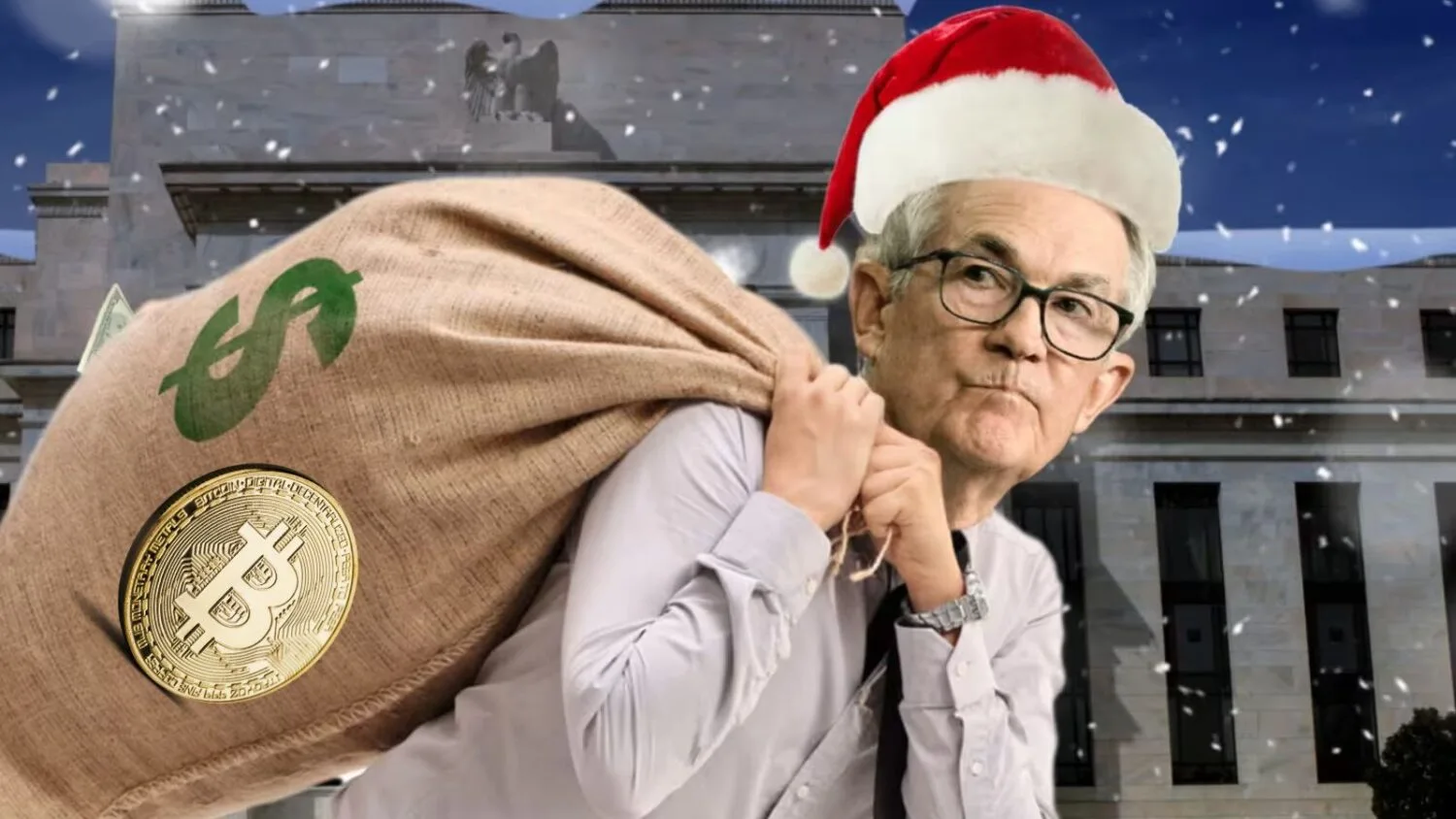
Today the United States Federal Reserve (FED) decided to cut interest rates by 25 basis points, setting their range at 3.5%–3.75%. It was the third consecutive cut this year, following cuts in September and October. The decision was widely expected by the market, with a probability exceeding 90%. Analysts predicted that lower interest rates would increase market liquidity, boost risk appetite and lead to higher prices of high-risk assets, including cryptocurrencies.
Market Expectations: A Bullish Scenario for Crypto
Traditionally, Fed interest rate cuts are seen as a catalyst for growth in cryptocurrency markets. Lower borrowing costs encourage investors to put capital into higher-risk assets such as Bitcoin (BTC) or Ethereum (ETH). In the past, similar decisions led to price rallies – for example, after the September cut, Bitcoin recorded short-term gains.
Before the decision was announced, Bitcoin even approached the level of 95,000 USD, driven by speculation and additional factors, such as the injection of 13.5 billion USD into the market by the Fed. The crypto community on platforms such as X (formerly Twitter) was optimistic – posts spoke of „mega bullish” conditions, with forecasts of 1.5 billion USD in liquidity being added to the market. Analysts predicted that cryptocurrencies would react fastest to increased liquidity.
Unexpected Reaction: Declines Instead of Gains
Despite these expectations, the crypto market’s reaction after the Fed’s announcement turned out to be the opposite. Instead of continuing its rally, Bitcoin fell below 93,500 USD. The BTC price dropped to its level from January 2025, erasing all of this year’s gains.
The tone of the Fed’s statement proved to be the key factor. Despite the cut, Chair Jerome Powell suggested a potential pause in further cuts in January 2026, due to persistent inflation and a cooling labour market. This divided stance within the Federal Open Market Committee (FOMC) – with votes for larger cuts or for maintaining the status quo – fueled uncertainty. As one analyst noted on X: „People treat rate cuts as bullish events, while they often signal that something is breaking. In such a regime, crypto is sold first”.
Causes of the Reverse Reaction
Several factors contributed to this unexpected dynamic:
- Pause in further rate cuts: The expected cut was already priced in, but signals of a slower pace of further cuts caused overly high expectations about economic growth to fall.
- Sensitivity to Macro: Cryptocurrencies have become more correlated with traditional markets. In 2025, Bitcoin tracked stock market sentiment, reacting to concerns about tariffs, interest rates and an AI bubble.
- Internal Problems in the Crypto Market: Despite institutional interest (e.g. Vanguard opening access to crypto ETFs), the market experienced internal shocks, such as mass position liquidations.
- Global Influences: Additional pressures, such as the policy of the Bank of Japan or China’s ban on cryptocurrency trading, weakened the rebound.
Conclusions and Future Outlook
The Fed’s decision of December 10, 2025 highlights the growing link between the crypto market and macroeconomics. Although rate cuts have historically supported growth, this time it turned out differently. Analysts warn that Bitcoin may end the year below 100,000 USD, but in the long term, progress in adoption – such as new regulations or institutional investment – could reverse the trend.