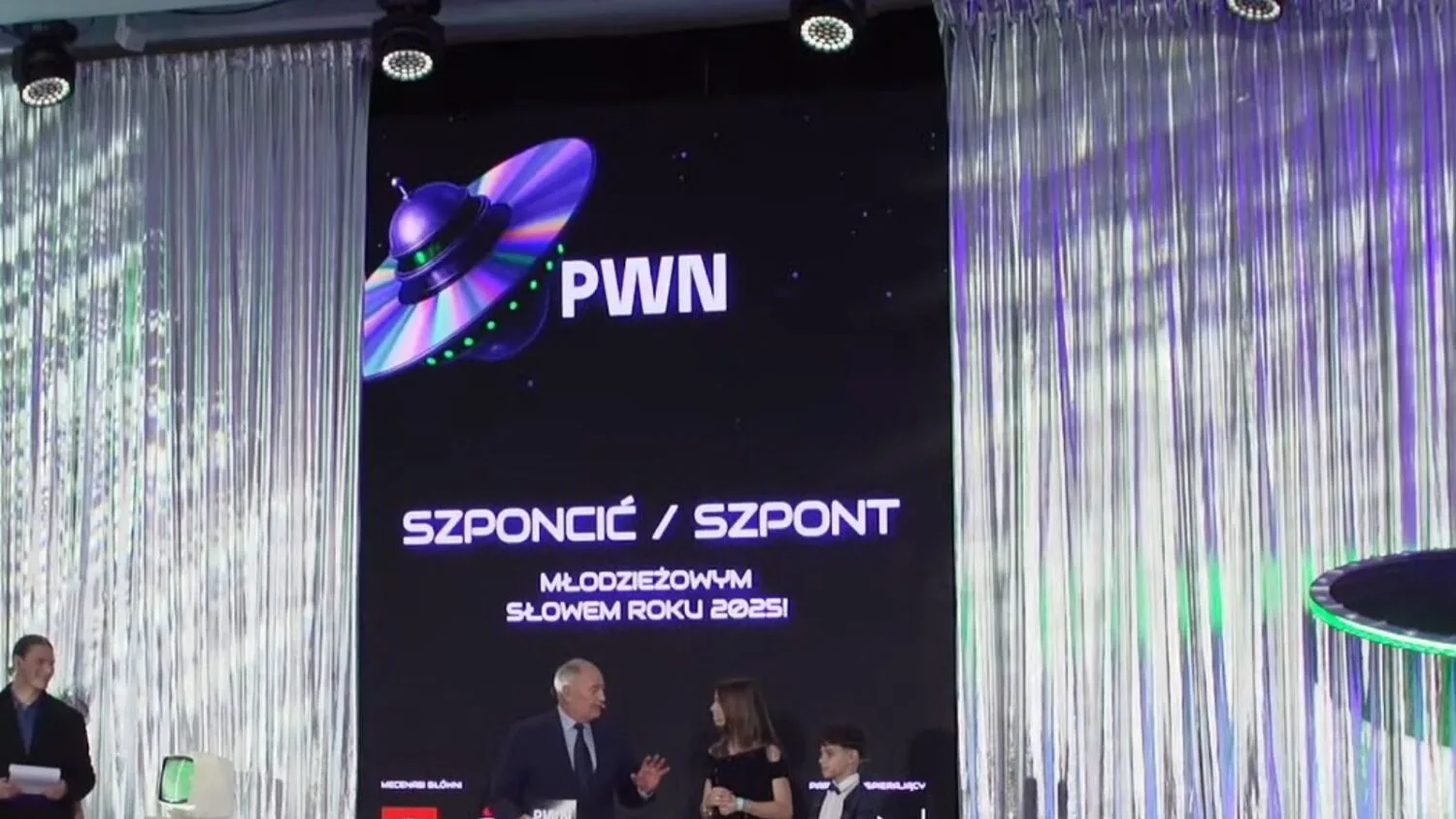
In the world of youth slang, a new word appears every year that best captures the spirit of the times, the creativity and the sense of humour of young people. In 2025, this honour went to the word „szponcić” (or in its noun form „szpont”), which was announced as the Youth Word of the Year in a plebiscite organised by PWN. The results were announced today, and the news quickly spread across social media.
What does „szponcić” mean?
According to the definition provided by the organisers, „szponcić” is a multi-meaning word that can be used in various contexts. On the one hand, it expresses playful disapproval – it means doing something not entirely proper or legal, toying with rules, clowning around or showing off. On the other hand, it can be said with admiration, describing actions that are interesting, crazy, organising something exciting or even flirting. It is a word that combines elements of rebellion, creativity and lightness, fitting perfectly into youth slang.
The origin of the word is not entirely clear, but many commentators point out that it had already appeared in everyday speech earlier, even a dozen or so years ago. Nevertheless, in 2025 it gained popularity, becoming a symbol of youth expression.
Announcement of results and online reactions
Internet users’ reactions were mixed, but mostly positive and humorous. Many users shared memes, GIFs and stories from their own lives where the word already featured. For example, one commenter wrote: „First time I haven’t been disappointed”, while others joked: „It was already being used 20 years ago – yes, I’m old”. There were also voices of surprise: „Where do they get this from XDDDD” or „I’ve never heard of this in my life”.
History of the plebiscite: From „sztos” to „szponcić”
The Youth Word of the Year plebiscite has been organised since 2016 by the Academic Publishing House PWN in cooperation with the University of Warsaw. Its aim is to promote living language and observe changes in the communication of young people. Here is a list of previous winners:
- 2016: sztos – something great, sensational.
- 2017: XD – a symbol of laughter on the internet.
- 2018: dzban – a person who is foolish or naive.
- 2019: alternatywka – a girl with an alternative style.
- 2020: No winner (due to the pandemic and a lack of entries meeting the criteria).
- 2021: śpiulkolot – a place to sleep.
- 2022: essa – something easy, simple.
- 2023: rel – short for „relatable”, something one can identify with.
- 2024: sigma – an independent, self-reliant person.
- 2025: szponcić – as described above.
Each of these words reflects cultural trends, from internet memes to social changes. „Szponcić” continues this tradition, highlighting creativity and ambiguity in language.
Why does it matter?
Choosing the Youth Word of the Year is not just fun, but also a way of documenting the evolution of the Polish language. It shows how young people adapt words to their experiences, creating new meanings and forms. In the era of social media, such plebiscites help us understand what is „trending” and how language influences culture.
Will „szponcić” make its way into dictionaries for good? Time will tell, but it already encourages experimenting with language. If you’re not szponcing yet, maybe it’s worth giving it a try – after all, it’s the word of the year!