

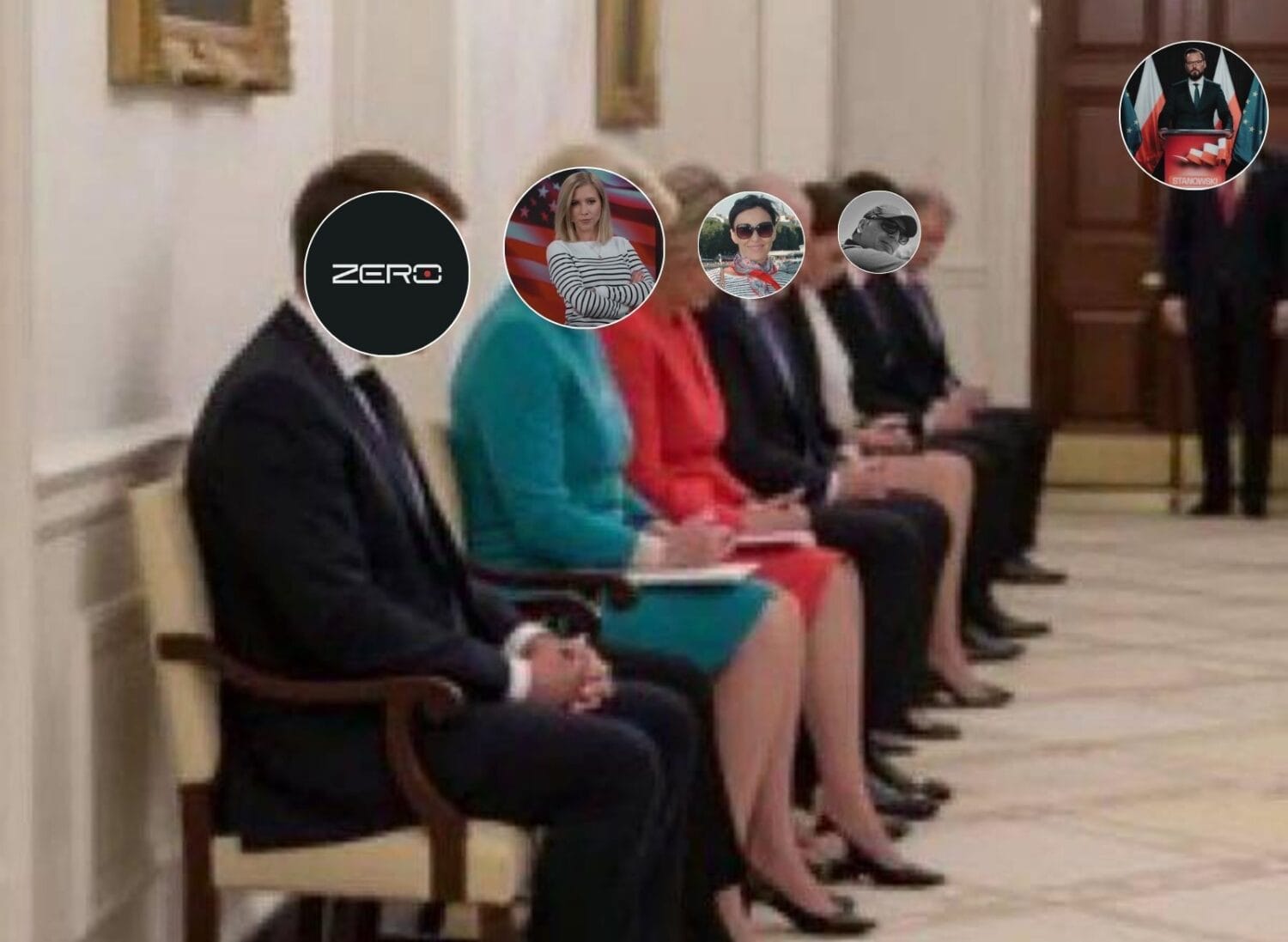
Kanał Zero posted an unlabeled AI-generated image (created by artificial intelligence) yesterday, one that had previously circulated on Russian channels and profiles. Was this a one-off blunder, or evidence of a deeper problem with propaganda and content verification?
If it's fake, is it from Russia too? – The leaders' photo affair
Yesterday a graphic showing a meeting between EU leaders and Donald Trump appeared on Kanał Zero’s social media. It quickly turned out that the picture was made with AI. A similar image had already circulated earlier on Russian Telegram channels and profiles on X, which set off a storm on Polish internet.
The channel deleted the post and published an apology, stressing that the post was the responsibility of Mikołaj from the social media team. As the cause of the error, it pointed to the lack of a clear source label and the unwitting spread of disinformation.
The sins of the past – Stanowski warned about fakes
Just a year ago, Krzysztof Stanowski, the creator of Kanał Zero, himself warned his audience not to trust everything they see online. A fake video sent to Zbigniew Stonoga, filmed in the Zero editorial office, made a big splash. Stanowski then successfully staged a provocation that exposed the lack of verification in the media and stressed how easily one can fall victim to manipulation.
A crisis of trust or a routine blunder? Comments and reactions
Key questions:
- Can a single incident be excused for a media outlet of this calibre?
- Are Polish media ready for a wave of AI-based Russian disinformation?
Sharp comments appeared on X and other social media. Dorota Wysocka Schnepf and Tomasz Lis accused Zero of irresponsibility, suggesting it was taking part in a broader disinformation machine. Joanna Pinkwart of Kanał Zero defended the channel, stressing that the mistake was isolated, the result of a thoughtless decision by one person who is not a public representative of the newsroom.
First, it’s better to lose a surname than to “not come home”. Second, Mikołaj is not a public figure and does not have to introduce himself to you or anyone else by surname. This is not an interrogation at Rakowiecka. Third, even in this post, Madam Editor writes untruths and spreads fakes – the “stirring up of hate against Joasia Dunikowska-Paź” is the responsibility of Grok. Which, incidentally, at first claimed it was the voice of Robert Mazurek, and later that it was mine. Fourth, your post on this topic would actually be quite funny, if it weren’t meant seriously. Fifth – Mikołaj assumed that Macron’s third leg would rather catch the eye. He also wrote that it was AI. But yes, this graphic should not have appeared on our profile, so he deleted it and has now apologized. That is what taking responsibility for your actions looks like. Something you probably never had and never will have any idea about. – Joanna Pinkwart, Kanał Zero
What does Russian visual propaganda look like?
In recent months, experts have pointed out that Russian channels on Telegram and X are flooding the internet with AI-generated illustrations meant to sow chaos and undermine trust in Western elites. Poland has become one of the targets of this strategy: fake news, memes and manipulated materials are reposted by various accounts before reaching a wide audience.
What next? Responsibility and transparency in the media
Kanał Zero has declared that in the future it will not publish AI-generated content without a clear label. The problem is that lost trust is hard to rebuild, especially when the stake is the information security of the most important independent medium in the country.
Kanał Zero has faced a credibility test. Time will tell whether this was a single incident or the beginning of a bigger problem from which Russian propaganda benefits.
Who is Mikołaj from the Kanał Zero social media team?
After a 5-minute investigation, we managed to establish who Mikołaj is, the person who runs Kanał Zero’s social media channels. However, because a huge wave of hate would likely fall on him, for now we will keep this information to ourselves.

Komentarze