Do you know that one day a year may conceal revolution, the birth of a legend, the tragic death of a hero, and the scientific breakthrough that changes the face of the world? This is the day of May 12. — date, which in the historical calendar was extremely abundant. If you're wondering what happened that day in history, we have an answer for you: a lot. Prepare to travel for centuries.
What happened on May 12? Major events in history
1364 – Kazimierz the Great is founded by the University of Krakow
Exactly that day in history one of the biggest Polish monarchs — Kazimierz III the Great — announced the foundation act of the University of Krakow, today called the Jagiellonian University. It is one of the oldest universities in Central Europe, which for more than six and a half centuries educates subsequent generations of Poles. The king's decision was not accidental. — Kazimierz wanted to create a knowledge centre equal to the largest European universities of that era. This foundation changed the face of Polish science and culture for centuries.
1817 – First Polish Stock Exchange
The first Stock Exchange in the country was opened in Warsaw, a milestone in the development of the Polish economy. This event fits into the broader context of the then economic changes on Polish lands, when the Kingdom of Poland under the sceptre of Tsar Alexander I experienced a temporary institutional boom. The stock exchange was to be a symbol of the modernity and financial ambitions that were rebuilt after the dismemberment of society. It is worth remembering that nearly 200 years have passed before her successor today — WSE — She had her PZU action debut just on May 12, 2010.
1926 – Józef Piłsudski begins the May coup
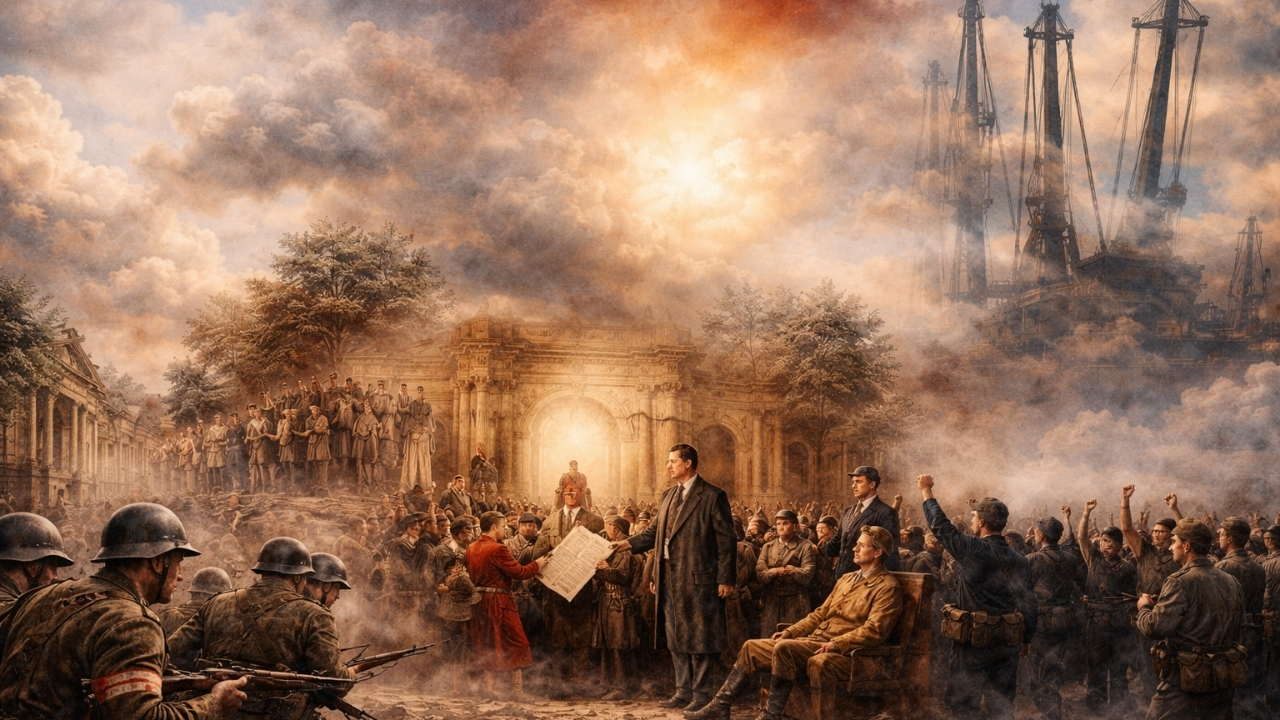
This day in the history of Poland is particularly dramatic — On May 12, 1926, Marshal Józef Piłsudski headed an armed coup that went into history as a May coup. Several days of street fighting in Warsaw consumed hundreds of victims on both sides of the conflict. Piłsudski took over actual power in the state, starting a period of sanitization. Exactly nine years later, on May 12, 1935, the same man left forever — Poland is in national mourning.
1941 – Konrad Zuse presents the first computer Z3
On May 12, 1941, an event took place in Berlin, which today can be considered one of the cornerstones of the digital era. Konrad Zuse publicly presented Z3 — the first fully operational and automatic computer with a variable program in the world. This machine worked in the dual system and used electromechanical relays. The paradox of history is that the revolutionary invention was created in the midst of war chaos, and its creator for a long time did not gain his rightful place in the pantheon of IT pioneers.
1944 – Polish assault on Monte Cassino
On that day in the history of General Władysław Anders, soldiers moved on to one of the most heroic attacks of World War II. On May 12, 1944, the Polish 2nd Corps launched an assault on Monte Cassino — a powerfully fortified hill in central Italy that blocked the Allied way to Rome. After several days of fierce fighting, on 18 May, Polish white-red flag hung on the ruins of the monastery. The victory was occupied by huge losses, but it included Poles for permanent in the pantheon of heroes of that era.
1983 – Beating Grzegorz Przemik
One of the most tragic episodes of martial law in Poland took place on May 12, 1983. Maturist Grzegorz Przemyk was detained and brutally beaten by MO officers at a police station on Jesuit Street in Warsaw. Two days later, on May 14, Barbara Sadowska's poet's son died in hospital due to injuries suffered. The case shook Polish society and became a symbol of impunity of the PRL violence apparatus. The death of a 19-year-old remained a painful wound in the collective memory of Poles forever.
2008 – Sichuan earthquake
One of the largest natural disasters of the early 21st century is recorded in the historical calendar on 12 May. A massive earthquake that struck the Chinese province of Sichuan consumed over 69 000 deaths and over 374,000 people were injured. The element completely destroyed entire towns, including numerous schools where children were present at the time of the disaster. The scale of destruction has touched the whole world and launched a global aid effort on an unprecedented scale.
2017 – WannaCry Global Cyberattack
What happened that day only a few years ago in the digital world? On May 12, 2017, a wave of ransomware attacks called WannaCry swept over the internet, which infected over 300 000 computers in 150 countries in several decades. Hackers blocked access to the data and demanded ransom in Bitcoin. Hospitals, banks, telecommunications companies and governments worldwide have suffered. The attack revealed to humanity how fragile the global digital infrastructure is and how serious cybercrime is.
2022 – First picture of a black hole in the center of the Milky Way
This day in the history of science deserves a unique place in every historical calendar. On 12 May 2022 astronomers from around the world published a landmark photo of Sagittarius A* — A supermassive black hole in the center of our galaxy. This object has a mass equivalent to four million solar masses and is approximately 27,000 light years from Earth. The photo was taken by a network of Event Horizon Telescope telescopes and confirmed what scientists have suspected for decades.
Born 12 May
Florence Nightingale (1820) – British nurse, pioneer of modern nursing and medical statistics, whose birthday became the basis for the establishment of the International Nurses Day celebrated on 12 May.
Gabriel Fauré (1845) – an outstanding French composer and organist, the creator of the famous Requiem, one of the leading representatives of romantic music and the precursor of impressionism.
Katharine Hepburn (1907) – legendary American actress, Oscar four-time winner for best female role, symbol of independence and class in the golden era of Hollywood.
Rishi Sunak (1980) – British politician of Indian origin, who in 2022 was the first Asian in history to assume the office of Prime Minister of Great Britain.
Tony Hawk (1968) – American skateboarder, who was the first man to perform 900 degrees in the trick competition on June 27, 1999, and his name became synonymous with skateboarding culture worldwide.
World events
113 – Sacrifice of Trajan Column in Rome – one of the best preserved monuments of ancient Rome, celebrating the victory of Emperor Trajan over the Dakas, stood officially that day and still adorns the center of the Eternal City.
1191 – The Wedding of Richard the Lion Heart in Cyprus – The King of England married in Limassol Berengaria of Navarra during the Third Crusade, in one of the most romantic and at the same time politically calculating wedding ceremonies of the Middle Ages.
1664 – Premiere of St.Molier in Versailles – Molier's famous moral comedy premiered in the gardens of Versailles, prompting huge controversy and becoming one of the most debated literary works of the era.
1932 – Finding the body of Charles Lindbergh's son – A body of a kidnapped and murdered 20-month-old son was found near the property of the famous pilot, which shocked the United States and led to one of the loudest criminal trials of the 20th century.
1949 – Berlin blockade end – The Soviet Union ended the blockade of West Berlin, which the Western allies broke thanks to the famous air bridge — one of the largest logistics operations in civil aviation history.
May 12 is a day that for centuries has been recorded in the books of history in an extremely diverse way — from the acts of the royal foundation and political revolutions, through heroic battles and scientific discoveries, to the digital cataclysms of our times. This is a perfect proof that each date hides in itself entire layers of stories that are worth discovering. Look at us tomorrow — Because what happened that day in May 13th history may surprise you just as much.