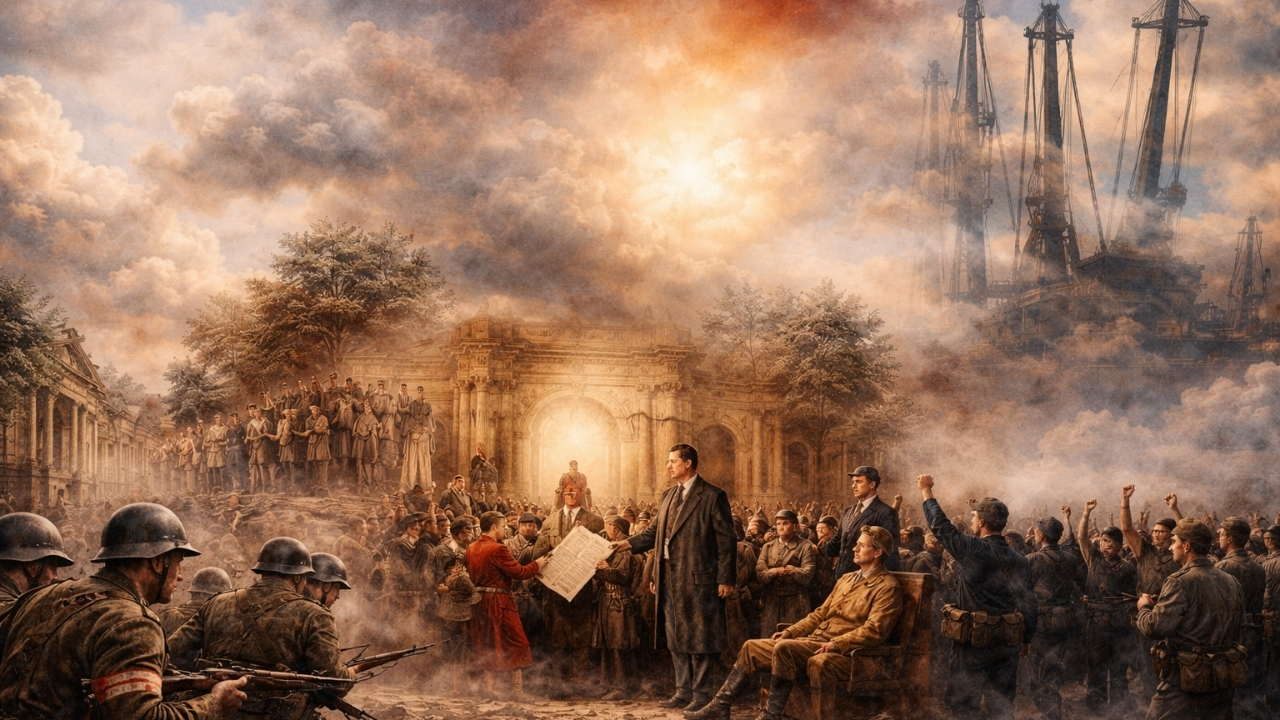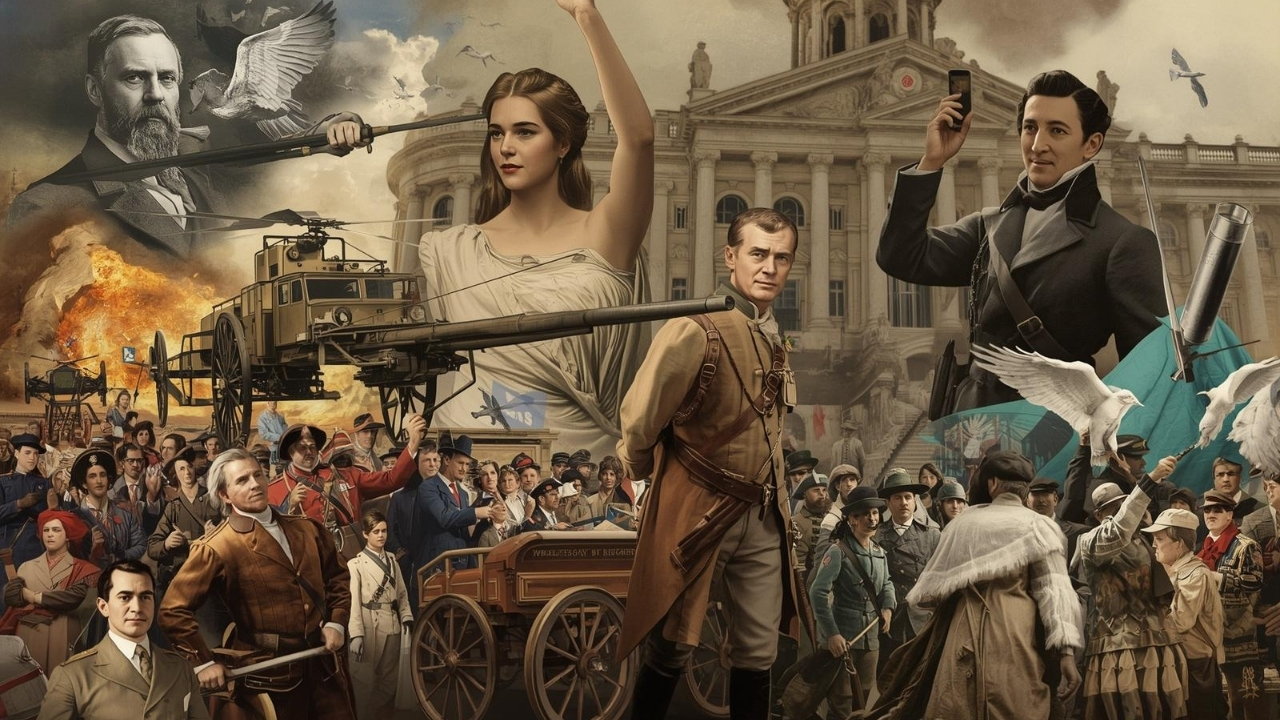
Have you ever wondered how many groundbreaking events can fit in one day? Looking through the historical calendar for May 23, it's hard not to be surprised — That day history wrote its pages extremely intensely, from dramatic battles through scientific discoveries to crimes and triumphs that changed the fate of entire nations. If you ever wondered what happened that day in history, you're in the right place. Prepare to travel for centuries.
What happened on May 23rd? Major events in history
1430 – Joanna d’Arc captured by the Burgundians
One of the most dramatic moments of the 100-year war was on May 23. Joanna d’Arc, a 17-year-old girl who managed to lead the French army to victories considered as miracles, fell into the hands of the Burgundians in an attempt to defend Compiègne. Her capture opened the way for a trial that ended in burning at the stake — Although today we know it was a political, not religious sentence. This day in history has put an end to her extraordinary military career.
1498 – The Death of Girolamo Savonaroli
The Florentine preacher who held the city in an iron grip of moral terror for several years ended his life in the same way that he himself condemned others. — in front of the crowd. Savonarola and his two companions were hanged and their bodies burned at the stake. The man who ordered us to burn books, works of art and mirrors became a victim of fire. — The irony of history is rarely so clear.
1618 – Prague Defense and the Beginning of the Thirty Years' War
Throwing out the window sounds like a comedy scene, but on May 23, 1618 it became the trigger of one of the most destructive conflicts in European history. The Habsburg MPs were literally thrown out of the Hradčany Castle window by Czech Protestants. Interestingly, all survived a fall from a height of several meters — Catholics claimed that their angels had saved them, and Protestants claimed that they had been saved by a pile of dung. The Thirty Years ’ War, which broke out after this incident, consumed millions of victims and mapped Europe.
1701 – Captain Kidd hung on gallows
The legend of piracy ended on May 23, 1701. William Kidd, known as Captain Kidd, was hanged for piracy — Although historians are still arguing whether he was a real pirate or a victim of political games and betrayal of principals, who themselves were not blameless. His alleged treasure was never found, which for centuries has ignited the imagination of adventurers around the world.
1814 – Beethoven's "Fidelia" premiere in Vienna
Beethoven wrote his only opera several times. — Literally. Fidelio underwent further versions and modifications before the final version of the work was premiered in Vienna on May 23, 1814. The opera tells of a brave woman who saves her imprisoned husband, disguised as a man — The subject of freedom and justice was particularly present in the Napoleonic era. Today, Fidelio is considered one of the symbols of the music of Romanticism and the humanistic ideals of the era.
1863 – Establishment of the SPD and the fall of the Provisional National Government
This day in history proved significant at the same time on both sides of the barricade. In Germany, the Social Democratic Party of Germany was established on 23 May 1863. — SPD, one of the oldest still active political parties in the world, which is still shaping European policy. Meanwhile, the Provisional National Government collapsed in Poland on the same day, which meant a serious weakening of the command structures of the January uprising. History likes to write opposing chapters on the same day.
1934 – The Death of Bonnie and Clyde
A pair of criminals whose names became synonymous with romantic, desperate crime died on May 23, 1934 in a police ambush in Bienville Parish, Louisiana. Bonnie Parker and Clyde Barrow terrorized the South of the United States for two years with robberies and murders. Their deaths — The bodies were literally holed with bullets by officers waiting in hiding — She was brutal and ruthless, although Hollywood for decades portrayed them as tragic rebel lovers. The historical calendar is full of irony, but this one belongs to the most bitter.
1980 – Premiere of Stanley Kubrick's Shining
One of the most influential horror movies in the history of cinema debuted on screens on May 23, 1980. Stanley Kubrick based on Stephen King's novel created a work that is still being analyzed, cited and imitated today — The famous scene with an axe and the sentence "Here's Johnny!" entered pop culture permanently. The irony of fate is that King himself repeatedly admitted that he did not like Kubrick's adaptation — which did not prevent the film from becoming a canon of the genre.
1992 – Assault on Justice Giovanni Falcone
On May 23, 1992, the Italian mafia made one of the most spectacular assassinations in the history of fighting organised crime. Investigative judge Giovanni Falcone, who spent years building unprecedented indictments against Cos Nostra and led to the conviction of hundreds of its members, died in an explosion of a bomb planted under a highway near Capacia, Sicily. His wife and three bodyguards lost their lives with him. His death shook Italy and paradoxically accelerated the state's action against the mafia.
2021 – The forced landing of Ryanair in Belarus
One of the most controversial aviation events of recent years took place on May 23, 2021. The Ryanair aircraft flying from Athens to Vilnius, almost at the border of Lithuanian airspace, was forced by the Belarusian fighter to crash landing in Minsk. The pretext was an alleged bomb alert and the real target — arrest aboard opposition journalist Raman Pratasiewicz, co-founder of the NEXTA channel. The event sparked an avalanche of sanctions against Belarus and a lively debate on aviation safety and the limits of authoritarianism.
Born 23 May
Charles Linnaeus (1707) – Swedish naturalist, creator of modern biological taxonomy and species naming system used by scientists around the world.
Maria Konopnicka (1842) – Polish poet, novelist and journalist, author of "Rota" and "About the Dwarves and Orphan Marysi", one of the most important figures of Polish literature in the late 19th and 20th centuries.
Joan Collins (1933) – British actress, glamour icon and symbol of elegance of several decades, known primarily for the role of Alexis Carrington in the series "Dynasty".
Anatoli Karpov (1951) – Russian chess grandmaster, longtime world champion and one of the greatest chess players in history, known for its iron precision and strategic genius.
Dawid Podsiadno (1993) – Polish vocalist and songwriter, winner of the popularity thanks to the program "X Factor", today one of the most recognizable and award-winning music artists in Poland.
World events
1430 – Seize Joanna d’Arc – While trying to free Compiègne Joanna d’Arc fell into the hands of the Burgundians, which started her way to the stake.
1618 – Prague Defense – Throwing the Habsburg MPs out the window of the castle in Hradčany became a direct trigger of the Thirty Years' War.
1863 – Establishment of SPD "In Germany, the Social Democratic Party of Germany was established, one of the longest-running political parties in the world.
1949 – The uprising of the Federal Republic of Germany "With the entry into force of the Basic Act of 8 May, the German Federal Republic was officially established, which opened a new chapter in the postwar history of Europe.
1992 – Giovanni Falcone's assassination – The famous Italian investigative judge died in a bomb explosion planted by the mafia under the highway near Capacia, Sicily.
Looking at what happened that day in history, it's hard not to feel that May 23 is a special date — collects events that have changed the course of history, shaped cultures and forever entered into the collective memory of humanity. From the capture of Joanna d’Arc by the birth of SPD to assassinations, film premieres and dramatic arrests — This one day turns out to be a condensed history lesson. Come back tomorrow because the historical calendar for May 24 brings another surprising discovery.