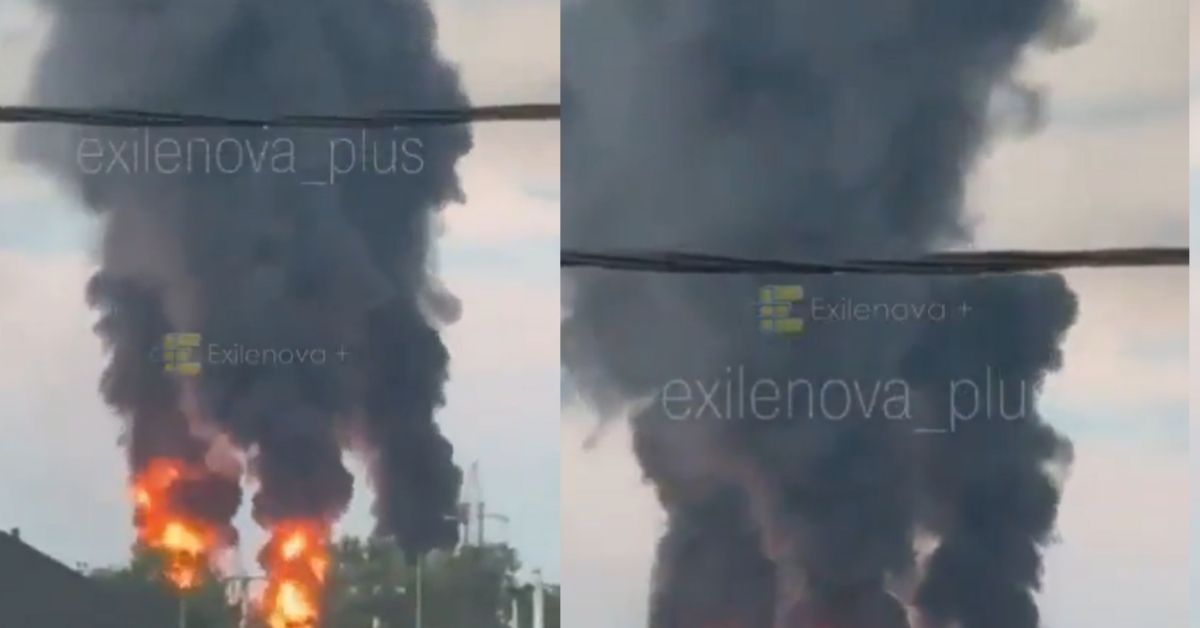
Ukrainian drones hit the heart of Russian fuel logistics again. On the night of 24 to 25 June 2026, a fuel distribution base in Poltavska was ignited in the Krasnodar area. This is the third attack on the same object in a month. The fire covered several reservoirs, and the inhabitants of the region feel the effects of the growing fuel crisis again.
Why is Poltavskaya so important?
This base is no ordinary warehouse. "Poltava Paliw Base" stores and distributes petrol, diesel and other petroleum products to gas stations in the Krasnodar Region and the Republic of Adigea. The property has 28 tanks with a total capacity of nearly 15,000 cubic metres. It provides fuel to both civilians and – crucially – supports military logistics in southern Russia.
Russian authorities traditionally explain the fire "falling remains of shot down drones". Meanwhile, images and recordings from the area show burning tanks and dense smoke – a classic picture of effective impact.
The third time in a short time
- First attack (16 June) – fire after "falling remains".
- Next – including June 25, when at least three tanks caught fire.
- Effect? The region is struggling with fuel shortages at stations, and Russia needs to look for detours and imports to fill gaps.
It's not a single incident, it's a systematic back pressure. Ukraine consistently attacks refineries, bases and terminals that power the war machine.
How does Russia react?
Despite the assurances of the "no casualties" and the rapid action of the guards, the fires are extinguished with difficulty. Krasnodar lies relatively close to the front (about 300-400 km), making it easier for drones to reach their destination. The Russians reinforce anti-aircraft defense, but drones continue to penetrate systems.
What's next?
Attacks on fuel infrastructure show how war evolves. Ukraine does not have to destroy everything right away - it is enough to regularly annoy life and raise the cost of conducting activities. Each such fire is not only smoke over Krasnodar, but also a real blow to Russian economy and logistics.