
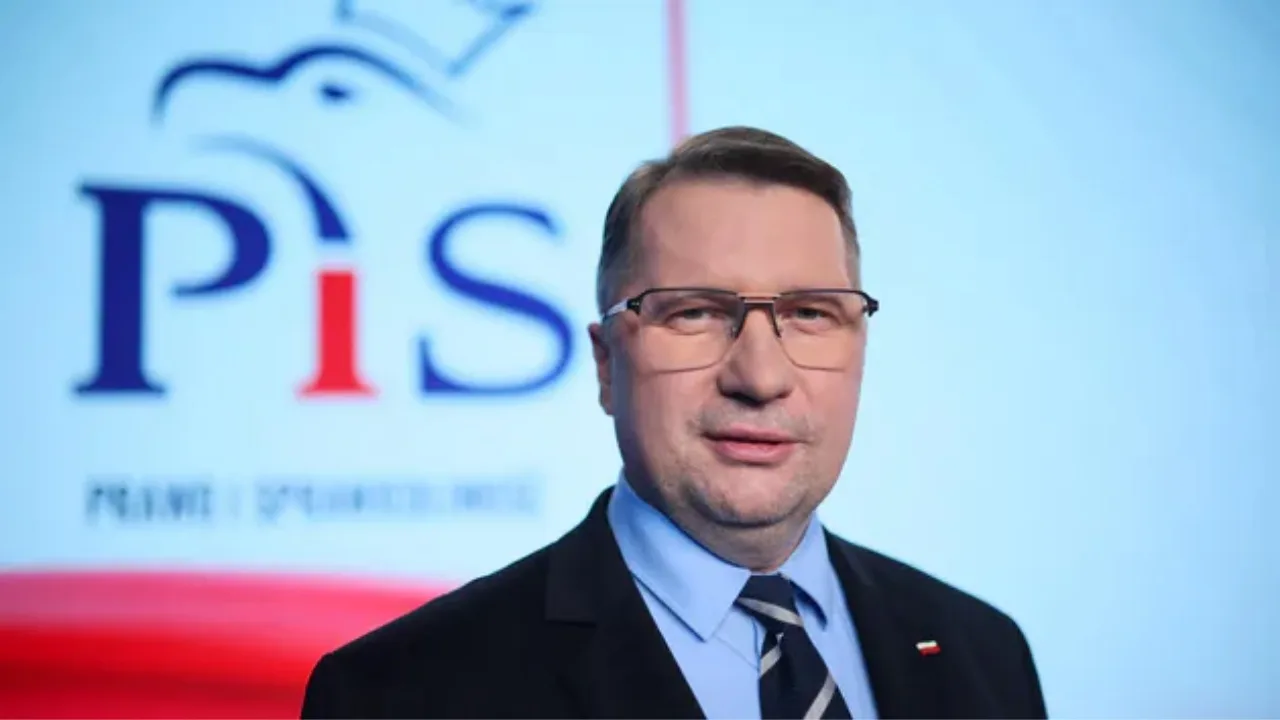
On 7 March 2026 in Kraków, during the Law and Justice (PiS) convention under the slogan „Czas Polski. Program Polaków” (“Poland’s Time. The Poles’ Programme”), Jarosław Kaczyński announced the decision awaited by the entire Polish political scene. The PiS candidate for prime minister in the parliamentary elections scheduled for 2027 is Przemysław Czarnek.
A former minister of education and science, a vice-chair of the party and one of the most outspoken and recognisable politicians on the right in recent years, he is now set to lead PiS to victory and become head of the next government. Kaczyński’s decision ends weeks of speculation and closes a period of uncertainty about the direction the party intends to take.
A radical shift to the right and a clear message
The choice of Przemysław Czarnek is interpreted almost unanimously as a clear signal that PiS’s message is radicalising. Political scientists and commentators agree that the party is betting on a confrontational style, sharp ideological rhetoric and an attempt to win back voters drifting towards the Confederation – both its more libertarian and its national-Catholic wing.
In his first speech after announcing his candidacy, Czarnek left no doubt about the tone of the months and years ahead. He spoke of a “normal, real Poland”, the need to defend national sovereignty and the threats posed by the “overt German option”, which he claimed was supposedly steering the current government of Donald Tusk. These words – as well as the now-famous phrase “empty head” aimed at the current prime minister – triggered immediate, highly polarised reactions in the media and on social networks.
Who is Przemysław Czarnek?
The 48-year-old politician from Lublin has risen within PiS from voivode of Lublin Province (2015–2019), through head of the education and science ministry in the second government of Mateusz Morawiecki (2020–2023), to one of the party’s key faces in the current term. He is known for very conservative views on moral and social issues, decisive criticism of “LGBT ideology” and the promotion of patriotic education based on traditional values.
His nomination is generating enthusiasm among the most hardline PiS electorate and circles associated with Father Rydzyk’s media. At the same time, it is causing deep concern among moderate party sympathisers and centre-right commentators, who fear this choice could definitively close PiS’s path to a broader centrist electorate.
Internal calm at the price of risk?
Many analysts believe Kaczyński’s decision was primarily meant to calm internal tensions within the party. After a series of electoral defeats (presidential and parliamentary) and the departure or marginalisation of several important figures, Czarnek’s selection gives the “maślarze” (the most ideological wing of PiS) a clear advantage and a sense that their voice has been heard.
The question is whether this consolidation of the hardline electorate will be enough to win the 2027 election. Polls from early 2026 show PiS clearly behind the Civic Coalition (KO), and the radicalisation of its message could at the same time deter moderate voters and strengthen the Confederation as a rival on the right.
What next?
Przemysław Czarnek promises to be the “driver of a great train” that is about to set off upwards. His campaign will most likely rest on slogans of sovereignty, defence of the traditional family, the fight against “leftist ideology” and the rebuilding of a strong national state. Whether this strategy proves effective will be shown in the next year and a half.
One thing is certain: Polish politics has just entered a new, very intense and highly polarised phase. As a candidate for prime minister, Przemysław Czarnek leaves no room for half-measures – either on the side of PiS or on the side of its opponents.