The 100 ml liquid limit for carry-on bags no longer applies at Kraków Airport. You can now take bottles of up to 2 litres, and screening is 30 percent faster.
Revolution at Kraków Airport: No More Liquid Limits
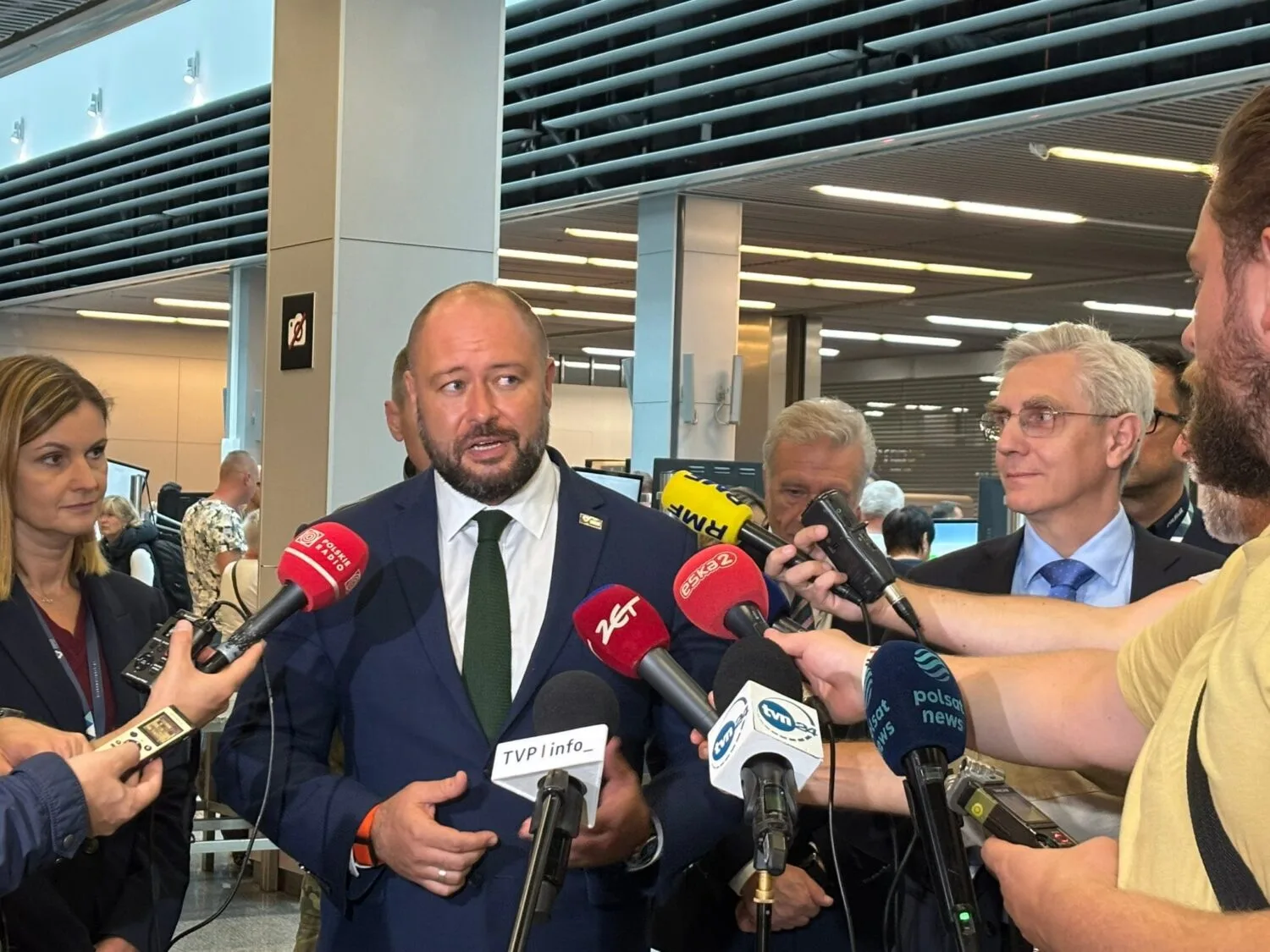
Kraków Airport is the first airport in Poland to lift the restrictive 100 ml liquid limit for carry-on bags, thanks to the deployment of modern CT scanners. This change makes travel more convenient, speeds up screening, and means passengers no longer have to decant cosmetics or drinks into miniature containers.
How Does the New Technology Work?
CT Scanners Working for Passengers
The new generation of CT scanners uses computed tomography to create detailed 3D images of the contents of a bag. This allows security staff to analyse its contents faster and more effectively, detecting dangerous items without the need to remove electronics or liquids.
- Liquids can be carried in containers of up to 2 litres (e.g. water, cosmetics, perfume).
- There is no need to remove laptops, phones or cosmetics during screening.
- Screening time per person has been cut by as much as 30 percent, and even at peak times it usually does not exceed 10 minutes.
What Does This Change Mean for Travellers?
For passengers at Kraków Airport, travel will become more comfortable and less stressful. The previous restrictions were a source of frustration, especially when packing for holidays or short city breaks. Now, even on hot days, you can freely take your favourite drink without the tedious business of decanting it into small containers.
Example: If you buy water before the security check, you no longer need to throw it away or pour it out. Simply put the bottle in your suitcase and go through checks.
When and Where Do the New Rules Apply?
The changes took effect on 3 September 2025 and apply to all screening points equipped with CT scanners. At Kraków Airport, three checkpoints with older equipment temporarily remain in use – the limit still applies there, but they are only used in emergency situations.
Does the Lifting of Limits Apply in Both Directions?
It is worth remembering that the rules lifting the 100 ml liquid limit at Kraków Airport apply only to departures from Kraków – on the return journey, the situation depends on the airport in the country you are returning from. If your destination airport (e.g. abroad) does not yet use modern CT scanners, the old rules apply there and the limit remains 100 ml per container. For your own convenience, it is worth checking the current regulations at your departure airport before your return trip – for example, in many EU countries the introduction of new standards is still underway, and you cannot count on the same freedom to carry liquids as in Kraków everywhere.
Where in Europe Are There No Limits?
Below is a list of airports in Europe where modern CT scanners have been introduced and the 100 ml liquid limit for carry-on bags has been lifted – you can carry liquids of up to 2 litres:
Airports Without a Liquid Limit
- Kraków Airport (Poland) – the first airport in Poland with full implementation of the system
- Poznań Ławica (Poland) – equipment installation completed, liquid limit lifted
- Berlin Brandenburg (Germany) – selected checkpoints with the new technology
- Amsterdam Schiphol (Netherlands) – being introduced gradually in parts of the terminals
- Milan (Italy): Linate, Malpensa T1 – full application of the new rules
- Rome Fiumicino (Italy) – all terminals without a limit
- Bologna (Italy) – implementation completed
- Turin (Italy) – Fast Track without a liquid limit
- Birmingham (United Kingdom) – limit lifted from July 2025
- Edinburgh (United Kingdom) – limit lifted from July 2025
Airports Planning to Lift the Limits
- Warsaw Chopin (Poland) – implementation planned by the end of 2025
- London City and Gatwick (United Kingdom) – system in the testing phase
Check the current situation before you travel – not all airports have yet implemented the new rules at all screening points.
Kraków Airport is setting a new standard for air travel – a genuine revolution for all passengers, showing how technology can simplify everyday matters and make journeys simply more pleasant.