

The Sejm has voted to ban fur farming. The bill now goes to the Senate and then to the president for signature. The final stage is ahead, and it could permanently transform Poland’s fur industry.
Fur Farming Ban: What Will Change?
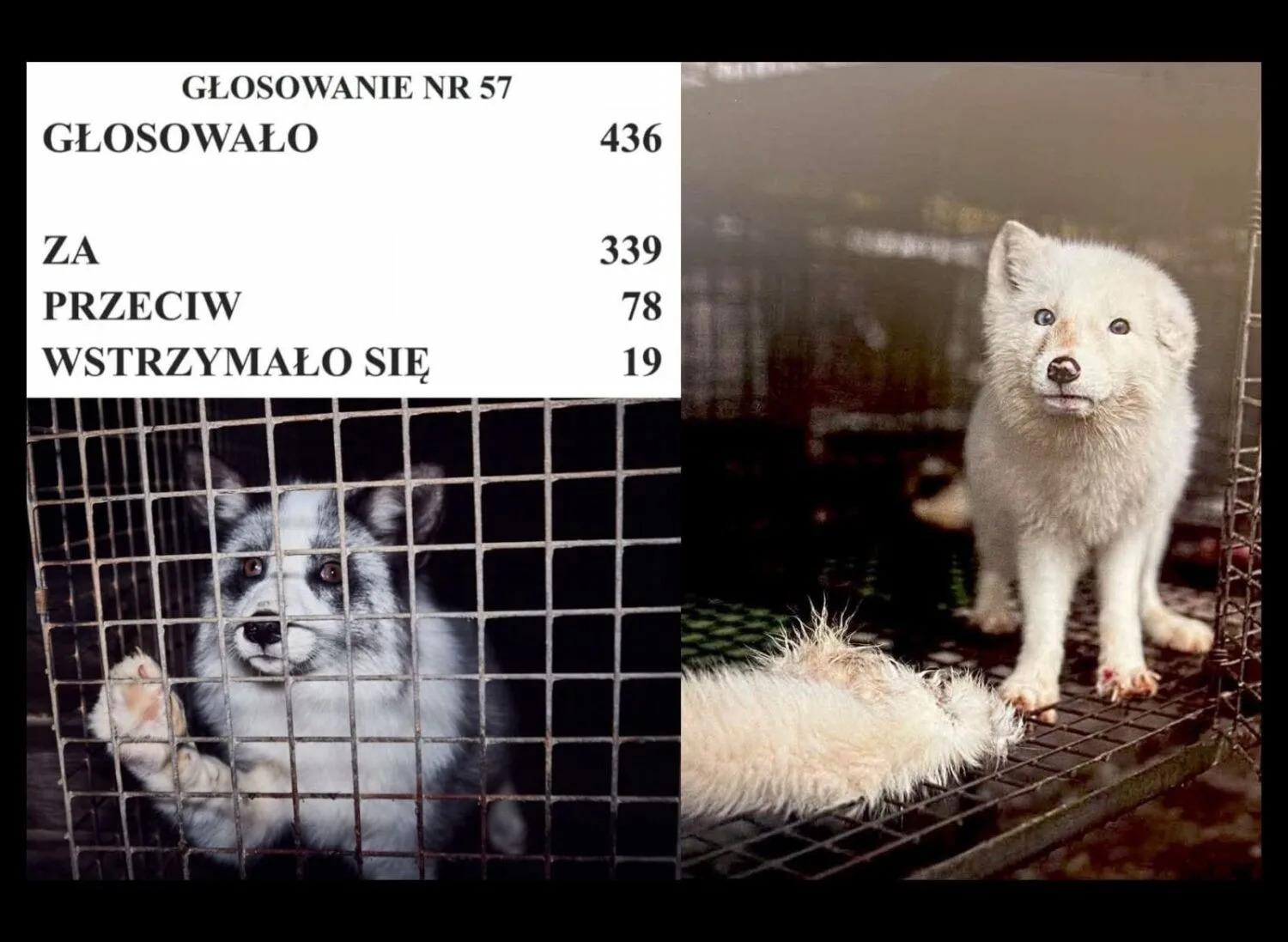
The regulation banning fur farming was backed by as many as 339 deputies, with only 78 votes against and 19 abstentions. The law excludes rabbits from the absolute ban and introduces a schedule for phasing out fur farm operations. Businesses have until the end of 2033 to close their farms, while those that end operations sooner, by 2031, may expect higher compensation. The law provides a compensation system for breeders, dependent on the date on which operations end.
Arguments for the Fur Farming Ban
The decision to ban fur farming was based on several key considerations:
- Protecting animal welfare and eliminating suffering in farming.
- Social support: over 70% of Poles back the ban on fur farming.
- Ecological and social benefits for residents of rural areas.
- Changing fashion trends: synthetic fur and other alternatives are becoming increasingly popular.
Vote and Political Divisions
Deputies from the Civic Coalition (KO), Law and Justice (PiS), the Polish People’s Party (PSL), Poland 2050 and the Left voted for the bill. Opponents included, among others, representatives of Confederation and some PSL deputies. During the parliamentary debate, arguments were made that fur production is no longer a „product of first necessity” and is sometimes seen as a whim at the cost of animal suffering.
What Next for the Bill? Legislative Stages
After the Sejm vote, the bill goes to the Senate. If the Senate approves it and the president signs it, it will take effect within the coming months. The legislative path is straightforward:
- Senate vote.
- Presidential signature.
- Publication in the Journal of Laws (Dziennik Ustaw). The law will take effect after 14 days.
Possible Scenarios for the Fur Industry
Fur farms, once a powerful sector in Europe, have eight years ahead of them to end operations. For businesses, this is time to transform their operations, change their production profile or look for new solutions. This is the new reality for an industry that, as recently as a decade ago, had a huge impact on exports.
Who Gains, Who Loses?
Key assumptions of the bill banning fur farming:
| Group | Impact of the law | Comments |
|---|---|---|
| Breeders | Phasing out farms by 2033 | Compensation for closing earlier |
| Residents | Better living and environmental conditions | Fewer nuisances, fewer conflicts |
| Consumers | Greater availability of alternatives | Development of synthetic fur |
| Animals | End of fur farming | Reduced suffering |
A Signal of Civilisational Change
The new law is not only a political or economic matter. It is a signal that Poland is following a civilisational trend in which animal welfare and new ethical values are gaining importance. The industry had for years faced a growing backlash: a large part of society did not accept fur farming, and changes at the international level accelerated the decision in Poland. Now everything depends on the upcoming Senate votes and the president’s decision.
An Example from Europe
Poland is about to join more than 20 countries that have introduced similar restrictions (including Germany, the Czech Republic and the Netherlands), showing that animal protection can be reconciled with support for entrepreneurs.
The Sejm’s decision to ban fur farming is a historic step, supported by most citizens and a broad political coalition. Although the fur industry will disappear, breeders will receive support to transform their businesses, and Poland will begin a new chapter in animal welfare standards.