

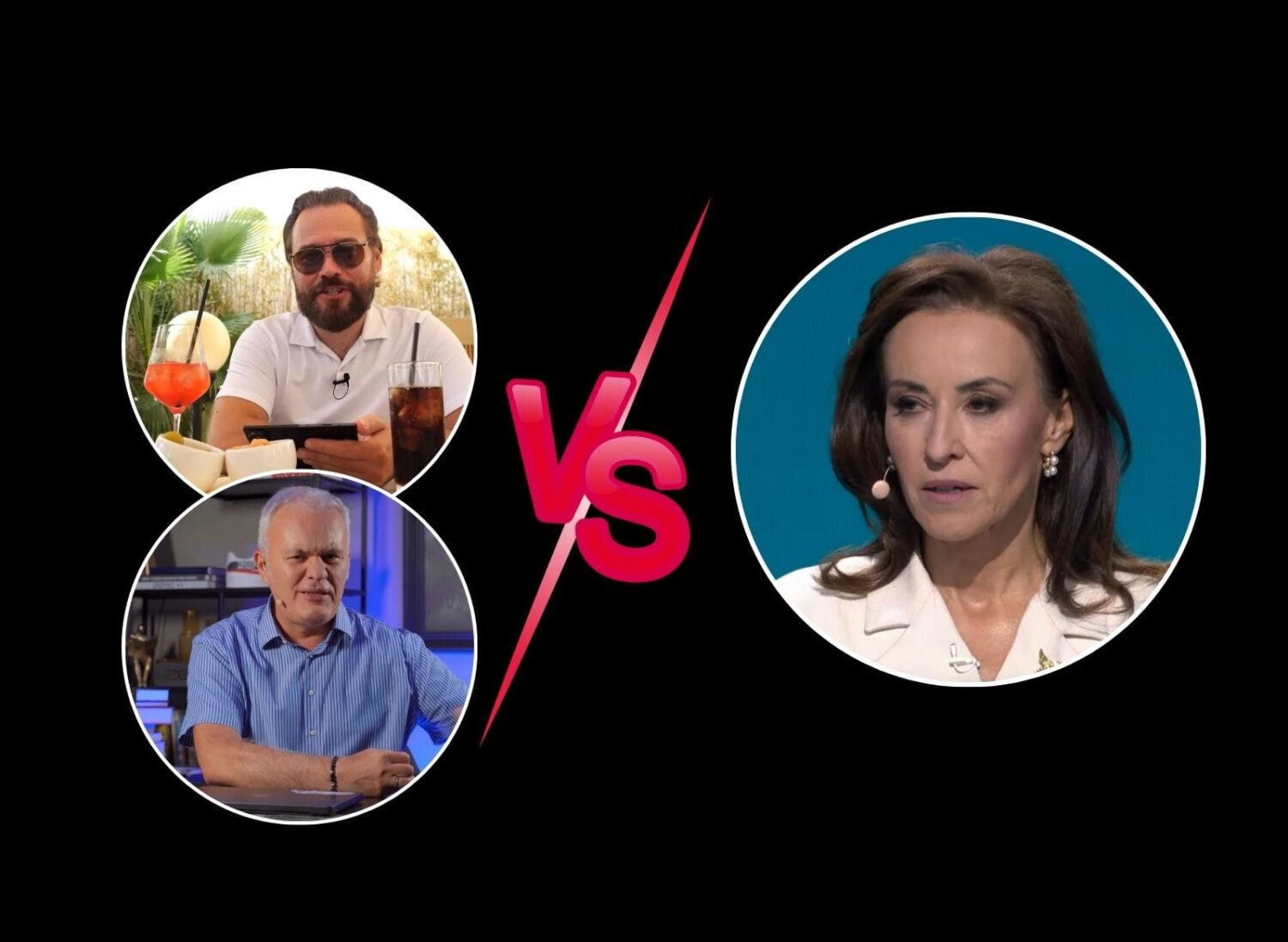
The Polish media and political scene is in turmoil once again. Journalist Dorota Wysocka-Schnepf, known for her work at Telewizja Polska (TVP), has obtained a court injunction barring Krzysztof Stanowski, Robert Mazurek and the company Kanał Zero from publishing content that links her and her son to communist crimes, including the Augustów Roundup. The dispute erupted after Schnepf posted triumphantly on the platform X: “Karma is coming back.” Is this the end of the debate over family history, or rather the start of a bigger storm? We take a closer look at the details of this high-profile affair.
What Happened? Details of the X Post and the Court Decision
On 28 November 2025, Dorota Wysocka-Schnepf published photos of a ruling by the Warsaw District Court on her account on X (formerly Twitter). The post was addressed directly to Krzysztof Stanowski, founder of the popular YouTube channel Kanał Zero: “How did it go, Mr @K_Stanowski? ‘Your only task is to shut up’? That’s how you harassed me? Karma is coming back. Now it is you who has to be silent. About me. And about my child too. And add the appropriate information to your libels. Immediately. The court issued an injunction. The case is ongoing.”
The post quickly drew hundreds of reactions, including likes, reposts and comments. On 20 November 2025, the court, presided over by delegated judge Ewa Breś, granted an interim injunction protecting the claims of Schnepf and her son Maximilian. The decision prohibits the defendants (Stanowski, Mazurek and Kanał Zero) from publishing content that:
- Associates Dorota Schnepf with communist crimes, including those committed during the Augustów Roundup.
- Describes her as an “archpriestess of propaganda.”
- Concerns the choice of the first name of Maximilian Schnepf and content that links this name with his grandfather.
The injunction is valid for one year from the date of the ruling. In case of violation, a fine of up to 15,000 zloty may be imposed for each breach. The main case seeking a prohibition, an order and payment is still pending in court.
Who Are the Main Characters of This Story?
To understand the context, it is worth looking at the key figures:
- Dorota Wysocka-Schnepf: An experienced journalist associated with Telewizja Polska. Wife of Ryszard Schnepf, former Polish ambassador to the USA. Her father-in-law, Maksymilian Sznepf, is a controversial figure linked to the history of postwar Poland.
- Maximilian Schnepf: Son of Dorota and Ryszard, named after his grandfather. The case also concerns the protection of his personal rights.
- Krzysztof Stanowski: A sports journalist and creator of Kanał Zero, one of the most popular YouTube channels in Poland, with millions of subscribers. The channel is known for sharp political and social commentary, often criticizing the establishment.
- Robert Mazurek: A journalist who hosts programmes on RMF FM and other media. He often collaborates with Stanowski.
The conflict likely stems from Kanał Zero materials that addressed the Schnepf family history, linking it to events of 1945.
The Augustów Roundup – What Was This Crime?
The Augustów Roundup, also called the “Little Katyn,” was one of the largest Soviet crimes against Poles after the Second World War. In July 1945, NKVD units, supported by Polish units of the People’s Polish Army (LWP) and the Polish Security Service (UB), encircled the Augustów Forest. More than 7,000 people suspected of anti-communist activity were detained. About 600 of them disappeared without a trace and are believed to have been murdered.
Among those involved in the operation was Colonel Maksymilian Sznepf, commander of LWP units in the Suwałki region. According to historians at the Institute of National Remembrance (IPN), Sznepf (father of Ryszard Schnepf and father-in-law of Dorota) was one of the officers responsible for the arrests. His role in the roundup is documented in archives, although in later testimony he claimed he remembered nothing.
This historical trauma still stirs emotions in Poland, especially in the context of settling accounts with communism. Materials linking Dorota Schnepf to this matter appeared on social media and in Kanał Zero programmes, which prompted her to take legal action.
Online Reactions: The Streisand Effect in Action?
Schnepf’s post sparked a flood of comments. Many internet users point to the so-called Streisand effect, the phenomenon in which an attempt to censor information leads to its even wider spread. Sample reactions:
- “Haha, I guess the lady doesn’t know what the Streisand effect is. I think the views on the video with the archpriestess will go up nicely” – wrote one user.
- “Bravo! No one in recent years has contributed as much as you have to spreading the truth about a communist crime” – another user wrote ironically.
- Commenters stress that thanks to the injunction, more people will learn about the role of Maksymilian Sznepf in the Roundup.
At the time of publication, the post had gathered over 7,000 views, 248 likes and 98 comments. The affair has become viral, fueling a debate about freedom of speech versus the protection of personal rights.
What's Next? Implications for Media and Politics
This court decision raises questions about the limits of freedom of expression in Poland. On the one hand, it protects privacy and good name; on the other, it may be seen as an attempt to censor historical facts. Krzysztof Stanowski has not yet publicly commented on the matter, but knowing his style, a response on Kanał Zero can be expected.
The case is moving forward, and its outcome may influence similar conflicts in the media. Is this the end of attacks on the Schnepfs, or only the beginning of a broader discussion about the legacy of communism? Stay tuned for further developments – in the age of social media, nothing stays hidden for long.
Update: Stanowski's Response
Krzysztof Stanowski commented on Dorota Wysocka-Schnepf’s post in his typical style. He did not address it on the merits, instead going on the offensive and mocking the whole situation:
He even launched a contest for a new term describing Ms Schnepf’s activity, referring to the court ban on using the phrase “archpriestess of propaganda”:
Update from Dorota Wysocka-Schnepf
Journalist Wysocka-Schnepf responded to Krzysztof Stanowski’s replies.
She accused PiS politicians of getting involved in the conflict on Stanowski’s side.




Może dziennikarze zapytają naukowców prawnych, czy to tak powinno wyglądać?
No i teraz każdy wie, że Stanowski i Mazurek nie mogą mówić, że Dorota Schnepf to arcykapłanka propagandy.
Tak, już ogłosił konkurs na nowy pseudonim dla “arcykapłanki propagandy”
UberKapłanką
I jeszcze tak pięknie po Niemiecku 🇩🇪 brzmi 😂