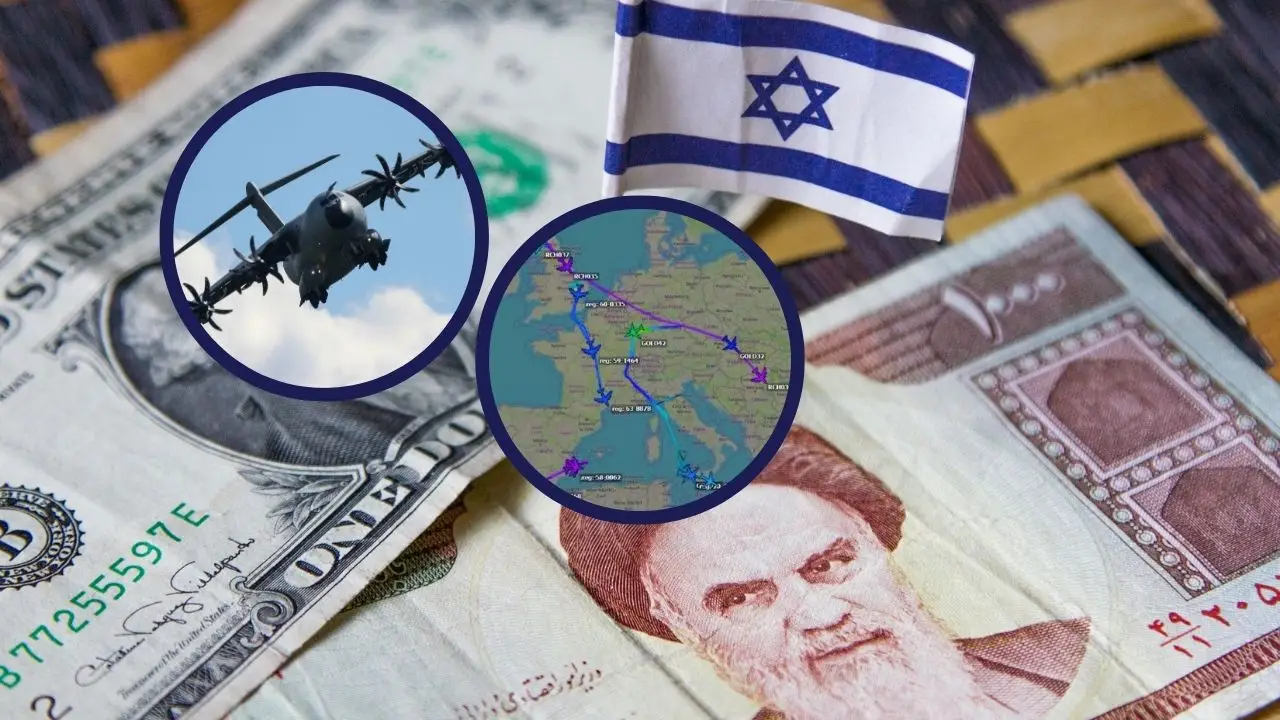
The recent movements of the US troops have sparked a wave of speculation: will the Americans join Israel's war with Iran? The transfer of tankers and aircraft carrier to the Middle East raises questions about the future of the conflict and the role of the US in the region.
American tankers and aircraft carriers – showing strength or preparing for war?
In recent days, massive shipments of U.S. refuelling aircraft have been observed – over 20 KC-135 and KC-46 machines – from the US to Europe and the Middle East. At the same time, the USS Nimitz aircraft carrier strike group is heading from Asia to the Middle East, which is officially intended to provide the US President with "options" in the face of the escalation of the Israeli-Iranian war.
Provide logistical and refuelling support for possible air operations over Iran.
Increase preparedness for rapid response to potential threats.
Diplomatic pressure and a show of force against Iran.
Preparation for Iran's closure of the Ormuz Strait, which would threaten global oil supply.
Trump calls for evacuation from Tehran
In the face of an increasing conflict between Israel and Iran, U.S. President Donald Trump caused a stir, calling on the people of Tehran to evacuate immediately. In a series of entries on the Truth Social Trump platform, he stressed that Iran should have accepted the nuclear agreement, and further escalation threatens with tragic consequences. His warning came just after the Israeli military called on some of the people of Iran's capital to leave the city before planned military attacks. Trump's hard rhetoric and the suggestion of evacuation of nearly 10 million metropolises show how serious Washington is about the threat of further escalation of the war in the region.
Iran should have signed the contract I had them sign. What a shame and a waste of human life. Simply put, IRAN CAN'T HAVE NUCLEAR HARD. I kept saying that! Everyone should evacuate Tehran immediately!
Will the United States join the war on the side of Israel?
Washington official position
President Donald Trump's administration made it clear to allies in the Middle East: the US does not plan to actively participate in the Israeli war with Iran unless Iran directly attacks US troops or interests. Americans are mainly helping Israel capture missiles fired by Iran, but do not engage in offensive actions against Tehran.
Red line: attack on Americans
The key "red line" is the safety of American soldiers and bases in the region. If Iran decides to directly attack US targets, Americans can respond militarily. For now, however, Iran has avoided such action, fearing that the United States would be drawn into war.
Israel is counting on support, the US remains cautious
Israel formally asked the US to join the strike campaign against Iran's nuclear program, arguing that it does not have bombs capable of destroying deep hidden installations6. However, the White House consistently refuses to participate in the offensive, limiting itself to defensive support.
What's next? Possible scenarios
Maintaining the current policy: The U.S. continues to support Israel in defense, but does not engage in attacks on Iran.
Escalation on Iran's side: If Iran attacks American targets, the U.S. could enter the war.
Diplomatic pressure: The presence of US forces is designed to discourage Iran from escalating and prompting the parties to negotiate.
Although the movements of U.S. tankers and ships to the Middle East look dangerous, the U.S. is not planning to participate directly in Israel's war with Iran. Iran's behavior will be crucial – until it attacks American interests, Washington remains out of conflict, although ready to react quickly if necessary.
Tomasz Kamiński, editor of DigitalNexus.pl. She deals with show-business and entertainment. He graduated from journalism and medioscience at the University of Warsaw. In his spare time, he plays games, is a Call of Duty fanatic. He has been writing about games since 2008.