US company Radical Numerics announced that bacteriophages designed with the help of its Omnii-1 AI model were administered to a patient with an antibiotic-resistant infection. The treatment results have not been disclosed, and the research has not yet undergone scientific peer review.
The company announced the case on Tuesday, October 20, on its blog. It wrote that the designs generated by Omnii-1 were given to a patient infected with an antibiotic-resistant bacterium as part of an authorized, physician-supervised “compassionate use” pathway, meaning access to experimental therapy outside a clinical trial. A description can be found in the Radical Numerics report. This is the company’s own statement, not a publication in a peer-reviewed journal.
How the therapy works
Bacteriophages are viruses that attack only specific bacteria, not human cells. In typical phage therapy, doctors take a sample of bacteria from the patient and then search large collections of phages for one that kills it. This usually takes several weeks.
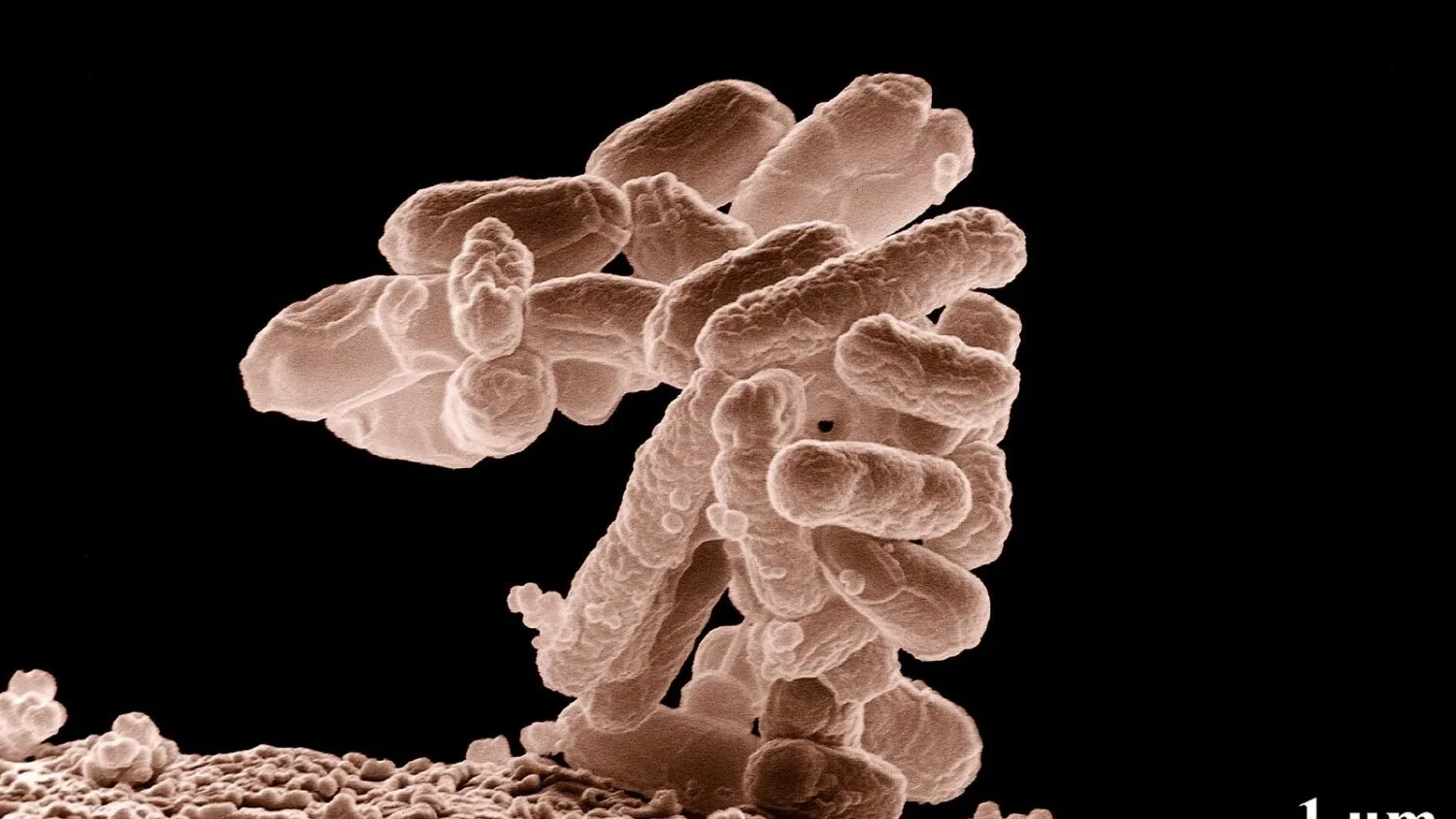
This time, as the company describes it, the AI model was used to design variants of phage T7, which attacks Escherichia coli (E. coli). The gene code for the tail fibers of the virus, which it uses to attach to bacteria, was changed. According to the company, the rest of the genome remained unchanged. The report states that a mixture of the variants destroyed a strain isolated from the patient in the laboratory. Only then was it administered to the patient.
What is not known
Radical Numerics has not disclosed whether the treatment worked or who the patient is. As Polsat News reports, citing the New York Times, the company’s CEO Eric Nguyen announced that results would be published in a peer-reviewed journal and that he would not disclose treatment details without the patient’s consent. It was also not stated at which hospital the patient was treated.
Independent scientists are taking a cautious approach. According to the NYT, Michael Baym, a microbiologist at Harvard University, said his first reaction was skepticism and that he would withhold judgment until the end of the therapy. The company itself acknowledges that the effectiveness and safety of such treatment have not been confirmed.
The company also presented results of computer tests: for 92.1% of qualifying E. coli strains, which were excluded from the training data, an active phage was among the model’s two top recommendations. These are the manufacturer’s data, without independent verification.
Background: antibiotic resistance
Phage therapies are returning to favor due to growing bacterial resistance. According to forecasts published in The Lancet, cited by Polsat News, infections caused by drug-resistant bacteria could be responsible for nearly 40 million deaths worldwide between 2025 and 2050. Earlier cases of phage treatment, including those described in medical literature, involved natural or selected phages, not ones designed by an algorithm.
If the approach proves successful, matching a drug to a specific infection could take days rather than weeks. For now, this is only an announcement. Because this concerns a single patient, it is not known whether the method is safe and effective.
What it means for readers in Poland
For patients in Poland, nothing changes for now: the therapy is not registered or available in any country, and permission for its use was granted in the US under an exceptional procedure. Standard treatment of infections still relies on antibiotics prescribed by a doctor. Among unrelated epidemic threats, we recently wrote about the first detection of the Shamonda virus in a human. That is a completely different matter from phages, which do not infect humans.