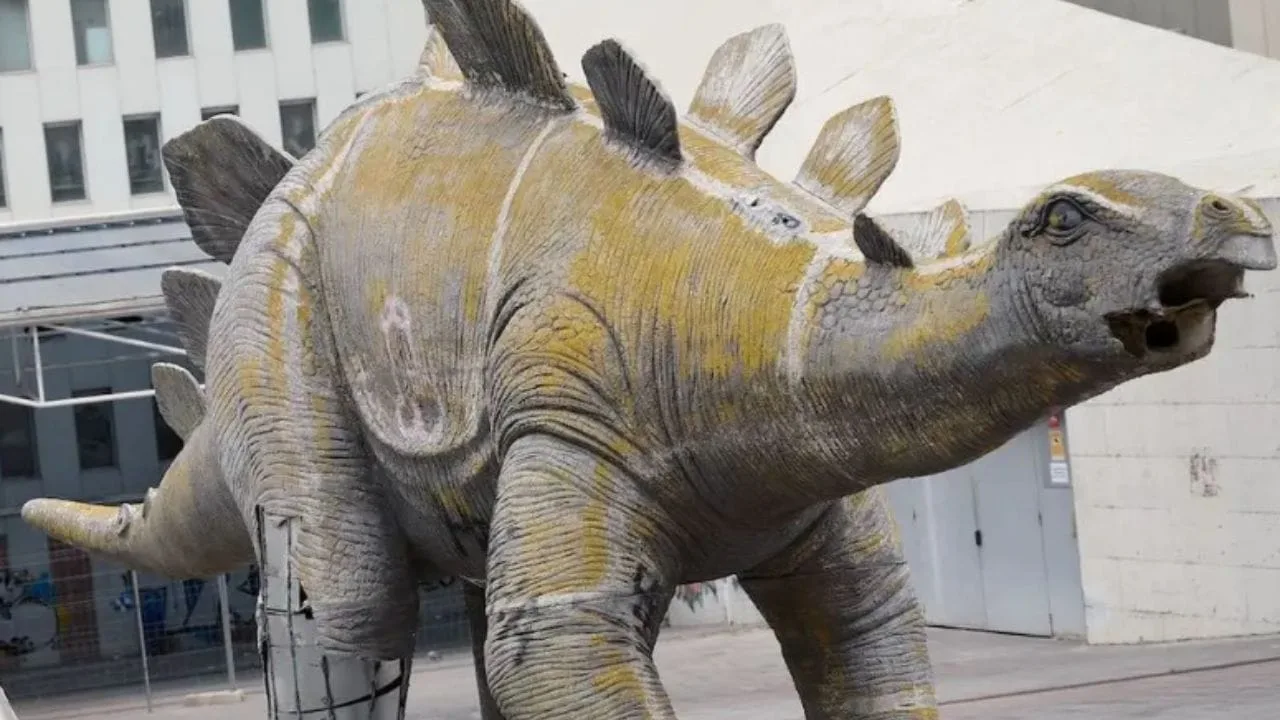
In a Spanish town near Barcelona, a 39-year-old man died in dramatic circumstances after becoming trapped inside the leg of a giant dinosaur statue. Investigators say it was an accident, not a crime.
A tragic accident in the shadow of a dinosaur
The incident took place in Santa Coloma de Gramenet, a satellite city located right next to Barcelona, where a large papier-mâché stegosaurus statue had stood for years. The sculpture originally served as an advertisement for a former cinema, but over time it simply became a distinctive part of the city landscape.
The body of the 39-year-old man was found inside one of the dinosaur’s hind legs after a father and his child noticed an unsettling smell and looked through a gap in the structure. Firefighters called to the scene had to cut open the statue’s leg to free the trapped man.
How the 39-year-old got stuck in the dinosaur’s leg
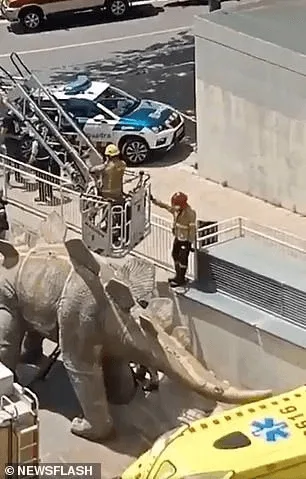
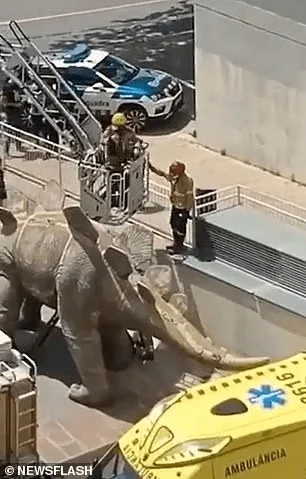
Investigators from the Catalan police believe the 39-year-old entered the statue to retrieve a phone that had fallen inside the dinosaur. He likely tried to reach the device by climbing head-first through an opening in the leg, then became wedged and was unable to free himself or call for help.
According to local media, the man’s family reported him missing before emergency services discovered the body inside the sculpture. Police stressed that at this stage no signs of violence had been found and that everything pointed to a tragic accident.
The dinosaur’s leg that became a trap
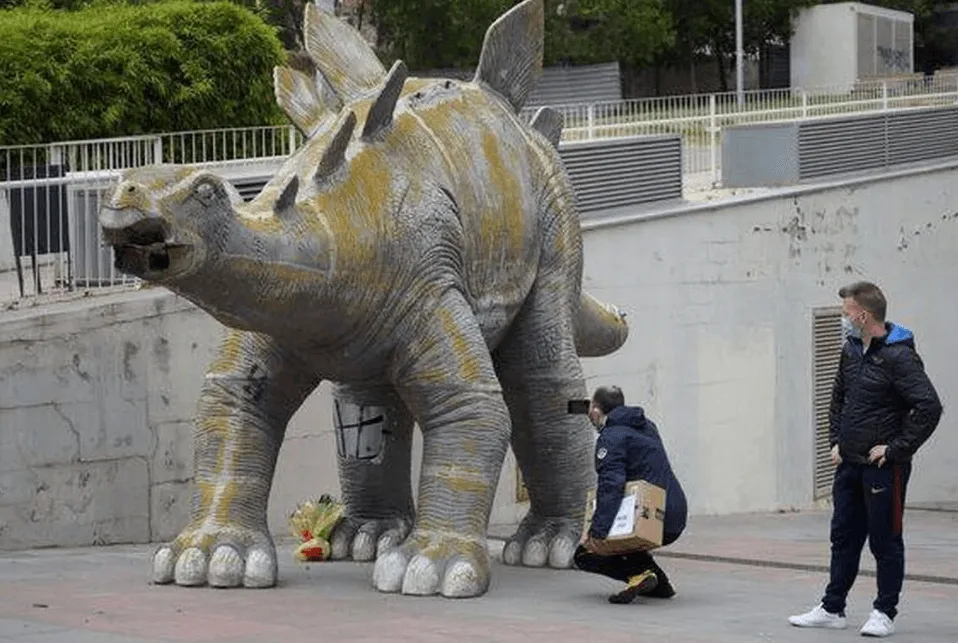
The papier-mâché and metal structure of the statue formed a kind of hollow shell, with an interior resembling a narrow chimney. For someone who fell inside head-first, such a space could act like a vertical trap: no freedom of movement, limited air supply, and no way to turn around.
This case shows that even an object designed as an innocent decoration can become a deadly hazard if people’s „unusual” use of it has not been anticipated. Cities increasingly feature spectacular art installations, from dinosaurs to abstract sculptures, but they are not always designed with safety in mind in the event of unauthorised entry inside.
Reaction from authorities and residents
After the body was recovered, the emergency services decided to remove the dinosaur from the public space. In the following days, residents saw only fragments of the structure, and flowers and symbolic gestures of remembrance appeared where the sculpture had stood.
The story made waves in Spanish and international media, mainly because of the unusual circumstances of the death. Local officials and public space designers were also given a painful reminder that unusual accidents must be taken into account when designing urban attractions.