
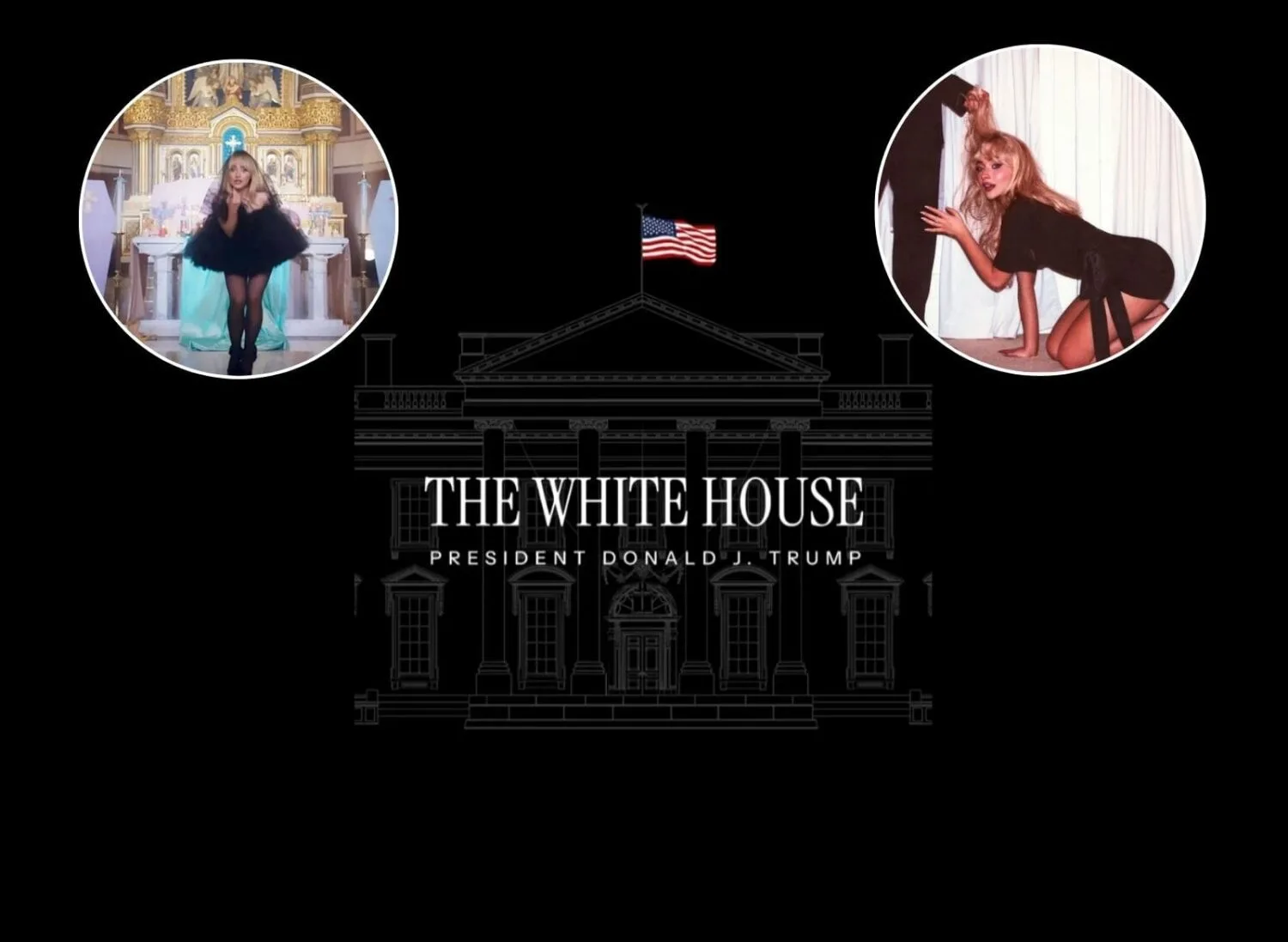
In the world of show business and politics, few clashes are as loud as the one that erupted between popular singer Sabrina Carpenter and the White House administration led by President Donald Trump. The incident, which flared up on the platform X (formerly Twitter), concerns the unauthorized use of Carpenter’s music in an official video promoting the activities of the Immigration and Customs Enforcement agency (ICE). The artist called it „evil and disgusting”, accusing the White House of promoting an „inhumane agenda”. The matter quickly went viral, sparking a wave of comments from fans, politicians and the media. Below we present a full account of the event, based on public statements and reactions.
The Beginning of the Conflict: The White House Video
It all began on December 1, 2025, when the official White House account on X published a video titled „Have you ever tried this one? Bye-bye 👋😍”. The roughly 20-second clip shows scenes of protests against ICE, dancing demonstrators, and then fast-paced footage of immigrant arrests, including chases, handcuffing and deportations. In the background a fragment of a Sabrina Carpenter song can be heard, probably from her hit „Juno” or another track with sexually suggestive content, in which the phrase „bye-bye” is used in an ironic context of farewell to deported people. The video ends with the White House logo and the signature of President Donald J. Trump.
The clip’s apparent aim was to emphasize the hardline immigration policy of the Trump administration, which promised mass deportations of illegal immigrants. However, the use of a popular artist’s music, known for light, pop hits aimed at a young audience, immediately caused controversy. The video quickly gained more than 10 million views, and the comments beneath it divided users into supporters and opponents of the White House’s policy.
Sabrina Carpenter’s Sharp Response
The next day, December 2, 2025, Sabrina Carpenter, whose account on X (@SabrinaAnnLynn) is followed by millions of fans, responded directly under the White House post. In her tweet she wrote: „this video is evil and disgusting. Do not ever involve me or my music to benefit your inhumane agenda” (translated from English: „to wideo jest złe i obrzydliwe. Nigdy nie angażujcie mnie ani mojej muzyki w promowanie waszej nieludzkiej agendy”). The artist’s post earned more than a million likes and 140 thousand reposts, and became a symbol of resistance to Trump’s policies among celebrities.
Carpenter, a 26-year-old pop star known for albums such as „Emails I Can’t Send” and hits like „Espresso” and „Please Please Please”, has for years been involved in social issues, including the rights of women and minorities. Her reaction was seen as a bold gesture, especially in the context of growing political polarization in the US. Fans praised her for her „moral backbone”, and some even suggested filing a copyright infringement lawsuit. For example, user @kainangelxo wrote: „copyright strike it queen” (translated from English: „zgłoś naruszenie praw autorskich, królowo”), which gathered thousands of likes.
However, not everyone was on Carpenter’s side. Critics, including Trump supporters, accused her of hypocrisy. User @Catholiphate wrote: „Sabrina 'It’s OK if you’re raped because I live in a gated community patrolled by armed guards and don’t have to deal with the consequences of mass migration’ Carpenter” (translated from English: „Sabrina 'To OK, jeśli cię zgwałcą, bo mieszkam w strzeżonej społeczności z uzbrojoną ochroną i nie muszę radzić sobie z konsekwencjami masowej migracji’ Carpenter”). This refers to alleged crimes committed by immigrants, which the Trump administration emphasizes in its rhetoric.
The White House Responds: A Counterattack Using Song Lyrics
The Trump administration did not stay silent. In response to Carpenter’s criticism, the White House published another post in which it used words from her own song „Juno” to mock her. They quoted a fragment: „Stupid or slow?” (translated from English: „Głupia czy powolna?”), suggesting that the artist does not understand the context or is naive. The move was described by the media as „humiliating” and „a slap back”. For example, the Daily Mail wrote: „White House humiliates Sabrina Carpenter with her own lyrics” (translated from English: „Biały Dom upokarza Sabrinę Carpenter jej własnymi tekstami”).
A White House spokesperson said they had no intention of apologizing, arguing that the use of the music was fair use in a public context. The case sparked discussions about copyright in social media and the limits of freedom of speech. The TMZ portal reported: „Sabrina Carpenter is fired up and firing back… after The White House’s social account used her sexually suggestive hit to hype up the administration’s deportation push” (translated from English: „Sabrina Carpenter jest wściekła i kontratakuje… po tym, jak konto Białego Domu użyło jej seksualnie sugestywnego hitu do promocji deportacji”).
Media and Public Reactions
The controversy quickly reached mainstream media. Politico published an article titled „’Evil and disgusting’: Sabrina Carpenter condemns White House’s use of her song” (translated from English: „Złe i obrzydliwe: Sabrina Carpenter potępia użycie jej piosenki przez Biały Dom”). NBC News and Telegraph US also covered the story, highlighting political divisions in Hollywood. Conservative media outlets such as the Daily Caller, meanwhile, defended the White House and called Carpenter’s reaction a „performative outburst”.
On X the discussion went on. Users compared Carpenter to other stars, such as Olivia Rodrigo and Billie Eilish, who have also criticized Trump’s policies. One of the posts stated: „her, olivia and billie are on right side of the history” (translated from English: „ona, Olivia i Billie są po właściwej stronie historii”). Others called for a boycott of the artist, calling her a „whore” or a „hypocrite”.
Consequences and Broader Context
This quarrel highlights the growing tensions between the entertainment world and politics in the era of social media. Sabrina Carpenter, whose career exploded in 2025 thanks to her concert tour and new albums, risks losing some fans but gains support among young, progressive voters. The White House, for its part, uses such incidents to mobilize its base, promoting a narrative of „tough America”.
Will this lead to a lawsuit? For now there is no official information, but Carpenter’s fans are calling for a „copyright strike”. The case shows how music can become a political tool and celebrities a voice of the opposition. In an era of polarization, such conflicts are becoming the norm, reminding us that art and power rarely go together without friction.