Drones repeatedly violated Polish airspace during an unprecedented incident of 9 to 10 September 2025. Most of them were neutralized by military, and events have triggered an immediate reaction by authorities, international allies and security services. Below is a full course of events, consistent with the latest accounts and official messages.
The course of the attack on Poland
At night the Russian Federation carried out a massive attack for purposes in Ukraine, and several drones breached Polish airspace in Podlaskie, Mazowieckie and Lublinie voivodships. For the first time some drones flew directly from Belarus, bypassing the war zone in Ukraine, which was considered a deliberate provocation. Operational Command of the RSZ and allied troops immediately launched air defense and radio-location systems. The most vulnerable areas were alarmed and residents received an RCB Alert with a call to stay home.
Response of Polish authorities
Prime Minister Donald Tusk and President Karol Nawrocki they were in constant contact with the General Staff and allies with NATO. Extraordinary meetings of the Government and the National Security Council were convened – debate It concerned, inter alia, the launch of Article 4 of the North Atlantic Treaty, allowing consultations between allies in the face of threats. Deputy Prime Minister and Head of the MON Władysław Kosiniak-Kamish publicly assured that the threat was effectively eliminated and all drones which may constitute a direct danger to the population have been shot down.
Impacts and activities of services
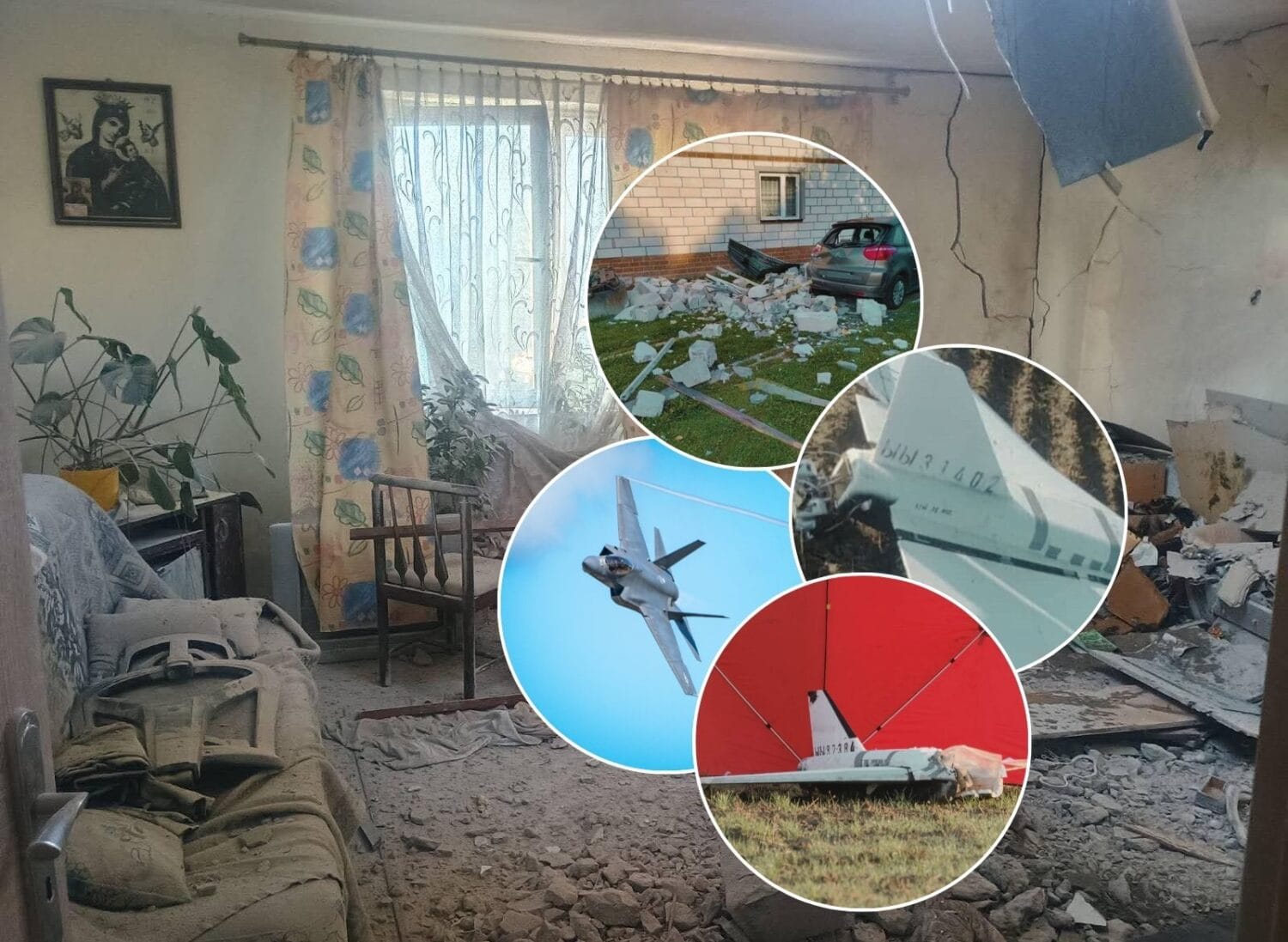
Military, Police and the co-operating services conducted intensive search for drone drop sites and fragments of machines shot down. One of the drones hit a residential building in Wyryki, another was found in Czosnówka near Biała Podlaski – Fortunately, no casualties were reported., and material damage has been minimised. The four airports were temporarily closed, and ground defense systems for several hours worked on high alert, supported by F-35 fighters from NATO and the Royal Dutch Air Force.
International reactions
The events from Poland have sparked strong responses from EU countries, NATO and Baltic countries. The BBC described the incident as an escalation and test for the West. The European Union expressed its full solidarity with Poland, highlighting the unprecedented nature of Russia's violation of its territory. The leaders of Ukraine, Lithuania, Latvia and the head of the EC, Ursula von der Leyen, called for a decisive and joint response to aggression.
Summary and outlook
All security procedures have worked flawlessly, and the service is currently preparing a full report on the incident. The councils on strengthening the Polish anti-dron defense system and diplomatic response to unprecedented provocation are ongoing. Poland remains ready and fully cooperating with its allies to prevent further violations of airspace.
Event
| Time | Event | Location/ Effect |
|---|---|---|
| 23:30 | First breach of Polish space | Poland (Eastern border) |
| 02:00 | Launch of defence procedures | Military and aviation on standby |
| night | 19-23 drone violations (part of Belarus) | Podlaskie, Lublinskie, Mazowieckie |
| night | Closure of 4 airports (military operations) | Warsaw, Modlin, Lublin, Rzeszów |
| 06:45 | Shot down the last drone. | Poland – the end of aviation activities |
| after action | Drone remains found | Garlic, Wyryki ( Lublin Province) |
| 08:30 | Extraordinary government meeting and NATO contact | Warsaw, central level |
| morning | Service Appeal, WOT, Police and Guard Actions | The whole of Poland, especially the east |
Article 4 NATO
After the night drone attack – Poland officially launched Article 4 of the North Atlantic Treaty by formally requesting urgent allied consultations in NATO. The decision was taken jointly by Prime Minister Donald Tusk and President Karol Nawrocki, which means that Poland considered this situation a direct threat to its security and territorial integrity.
The Parties shall consult each other whenever any of them considers that territorial integrity, political independence or security of either Party is at risk. – Article 4 of the North Atlantic Treaty (NATO)