

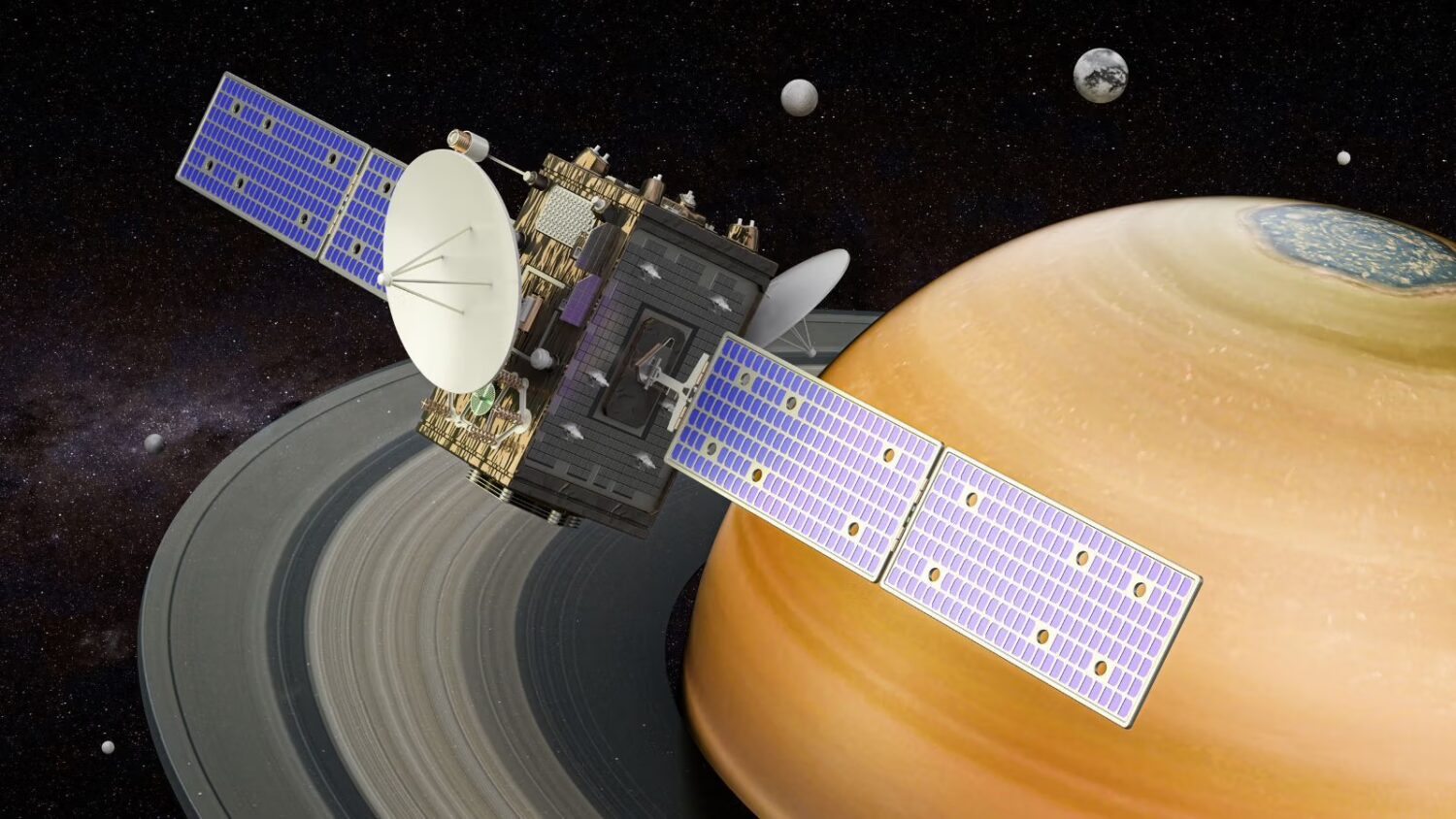
Kosmos 482, a Soviet probe launched in 1972, re-entered Earth’s atmosphere after more than half a century. Space agencies and enthusiasts around the world followed its fate. What made this space “veteran” stir so much interest?
The History of the Kosmos 482 Probe
Kosmos 482 was part of the Soviet Venera programme, whose goal was the exploration of Venus. The probe was launched in March 1972 and was originally meant to become Venera 9 – a lander studying the second planet from the Sun. Unfortunately, due to a failure of the carrier rocket, Kosmos 482 did not leave Earth’s orbit and circled our planet for 53 years.
A Structure Built to Withstand Extreme Conditions
The probe was built to withstand the extreme conditions on Venus – high temperatures, pressure and a dense carbon dioxide atmosphere. For this reason, it was expected to survive re-entry into Earth’s atmosphere, and fragments could reach the planet’s surface.
Deorbiting Kosmos 482 – How Did It Unfold?
After years of monitoring, on 10 May 2025 the Polish Space Agency (POLSA) confirmed that Kosmos 482 entered Earth’s atmosphere at 8:04 CEST (with an accuracy of 20 minutes). The probe’s last pass over European sensors occurred at exactly that time. The object then disappeared from radars, which meant that its deorbit had begun.
Where Did the Probe Fall?
According to official data, Kosmos 482 fell into the Indian Ocean, about 560 km west of the Andaman Islands, west of Jakarta. Earlier there were concerns that fragments of the probe might fall on Poland, but ultimately no such event was recorded.
The last pass of the Cosmos 482 probe over a European sensor occurred at 08:04 CEST, which is taken as the midpoint of the deorbit window, with an uncertainty of +/-20 min.
Around 09:50 CEST, another pass of the Cosmos 482 probe over European sensors was expected.
Currently, the object has not been recorded by the available data sources in Europe, which means it has entered Earth’s atmosphere.
At present, there are no signals that the object could have entered Earth’s atmosphere over Poland.
Source: https://polsa.gov.pl/wydarzenia/sonda-cosmos-482-zdeorbitowana-stan-na-10-05-2025-r-godz-poranne/
Why Did Kosmos 482 Attract Attention?
- It is one of the longest-orbiting “space debris” objects from the Cold War era.
- The probe was designed to survive extreme conditions, which raised questions about the safety of its return to Earth.
- Its fate was followed by space agencies, media and astronomy enthusiasts around the world.
Interesting Facts About Kosmos 482
- The probe’s mass was about 495 kg.
- For more than 50 years it silently witnessed the development of space technologies.
- Its history shows how unpredictable the fate of objects left in orbit can be.
Kosmos 482 is not only a relic of Soviet space exploration, but also a symbol of the challenges associated with “space debris”. Its return after 53 years reminded us how important it is to monitor and responsibly manage objects in orbit. Although the probe never reached Venus, its story will forever remain part of the history of humanity’s conquest of space.





Komentarze