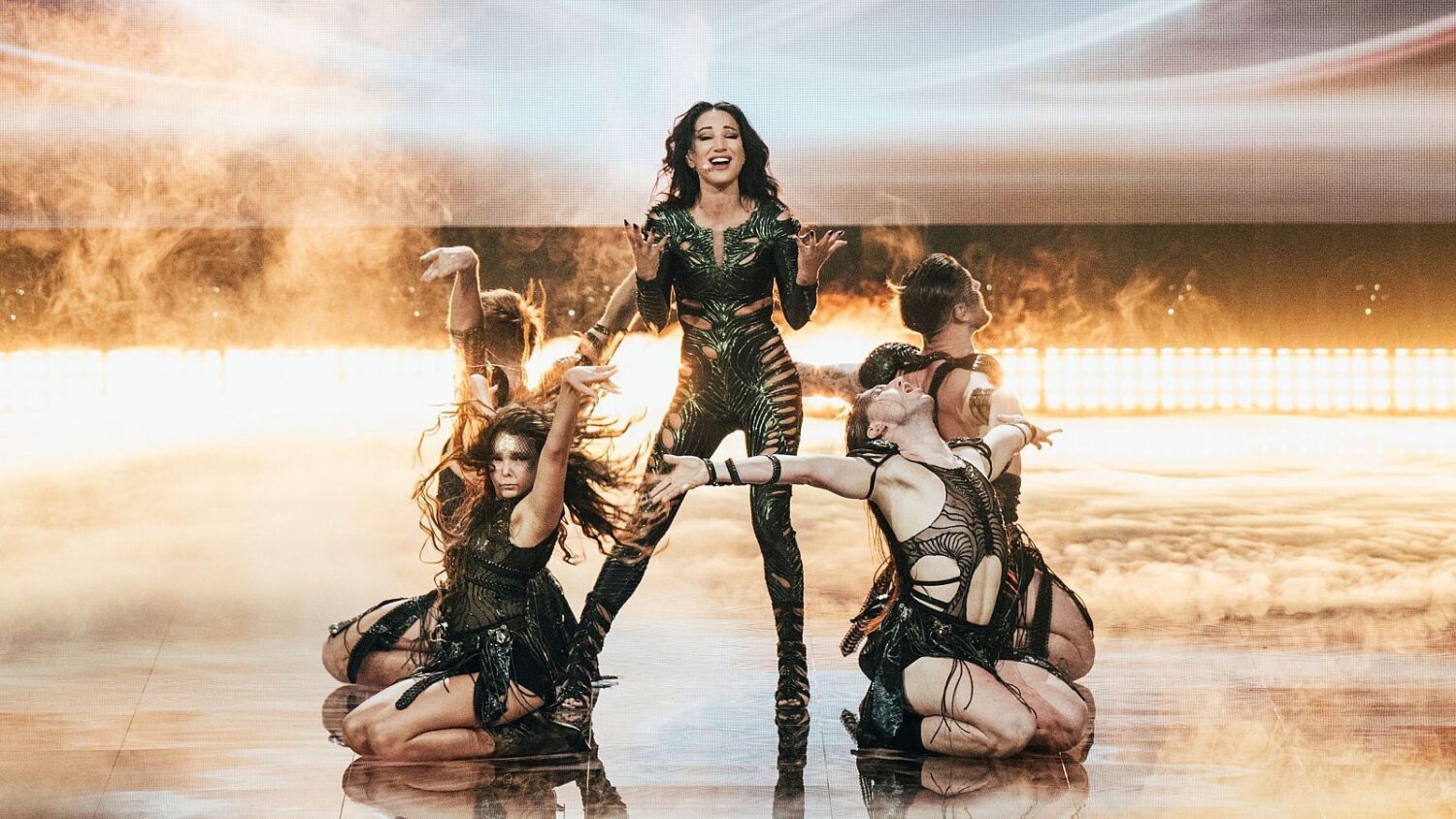
In a time of growing geopolitical tension, Poland confirmed its participation in the Eurovision Song Contest 2026, which will be held in Vienna. The decision of the Polish Television (TVP) contrasts with the attitude of several other European countries, which decided to resign from participating in the event. The reason for the boycott is controversial Israel's presence in a contest accused of genocide in the Gaza Strip. The Israeli-Palestinian conflict, which has been in progress since October 2023, has claimed over 70,000 casualties, including tens of thousands of civilians, as estimated by the United Nations, which has sparked a wave of protests and calls for Israel to be isolated internationally.
The European Broadcasting Union (EBU), the Eurovision organiser, decided to allow Israel to participate in the competition, despite previous discussions on possible exclusion. This decision has been strongly criticised by some public broadcasters who argue that the competition should promote the values of peace and equality rather than normalise the actions of a state accused of war crimes. In 2024, during the Malmö edition, Israel's participation had already sparked controversy – protests occurred, and Israeli representative Eden Golan had to face audience whistles. Now, in the face of the escalation of conflict, the boycott has become a reality for several countries.
Countries that have resigned
Five countries officially withdrew from Eurovision 2026 citing the situation in Gaza and Israel's presence:
- Iceland: Public broadcaster RÚV announced boycott on December 10, 2025, joining the list as the fifth country. The decision was made after consulting artists and public opinion, including the appeal of the famous singer Björk.
- Ireland: The broadcaster RTÉ stated that participation in the competition was incompatible with the values of peaceand the decision was unanimously supported by the board.
- Netherlands: Avrotros, a Dutch broadcaster, found Israel's presence incompatible with the public mission of the broadcaster.
- Spain: RTVE will neither take part nor issue a contest, and Culture Minister Ernest Urtasun stated that "Israel cannot be bleached in the face of genocide in Gaza."
- Slovenia: RTVSLO stressed that the competition should respect humanitarian values, and the current situation contradicts this.
These countries not only give up participation, but some, like Ireland and Spain, have also announced that they will not broadcast the competition.
Countries considering resignation
Several other countries or their representatives signal a possible attachment to the boycott:
- Portugal: Artists participating in national preselections announced that if they won, they would not go to Eurovision. RTP, a Portuguese broadcaster, has not yet made a final decision, but social pressure is increasing.
- Serbia: A group of RTS workers demanded boycott, arguing that EBU normalizes genocide. There is no official position yet, but the discussion is ongoing.
In addition, public debates are taking place in some countries, such as Belgium and Norway, although no withdrawal decisions have yet been made.
Countries to participate
Despite controversy, most countries confirmed their participation in Eurovision 2026. According to preliminary information from the EBU, around 34-35 countries will participate in the competition, including:
- Poland: TVP confirmed its participation on December 10, 2025, what happened to mixed reactions in social media – some netizens criticize the decision, accusing of ignoring the situation in Gaza.
- Germany: The SWR broadcaster announced participation and previously threatened to withdraw if Israel was excluded. Germany is one of Israel's largest arms suppliers.
- United Kingdom: The BBC has confirmed that it will issue and participate in the competition.
- France: France Télévisions remains in the competition, like other "great" Eurovision countries.
- Israel: KAN, an Israeli broadcaster, was allowed by EBU, which is the main reason for the boycott.
- Other confirmed: Albania, Armenia, Australia, Austria (host), Azerbaijan, Belgium, Bulgaria, Croatia, Cyprus, Czech Republic, Denmark, Estonia, Finland, Georgia, Greece, Italy, Latvia, Lithuania, Luxembourg, Malta, Moldova, Montenegro, Norway, Romania, San Marino, Sweden, Switzerland, Ukraine.
It is worth adding that the list may still change – for example, Iceland initially supported the competition, but eventually joined the boycott.
Eurovision, which has been promoted as an apolitical festival of music for years, is increasingly becoming a political arena of controversy. This reminds us of situations from the past, like the exclusion of Russia after the invasion of Ukraine in 2022. Boycott critics argue that the contest should combine rather than divide, but supporters of resignation emphasize that silence against genocide would be hypocritical. For Poland, the decision to participate can mean both the opportunity to promote culture and the risk of international criticism. The final shape of the competition will be known in the coming months, but it can already be seen that Eurovision 2026 will be one of the most controversial editions in history.