Did you know that one single day could change the fate of Europe, the world and all civilization – not once, but dozens of times? Looking at the historical calendar for May 9, it is difficult to resist the impression that this date is exceptionally saturated with landmark moments. If you are wondering what happened that day in history, you have an answer ahead of you – and it is surprisingly rich. We invite you on a journey for centuries that will prove that history never sleeps.
What happened on May 9th? Major events in history
1502 – Christopher Columbus embarked on his last trip to the New World
On that day, Christopher Columbus began his fourth and final expedition for the ocean. Although his first voyages changed the face of the world, this journey ended in failure – Columbus sought a passage to Asia and did not find it. Nevertheless, the expedition confirmed that the New World is not an island, but a huge continent. It's the symbolic end of an age of explorer who changed the history of humanity.
1671 – Spectacular Stealing Crown Jewels from the Tower of London
Thomas Blood, an Irish brawler, made one of the most bold thefts in England's history – stole crown jewels stored in the London Tower. Surprisingly, instead of life imprisonment, King Charles II pardoned him and granted him his salary. Historians are still arguing whether the ruler was involved. This day in history has been recorded as one of the greatest mysteries of the British monarchy.
1793 – First execution of death sentences on traitors of the Republic of Poland
During the insurrection of Kościuszkowski, in 1794, Warsaw witnessed the execution of the leaders of the trade union. Four prominent traitors were hanged on the gallows: Józef Ankwicz, Bishop Józef Kazimierz Kossakowski, Grand Crown Hetman Piotr Ożarowski and the Field Hetman Józef Zabieło. The Targovians defied their homeland by calling on Russia to intervene against the Constitution of 3 May. For many Poles executions were an act of historical justice, late but symbolic.
1950 – Schuman Declaration and the Birth of a United Europe
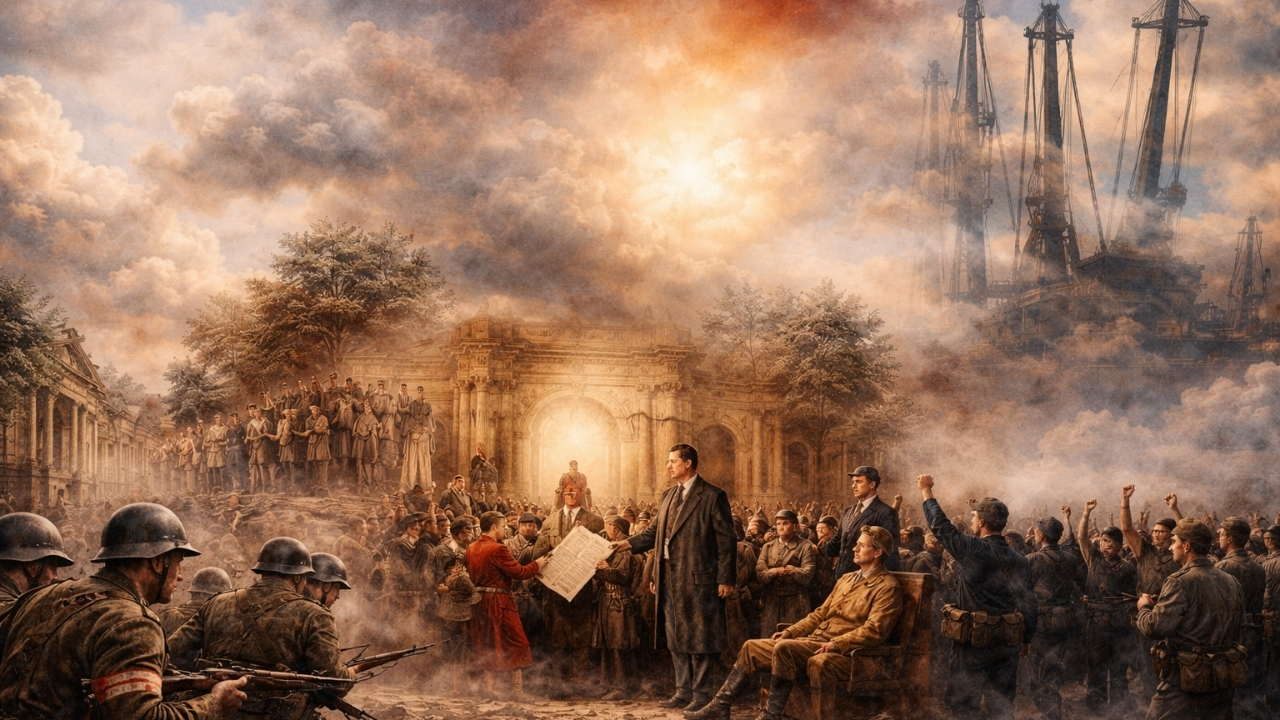
On that day, French Foreign Minister Robert Schuman presented a plan to create a European Coal and Steel Community. The proposal, known today as the Schuman Declaration, launched a process of European integration which led to the creation of the European Union. That is why 9 May is celebrated as Europe Day – one of the most important holidays on the EU calendar. It's hard to get better proof of how one day in history can weigh on the fate of hundreds of millions of people.
1960 – The first birth control tablet goes to the pharmacy
On May 9, 1960, American pharmacies began selling Enovid—the world's first birth control pill. This event started a social and moral revolution, changing the position of women, a family model and a demography of the entire Western world. No drug in medical history has caused such a profound cultural change in such a short time. The historical calendar rarely records inventions equally perverse and far-reaching in effect.
1962 – The Beatles sign the first record contract
Before Liverpool conquered the world, The Beatles had to endure further refusals. On May 9, 1962, the band, rejected by other labels, signed their first contract – with Parlophone label, led by George Martin. A year later, Love Me Do started a global beatlemania. If not for this decision, the history of popular music could have been different.
1987 – LOT plane crash in Kaback Forest
This is one of the most tragic aviation disasters in Poland's history. On May 9, 1987, a PLL LOT Il-62M aircraft called "Tadeusz Kościuszko", flying to New York, crashed in the Kaback Forest near Warsaw during an emergency landing attempt. 183 people were killed – 172 passengers and 11 crew members. The cause of the crash was an engine fire. The tragedy shook all of Poland and put a long strain on the image of Polish aviation.
1978 – Body of Aldo Moro found in Rome
After 55 days of detention, former Italian Prime Minister Aldo Moro was murdered by terrorists from the Red Brigade organization. His body was found on May 9, 1978 in the trunk of a car parked in the centre of Rome – a symbolic place, halfway between the headquarters of the Chadecka and Communist party. The murder shook Italian society and became a symbol of the democratic state's crisis against terrorist extremism.
1573 – The first free election in Poland selected a king
In the village of Stone near Warsaw, the collection of votes in Poland's first free election – one of the most important systemic events of the Republic – ended. The nobles chose Henry Walez as King, a Frenchman who, however, quickly abandoned the throne and fled to France after the death of his brother. Free election became a showcase of Polish noble democracy, although in time it also proved to be her curse. This day in history opened a chapter that lasted over 200 years.
1974 – The Richard Nixon impeachment process has begun
On May 9, 1974, hearings on the impeachment of President Richard Nixon, accused in connection with the Watergate affair, formally began in the United States Congress. A few months later, Nixon was the first and only president of the United States to resign. The Watergate affair became synonymous with corruption and abuse of power, and the word "gate" itself – a suffix added to every political scandal in the world.
Born 9 May
John Brown (1800) – American abolitionist, one of the most radical militants to abolish slavery in U.S. history who died in gallows after a failed uprising at Harper’s Ferry.
Howard Carter (1874) – British archaeologist and Egyptologist, discoverer of Tutankhamon's tomb in the Valley of Kings in 1922, one of the largest archaeological finds of all time.
Billy Joel (1949) – American singer and composer, author of such hits as "Piano Man" or "We Didn't Start the Fire", one of the best-selling music artists in history.
José Ortega y Gasset (1883) – an outstanding Spanish philosopher and essayist, author of "The Rebellion of the Mass", works which to this day is mandatory for anyone who wants to understand the contemporary culture of the West.
Sophie Scholl (1921) – German anti-Nazi activist, co-founder of the resistance "White Rose", arrested by Gestapo and executed at the age of only 21 – a symbol of civil courage in times of totalitarianism.
World events
1386 – Windsor Treaty – England and Portugal have formed an alliance that has survived to this day and is the oldest international treaty in force in the world.
1877 – Romania Independence "Romania declared independence from the Ottoman Empire, which started a new chapter in Balkan history.
1893 – Edison cinematoscope show – Thomas Alva Edison first publicly presented a kinetoscope, a device that is a direct predecessor of cinema.
1955 – West Germany joins NATO "Just a decade after the end of World War II, West Germany was admitted to the North Atlantic Alliance, which radically changed the arrangement of forces in Europe.
2003 – Launch of Hayabusa probe "Japan sent a Hayabus probe into space, which was the first ever to land on the Itokawa asteroid, and took samples from it two years later.
May 9 is a date that clearly shows how densely the network of events that make up our civilisation is – from the birth of the idea of a united Europe, through criminal sensations in the Tower of London, to an alliance treaty of more than six centuries. Looking at what happened that day in history, one can get the impression that this one day hides within itself an entire museum of human fates, triumphs and tragedies. Look here tomorrow – because on May 10 the story has equally much to tell.