Do you know that one day on the calendar can cover the conquests of new lands, political revolutions, the birth of icons of music and the fall of dictators? This is the day of May 10. — a date that has written in history over the centuries and on many continents. If you're curious about what happened that day in history, you have a mandatory reading ahead of you. Prepare to travel for centuries — from ancient Rome to almost modern times.
What happened on May 10th? Major events in history
1508 – Michelangelo began painting the Sistine Chapel
This is one of those moments that have forever changed the face of European art. On that day, Italian Renaissance genius faced a huge challenge — painting the vaulting of one of the most prestigious chapels in the Vatican. For over four years, working in extremely difficult conditions, he created frescoes considered today to be the peak of the painting of all time. The irony of fate is that Michelangelo considered himself primarily a sculptor, not a painter.
1503 – Christopher Columbus discovered the Cayman Islands
Columbus’s fourth and final voyage to the New World brought another discovery — three islands, which the sailor named Las Tortugas, from the number of sea turtles encountered in the waters there. Today we know them as Caymans — one of the most exclusive places in the world, famous for its paradise beaches and tax haven status. It's hard to believe by looking at this historical calendar, but the colonial history of these islands has just begun on May 10.
1774 – Louis XVI becomes king of France
Only 19 - year - old Louis XVI ascended the throne of one of the most powerful powers of that time in Europe. His reign, which would last almost two decades, ended on the guillotine — became a symbol of the fall of ancien régime and one of the most tragic figures in France's history. Interestingly, on the same day — May 10, 1794 — The guillotine consumed his aunt, Princess Elizabeth Bourbon, during the French Revolution.
1869 – First Transcontinental Railway opened in the US
This day in history meant a real breakthrough for the United States. The insertion of a golden nail in Utah connected the Eastern Coast railway network with California, shortening the journey across the continent from a few months to a few days. The transcontinental railway built thousands of workers, largely immigrants from China and Ireland, working in extreme conditions. This infrastructure project changed the face of America, opening the way to settle the Wild West.
1940 – Churchill Prime Minister, Germany attacking the West
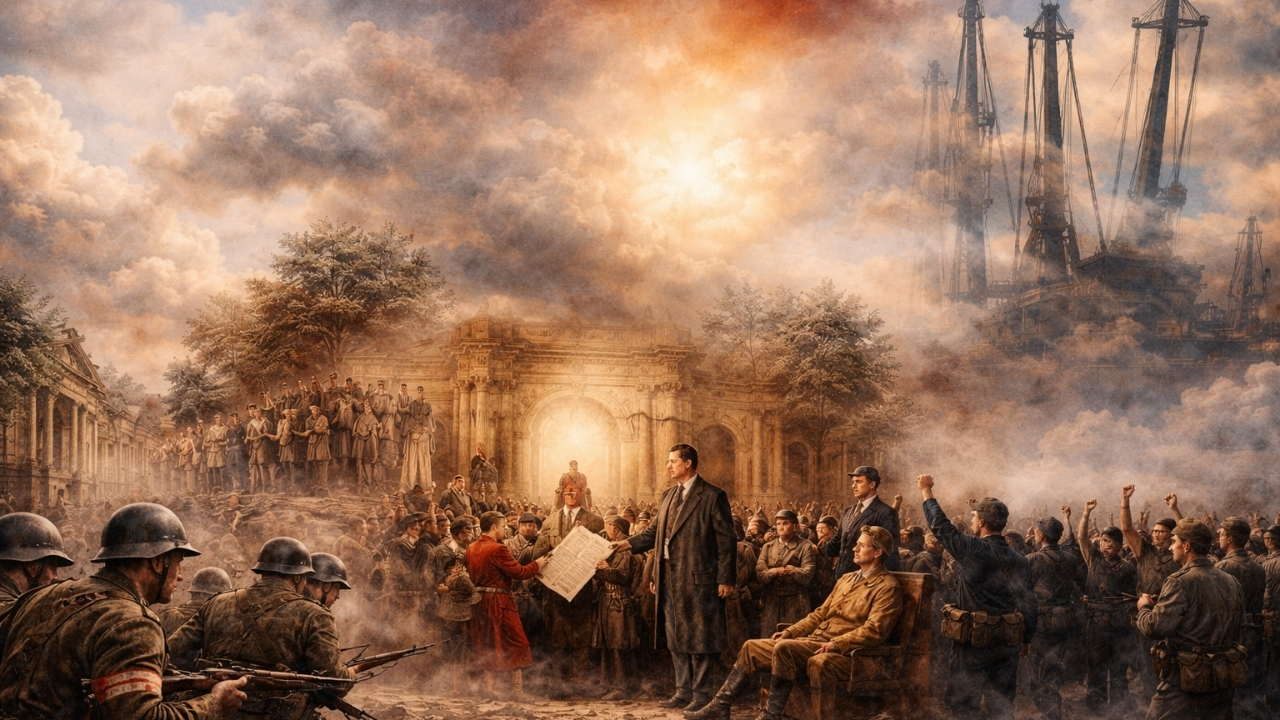
May 10, 1940 is one of the most dramatic days of World War II — Or maybe the entire 20th century. On the same morning, Germany attacked France, Belgium, the Netherlands and Luxembourg, starting a rapid campaign that swept over European order in a few weeks. In parallel, in London, Neville Chamberlain resigned, and his seat on Downing Street was taken by Winston Churchill — A man who, with his speeches, was about to sustain the spirit of resistance of the entire free world.
1994 – Nelson Mandela First Black President of South Africa
After 27 years in prison, after decades of fighting apartheid, Nelson Mandela took his presidential oath, becoming a symbol of the triumph of human dignity over the racist oppression system. This event that happened that day watched the whole world holding its breath was not only a political change — was a historical moment with a moral dimension. South Africa entered a new era, and Mandela became one of the largest icons of the 20th century.
1789 – First balloon flight over Warsaw
The Frenchman Jean-Pierre Blanchard, one of the pioneers of aeronautics, rose into the air over Warsaw, giving Poles their first ever air show. This was the day in history that probably caused a collective amazement among thousands of gathered observers. Blanchard was a true celebrity of his era — He previously made his first balloon ride over the La Manche Canal. So the Polish audience could admire the real star of the world.
1794 – Kościuszko appoints the National Supreme Council
In the hot year of the Kościuszko Insurrection, when Poland fought for survival, Tadeusz Kościuszko made an important organizational step — appointed the National Supreme Council as the civil authority of the uprising. It was a signal that the tear was not just a military revolt, but an attempt to build the foundations of a modern state. This historical calendar reminds us that Kościuszko thought categories of not only battles, but also institutions.
1964 – Monument in Treblinka
Exactly twenty years after the liberation of the extermination camps, a monument commemorating the victims of one of the largest mass extermination sites in human history was unveiled in Treblinka. In this camp the Germans murdered from 700,000 to 900,000 Jews. The monument became a memorial and a warning for future generations — That silence against crime is unacceptable.
1981 – François Mitterrand wins elections in France
After 23 years of right-wing rule in France, socialist François Mitterrand won the presidential election, defeating incumbent President Valéry Giscard d’Estaing. It was a political breakthrough that changed the face of the V Republic and started the era of cohabitation — governing with various options in power in parliament and presidential palace. Mitterrand remained in office until 1995, becoming the longest-serving president in France's history.
Born May 10
Bono (1960) – Irish singer and leader of the legendary U2 band, one of the most recognizable rock artists in the world, also known for its humanitarian activity and the fight against poverty in Africa.
Fred Astaire (1899) – American actor and dancer, the icon of the Hollywood golden era of cinema, whose dance skills have set standards for decades.
Sid Vicious (1957) – British bassist, member of Sex Pistols and symbol of the rebellious spirit of punk rock of the 1970s, whose short and turbulent life became a counterculture legend.
Linda Evangelista (1965) – Canadian supermodel of Italian origin, one of the most influential faces of world fashion of the 1980s and 1990s, famous for its courageous image metamorphos.
Dennis Bergkamp (1969) – Dutch footballer recognized as one of the most elegant players in football history, legend of Arsenal London and the Netherlands.
World events
70 – The Siege of Jerusalem – The Romans under Titus began the siege of Jerusalem, which ended with the destruction of the city and the Temple of Jerusalem, shaping the history of the Jewish people forever.
1612 – Shahjahan's wedding with Mumtaz Mahal – future ruler of the Mogul Empire married the love of his life, and after her death he ordered her to erect one of the most beautiful buildings in the world — Taj Mahal in Agra.
1933 – Burning books in Berlin – Before the Berlin opera, the Nazis organized the first great public burning of books, destroying works of Jewish, Marxist and pacifist authors — A violent signal of what was to happen.
1924 – J. Edgar Hoover becomes FBI Director "On that day, the Bureau of Investigation was headed by a man who led it for 48 years, building a powerful institution from it, but also a controversial one.
1996 – Tragedy on Mount Everest – a violent storm on the highest mountain in the world consumed the lives of eight climbers, becoming one of the greatest tragedies in the history of Himalaism, later described in bestseller Jon Krakauer.
May 10 is the day that — As you can see by looking at this vast historical calendar — He won't let go of himself. From ancient sieges through Renaissance masterpieces, revolutions and war twists to triumphs of freedom and political breakthroughs — This day in history witnessed events that changed the course of civilization. Come back tomorrow, because May 11th has a fascinating story to tell.