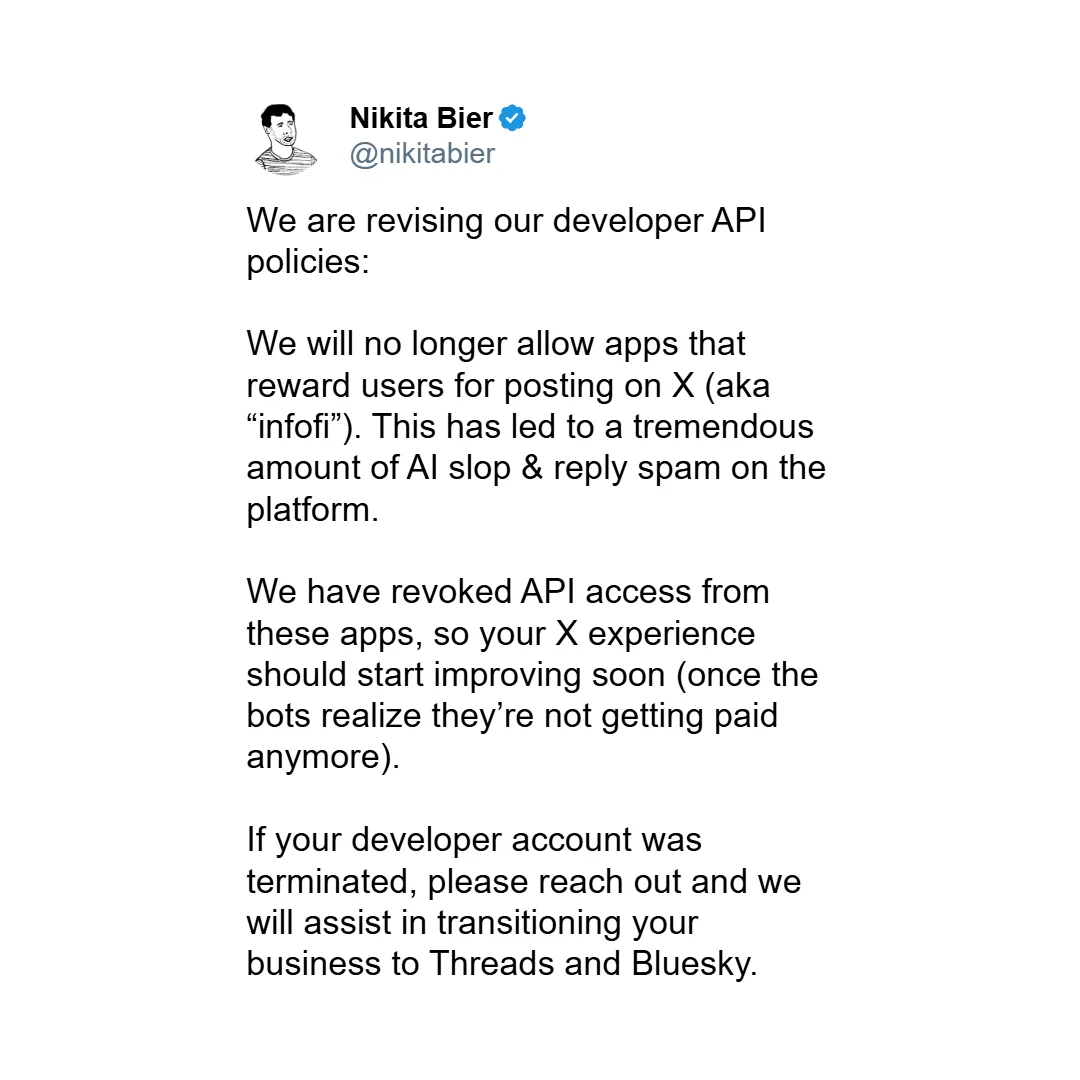
X, formerly known as Twitter, has announced a radical change to its developer API policy. It will no longer tolerate apps that reward users for posting on X. The decision, announced by head of product Nikita Bier, aims to fight the plague of AI-generated spam and bots.
What does this mean for the crypto world?
The term „InfoFi” (from „information finance”) has become synonymous with crypto projects that build their value on interactions on social media. These platforms offer tokens in exchange for activity on X, for example for likes, retweets or comments. Users, often from developing countries such as India, earned small amounts from this, which fueled mass publishing of content. As a result, X was flooded with a wave of low-quality posts, including AI-generated spam aimed at maximizing profits.
In the context of crypto, this change strikes at the very heart of these projects’ business model. InfoFi relied on access to the X API, which allowed automation and tracking of activity. Without it, the projects lose their foundation: they can no longer reward posts, which undermines the purpose of their tokens. This is not just a technical block, but also a signal that major platforms will no longer support models that degrade content quality for quick profit.
What exactly changed?
The change in X’s policy is simple. As Nikita Bier explained in his post, the platform is withdrawing API access for all apps that promote „earning from information” by rewarding posts. Until now, these projects paid X millions of dollars for advanced data access (Enterprise API), which was a lucrative source of revenue for the platform. Now X is saying „no”, even at the cost of losing those millions.
The result? An immediate blocking of developer accounts and shutdown of bots. Users should notice an improvement in feed quality in the coming days, as bots „realize” they will no longer get rewards. Interestingly, X offers help in migrating these businesses to competing platforms such as Threads or Bluesky, which sounds like an ironic nod to rivals.
What market reaction did this decision trigger?
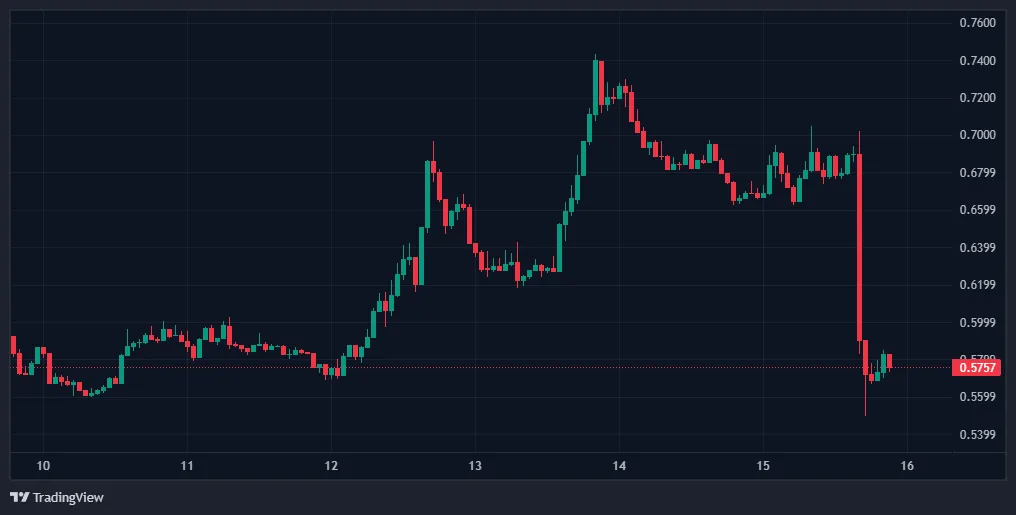
The market reaction was immediate and brutal. Within hours of the announcement, InfoFi-related tokens plunged by 20-50%. For example:
- The KAITO token fell by over 20%, losing millions in market capitalization.
- The Cookie DAO token also fell by over 20%.
- Many other minor InfoFi tokens were also hit
Important information for holders of the KAITO cryptocurrency: tomorrow, the release of over 1.1 million tokens from staking is planned. This may strongly affect the price of this cryptocurrency.

This is no coincidence: these tokens drew their value mainly from activity on X. When the „spam to earn” model was blocked, investors panicked, seeing that the projects had no real utility beyond artificially driving interactions. Crypto market analysts described it as the „burst of the SocialFi bubble”. Millions of dollars in API fees from these projects became worthless, and X deliberately gave up this revenue stream, choosing platform quality instead. This shows how fragile some crypto ecosystems are when they depend on external platforms.
Is this a good change?
Absolutely, and for several reasons. First, X is returning to its roots as a „global town square”, where content is meant to be authentic, not mass-generated for profit. The AI-slop plague (low-quality bot content) has irritated users for months, lowering the platform’s value. This decision shows that X prioritizes user experience over short-term gains, which is rare in big tech.
In the context of crypto, it is a healthy reset. InfoFi projects promoted a toxic model in which token value rested on spam rather than innovation. Their collapse reveals weakness: if a token loses half its value after a single regulatory change, it was never solid. For the market, the lesson is to focus on real products, not artificial hype. Additionally, this may spur the development of more ethical crypto projects that do not rely on manipulating social media.
Of course, not everyone is happy. Users from poorer regions are losing a source of income, and developers must look for alternatives. But in the long run, this is a win for the ecosystem: a cleaner X means better discussions, including those about crypto.