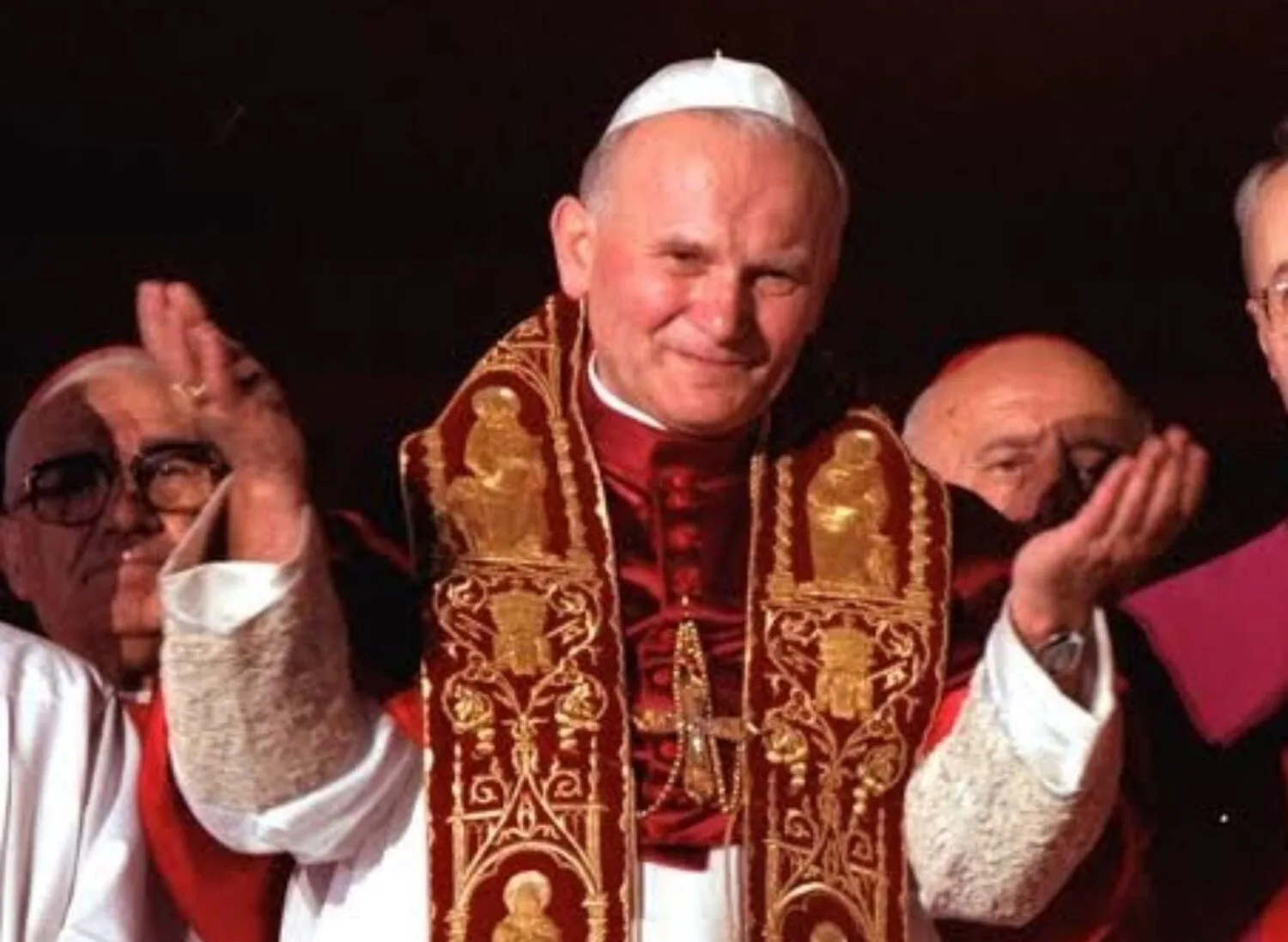
On 16 October 1978, the world stood still when Cardinal Karol Wojtyła was elected pope and took the name John Paul II. The event changed the history not only of the Church but also of Eastern Europe.
An Unprecedented Choice – How the Pontificate of John Paul II Came About
In October 1978, after the sudden death of John Paul I, 111 cardinals gathered for the conclave in the Sistine Chapel. Among the favourites were Italians, but the Metropolitan of Kraków, Cardinal Wojtyła, earned the respect of many clergy thanks to his openness and energy. On the second day of voting, 16 October, he received 99 of 111 votes. At 18:18, white smoke rose above the Sistine Chapel, and a moment later the world heard “Habemus Papam!”
A New Era for the Church and Eastern Europe
The election of Karol Wojtyła as pope was groundbreaking: for the first time in more than 400 years, the Bishop of Rome was a cleric from outside Italy. The world media reported that the Church was opening up to the world behind the Iron Curtain. The Polish pope brought hope for dialogue, understanding, and the struggle for religious freedom and human rights in the communist bloc.
A Pontificate That Changed the Course of the World
John Paul II served in his role for 26 years, one of the longest pontificates in history. During this time he:
- made 104 foreign pilgrimages to 132 countries,
- appointed about 240 cardinals and 2,500 bishops,
- beatified 1,338 people and canonized 482,
- issued 14 encyclicals and was the inspiration behind World Youth Days.
Influence on Poland and the World – Not Only on the Church
During the difficult years of communism, John Paul II became a moral authority, inspiring millions of people to fight for freedom and solidarity. His first words, “Be not afraid!”, became the motto of the changes that transformed the face of Europe. He was an initiator of dialogue between nations, religions, and politics. His visits to Poland strengthened national identity and supported the emerging “Solidarity” movement.
Little-known facts from the day of the election
Key Events of 16 October 1978
| Date and time | Event |
|---|---|
| 16.10.1978, 18:18 | White smoke rises above the Sistine Chapel |
| 16.10.1978, 18:44 | Official announcement of the election of the pope |
| 16.10.1978, 19:20 | John Paul II appears on the Loggia of Blessings |
Why does John Paul II still inspire?
John Paul II remains a moral authority to this day. His teaching, his message of peace, and his openness to the needs of other people remain relevant regardless of time and place. The Polish pope proved that with the power of words, courage, and faith, the course of world history can be pushed in a better direction.
What did “Be not afraid!” mean for Poles?
It was not only a religious motto. In the People’s Republic of Poland of the 1970s and 1980s, it gave ordinary people courage to rise above fear and doubt. These words combined hope and showed that even from behind the Iron Curtain one could influence the future of an entire continent.
47 years after Karol Wojtyła was elected pope, John Paul II still commands respect and remains a symbol of freedom and hope for millions of people around the world.