Did you know that one day in the calendar may hide the premiere of the iconic Polish film, the catastrophe of the famous blimp, the record mile run and the opening of the tunnel under the English Channel? If you're wondering what happened that day in history, you're in the perfect place. On the sixth of May, events that changed the course of history over the centuries took place. — from great scientific discoveries to groundbreaking political and sporting moments. We invite you to travel for centuries because this day in history really does not tire.
What happened on May 6th? Major events in history
1527 – Sacco di Roma, or when Rome was on fire
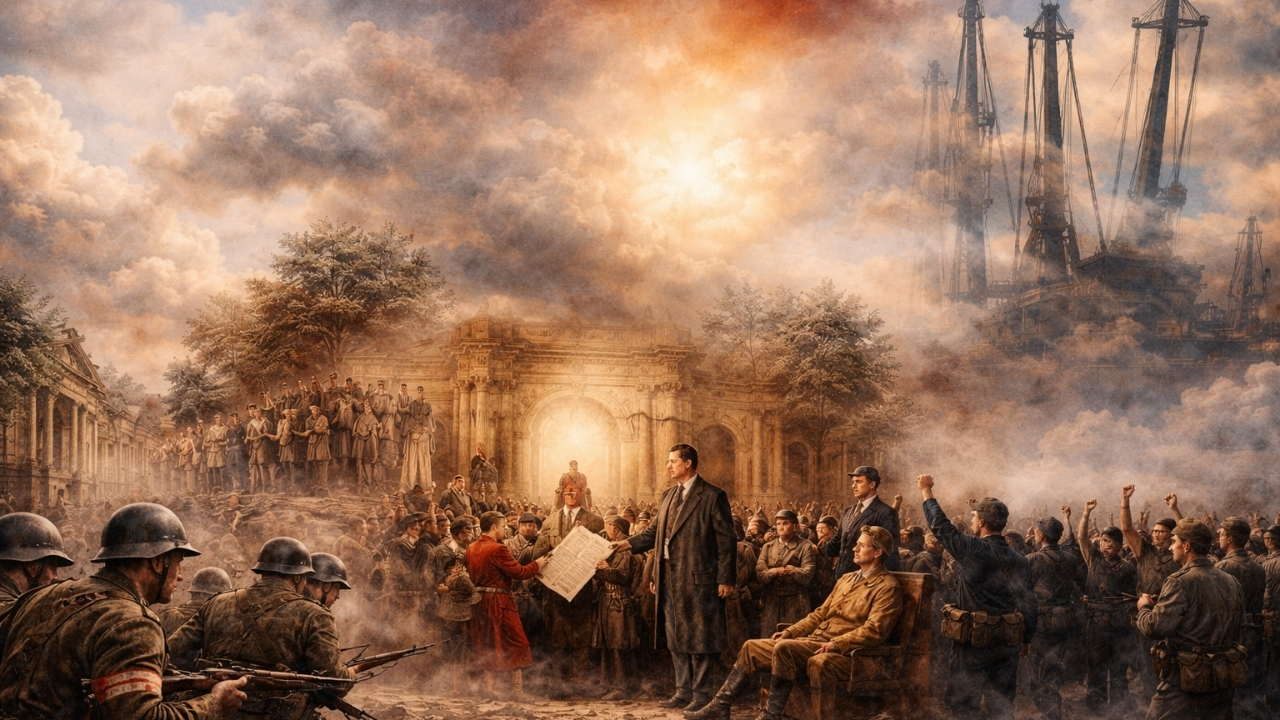
On May 6, 1527, Emperor Charles V Habsburg's troops, made up of German and Spanish soldiers, captured and completely plundered the Eternal City. This is one of the most tragic events in the history of Renaissance Rome — The massacre, looting and fires lasted for weeks. Of the 189 Swiss protecting Pope Clement VII, 127 guards paid for their duty. It is in memory of that battle that the Swiss Guard has sworn to this day on 6 May — And the Vatican celebrates its Guard Day that day.
1682 – Louis XIV moves into Versailles
When the Sun King moved his headquarters from Paris to Versailles, the world of European politics changed beyond recognition. On May 6, 1682 the royal court officially entered a beautiful palace that became a symbol of absoluteism and splendor. Versal has been attracting aristocracy from all over Europe for decades, becoming a centre of culture, fashion and diplomacy. Today it is hard to imagine a European canon without this place — And it all started that day in history.
1840 – Penny Black enters circulation
Six May 1840 is a date that every philatelist knows by heart. The first postage stamp in the world was officially put into circulation in Britain that day. — The famous Penny Black with the image of Queen Victoria. The revolution that started this inconspicuous piece of paper has completely changed the way we communicate around the world. Before his invention, the recipient, not the sender, paid for the shipment — And that's a lot of money.
1889 – Eiffel Tower open to the public
The Paris World Exhibition began on May 6, 1889, and with it the Eiffel Tower was officially made available to the public — The building, which at the time of the uprising attracted as much as the outrage. Critics called it "the iron asparagus" and "the shame of Paris". Today it is one of the most recognizable architectural symbols in the world and millions of tourists visit it annually. This is perhaps the best example of history being able to brutally verify bad reviews.
1937 – The plane crash "Hindenburg"
One of the most dramatic plane disasters of the 20th century has occurred in history that day. The German blimp "Hindenburg" burned while mooring at Lakehurst Airport, New Jersey, just a few dozen seconds after approaching the mooring mast. 13 passengers, 22 crew members and one of the ground workers were killed. Dramatic radio transmission from the scene forever imprinted in collective memory — and practically ended the era of hydrogen-filled passenger airships.
1954 – Roger Bannister and "impossible" run
Over the years, it was believed that a man was physically incapable of beating a mile in less than four minutes. On May 6, 1954, British Roger Bannister overturned this myth, gaining 3:59.4 at a distance of 1,609 metres. This achievement was not only a sports breakthrough, but also a psychological breakthrough. — Soon thereafter, more runners started beating this record, because "impossible" proved possible. Bannister was a doctor and treated running amateur, making his feat even more impressive.
1985 – "Vabank II" enters the screens
The Polish historical calendar dated May 6, 1985 marks the premiere of one of the best-received Polish comedy films of all time. "Vabank II, or riposta" directed by Juliusz Machulski continued the adventures of the smarty-pants Kwinto and made a rage among viewers. The film still enjoys its iconic status and regularly appears in the best Polish comedy charts. Machulski proved that the continuation could be as good as the original — What happens rarely in movies.
1994 – Eurotunel connects the islands to the continent
On May 6, 1994, Eurochannel officially opened — an offshore railway tunnel running under the La Manche Canal and connecting Britain to France. The project, which has been dreaming for over a hundred years, has become a reality thanks to the effort of thousands of engineers and workers from both sides of the channel. The tunnel is more than 50 kilometres long, of which 38 runs under the seabed. The irony of history is that the country that was connected by tunnel to Europe three decades later voted for Brexit.
2023 – Coronation of Charles III
The most recent entry in this historical calendar is the coronation ceremony of King Charles III and his wife Kamila, held on May 6, 2023 in Westminster Abbey. Charles III waited longer for the crown than any heir to the throne in the history of the United Kingdom — Over seventy years. The ceremony was televised from around the world, followed by hundreds of millions of viewers. It was the first coronation in over seven decades — since his accession to the throne of Elizabeth II in 1953.
Born 6 May
Sigmund Freud (1856) – Austrian neurologist and psychiatrist, creator of psychoanalysis, one of the most influential figures in the history of Western mind and culture sciences.
Maximilien de Robespierre (1758) – French lawyer and politician, one of the chief leaders of the French Revolution, known as the architect of the Terror period.
Orson Welles (1915) – American actor, director and screenwriter, creator of the iconic Citizen Kane, considered by many critics to be the best film in cinema history.
George Clooney (1961) – American actor and director, two-time Oscar winner, one of Hollywood's most recognizable stars.
Tony Blair (1953) – British politician and lawyer, UK Prime Minister from 1997 to 2007, one of the key figures in the European political scene of the turn of the century.
World events
1527 — Sacco di Roma – Emperor Charles V's troops captured and plundered Rome, making one of the largest massacres in the history of Renaissance Italy.
1682 – Louis XIV Court moved to Versailles – The Sun King officially established Versailles as its headquarters, making it the center of European politics and culture for the following centuries.
1840 – First postage stamp in circulation – Britain introduced Penny Black, revolutionizing the way shipments are broadcast worldwide.
1889 – Eiffel Tower Opening – on the occasion of the Paris World Exhibition, the most famous iron construction in the world, ridiculed by critics, adored by descendants, was made public.
1994 – Opening of Eurotunel – After decades of planning and several years of intensive construction, the underground railway tunnel connecting Britain to continental Europe was put into operation.
On May 6, the story was really dense — from Renaissance disasters through inventions that changed the world to sports records and great film premieres. That's what makes what happened that day in history never a question without an answer. — On the contrary, the answer is always too much to put in a single article. Look tomorrow, because there's a lot of surprises in history on May 7th.