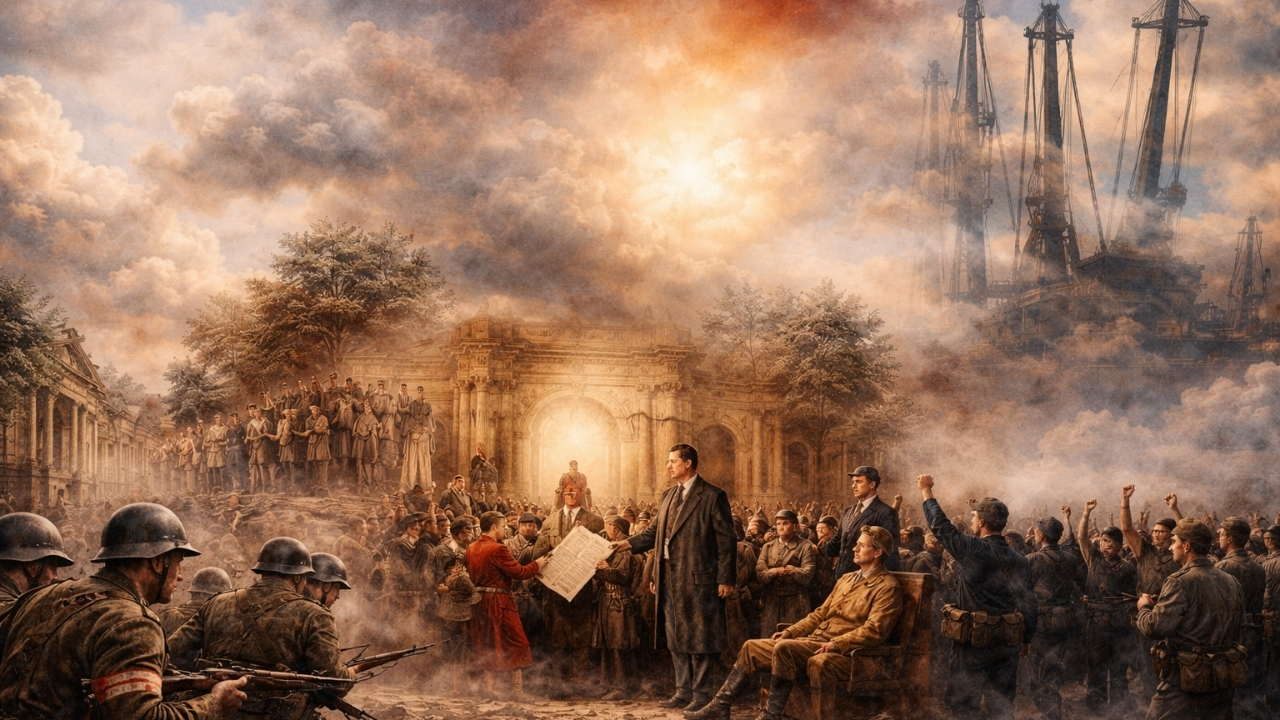
Do you know that one day in the calendar can hide both the birth of great ideas and the tragic twists of history? April 8 is a date worth stopping and asking: what happened that day in history that weighed on the fate of entire nations, continents, and even science and art? From secularization of Prussia to the funeral of John Paul II, from the discovery of superconductiveness to the death of Picasso – this day in history turns out to be extremely rich. We invite you to read, because this historical calendar can really surprise you.
What happened on April 8th? Major events in history
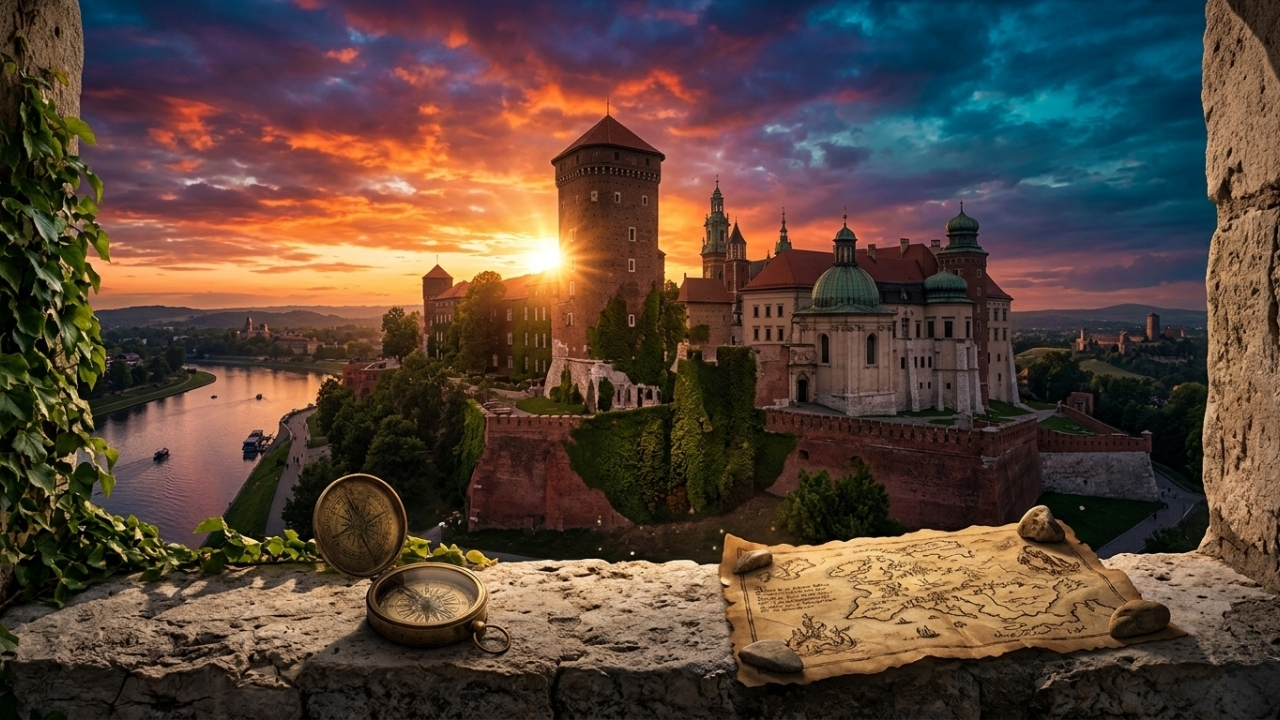
1525 – Treaty of Krakow and the birth of Prince Prussia
This is one of those moments that changed the map of Europe for centuries. King Sigismund I Old and Grand Master Albrecht Hohenzollern signed the Treaty of Krakow, ending the Prussian War and transforming the Prussian branch of the Teutonic Order into the secular, lenne Duchy of Prussia. The decision to secularize the Order was revolutionary – for the first time the great master paid tribute to Lenna to the Polish king as a secular prince. It is from this principality that power will grow over time, which will unite Germany and drag Europe into war three times.
1794 – Bartosz Głowacki receives the bulawa of the Ensign
A few days after the legendary Battle of Racławice, Tadeusz Kościuszko faced a unique task: to honour the heroes who fought the co-syndership against the Russian army. On 8 April, he appointed the peasant Bartosz Głowacki as the ensign of the grenadier regiment of Kraków. It was not just a gesture – it was a political and symbolic breach of state barriers in Poland. Głowacki, a simple cosynier, became an officer, which in the realities of the 18th century Republic was a real social revolution.
1861 – Massacre on Castle Square in Warsaw
That day in Warsaw's history was written in blood. During a demonstration in Castle Square, protesting the dissolution of the Municipal Delegation and the Agricultural Society, the Russian military opened fire on defenseless crowds. Over a hundred people died, several hundred were injured. This dramatic event became one of the sparks that ignited the January uprising two years later. Today, this massacre reminds us of how much Poles paid for every manifestation of freedom in the time of the partition.
1911 — Discovery of superconductiveness
On April 8, 1911, Dutch physicist Heike Kamerlingh-Onnes made a discovery that more than a hundred years later still fuels some of the world's most important technologies. He recorded the phenomenon of superconductiveness – a complete loss of electrical resistance in mercury chilled to extremely low temperature. For this discovery he received the Nobel Prize. Today, superconductivity is the foundation of MRI magnetic resonance, particle accelerators and, perhaps, the future of energy. It all started that day.
1919 – Establishment of AGH Academy in Kraków
Just a few months after Poland regained its independence, the reborn state took on building the foundations of modern science and industry. On 8 April 1919, the AGH University of Science and Technology was established in Kraków – a university that was to educate staff for Polish mining and metallurgy. Today AGH is one of the largest and best technical universities in Poland, employing thousands of scientists and educating tens of thousands of students. This historical calendar shows how quickly the young state wanted to catch up with civilization.
1940 – ORP "Earl" sinks "Rio de Janeiro"
In one of the bravest episodes of the Polish Navy during World War II, the Polish submarine ORP "Orzeł" sank in Norwegian waters a German transport ship "Rio de Janeiro", carrying on board Wermacht soldiers. About 200 of nearly 380 people on board died. This event was of great intelligence significance – it revealed that Germany was preparing an invasion of Norway, although the Allies failed to draw the right conclusions in time. The ORP "Orzeł" has been recorded in history as one of the symbols of the valor of Poles in a foreign country.
1973 – Death of Pablo Picasso
On April 8, 1973, the world of art lost one of its greatest Titans. Pablo Picasso, a Spaniard who revolutionized the painting of the 20th century, co-writer of cubism and author of "Guernica", left at the age of 91. He left more than 20,000 works – paintings, sculptures, ceramics and graphics. He was an artist who, throughout his life, refused to remain in one style, constantly redefining the boundaries of art. His death closed a certain era, although Picasso's influence on contemporary art continues to this day.
2005 – John Paul II funeral and opening of Wilson Square metro station
On the same day, April 8, 2005, Poland and the whole world experienced two very different moments, but in some way connected. The funeral of John Paul II, one of the most influential popes in the history of the Catholic Church, a Pole who changed the fate of Central Europe, was held in the Vatican. At the same time, Wilson Square Metro Station opened in Warsaw. Two symbols of two epochs, two faces of Poland – a spiritual and modernizing metropolis.
2022 – Rocket attack at the station in Kramatorsk
What happened that day in recent history still hurts and doesn't let you forget yourself. On 8 April 2022, during a full-scale Russian invasion of Ukraine, a Russian missile attack struck a railway station in Kramatorsk, through which civilians evacuated. 59 people died, more than 100 were injured. Among the victims were women and children waiting for evacuation trains. This day in history has become one of the most shocking symbols of war crimes committed during this invasion.
Born 8 April
Albert I Koburg (1875) – King of Belgium, one of the most admired European monarchs, who personally commanded the Belgian army during World War I and refused to surrender to Germany.
Kofi Annan (1938) – Ghanaian diplomat, 7th UN Secretary General, Nobel Peace Prize laureate, symbol of many years of efforts for peace and human rights in the world.
Jacques Brel (1929) – Belgian bard and composer, one of the greatest creators of French-language poetic song, author of immortal works such as "Ne me quitte pas".
Vivienne Westwood (1941) – British fashion designer, co-creator of punk aesthetics and one of the most influential figures in world fashion history, also known for their commitment to environmental activity.
Julian Lennon (1963) – British singer and composer, son of John Lennon, who grew out of his father's shadow and built his own acclaimed music career.
World events
217 – The murder of Karakalla – Roman Emperor Karakalla was killed by Prefect of the Praetorian Makrinus, which started one of the most turbulent periods in the history of the empire.
1341 – laurel for Petrark – The poet Francesco Petrarca was honored with a laurel wreath on the Roman Capitol, which perpetuated the tradition of the title of "the poet of the winner" for centuries.
1820 – Discovery of Venus of Milo – On the Greek island of Milos one of the most famous statues of antiquity was found, today stored in the Paris Louvre.
1904 – Entente cordiale – France and the United Kingdom have reached a historic agreement that ended centuries of rivalry and became the foundation of the alliance in World War I.
1990 – Premiere of Twin Peaks – ABC station aired a pilot episode of David Lynch's iconic television series, which forever changed the face of television and pop culture.
April 8 is a date that proves that history does not know interruptions and every day brings events capable of changing the course of the world – from great diplomatic treaties to scientific discoveries, from war dramas to the birth of iconic art. This historical calendar is just a clipping of what's in the annals of one day. Come back tomorrow, because on April 9, she has an equally fascinating story to tell.