

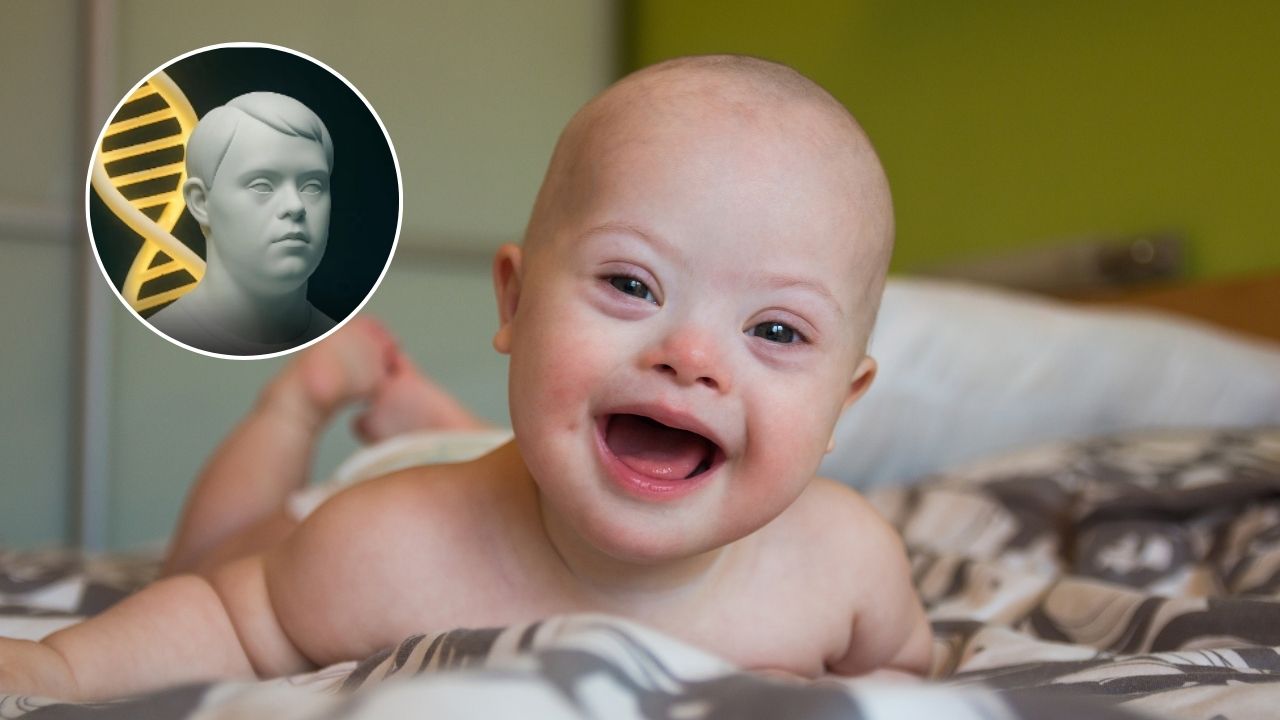
Japanese scientists have achieved what until recently seemed impossible: removing the extra chromosome 21 from cells of people with Down syndrome using the CRISPR method. It is a step that could change the future of this condition.
Scientists are removing the extra chromosome responsible for Down syndrome using CRISPR.
In Japan, scientists have made an incredible breakthrough: they used CRISPR to remove the extra chromosome responsible for Down syndrome – in human cells grown in the laboratory.
Down syndrome occurs when a person is born with three copies of chromosome 21 instead of two, which is called trisomy 21. This extra genetic material disrupts the growth and functioning of cells. Until now, it was not possible to directly remove an entire chromosome.
Using a CRISPR method called allele-specific editing, the scientists were able to target only the third copy of chromosome 21, without disturbing the other two. After the removal, the “rescued” cells began to behave more like typical cells: they showed healthier growth, reduced stress markers and more balanced activity of genes linked to brain development and cell health.
Japanese scientists, using CRISPR technology, have successfully removed chromosome 21, thereby eliminating the risk of Down syndrome in an embryo. Thanks to this technology, genetic diseases will become a thing of the past!
It’s amazing!
How Down syndrome develops
Down syndrome is the result of trisomy 21 – it is the presence of three copies of this chromosome that determines the specific set of features and the greater susceptibility to health problems.
People with Down syndrome may have among other things, heart defects, learning difficulties, reduced immunity or typical facial features. Overproduction of proteins linked to the extra chromosome also increases the risk of diseases such as leukemia and Alzheimer’s.
Until now, medicine has focused on alleviating symptoms and improving quality of life, but it has not offered a causal therapy. This new genetic approach changes that.
The Japanese breakthrough – how does it work?
The key innovation of researchers from Mie University is the use of CRISPR-Cas9 gene editing technology, which works like precise “genetic scissors”.
Simply put – the researchers designed special guide RNAs that targeted only the extra chromosome 21. Thanks to this, they could “cut out” the surplus copy, leaving cells with the correct set of genes.
- Cells obtained in the laboratory regained a typical gene expression profile.
- They were able to restore their natural functioning, which was previously impossible at the in vitro level.
Limitations and further challenges
The results were obtained only under laboratory conditions – the procedure is not ready for use in a whole organism.
Every cell of a person with Down syndrome carries the extra chromosome. Removing it from the body of a newborn or an adult is currently technologically impossible.
Potential risks and ethics
- Current techniques may lead to undesirable changes in healthy chromosomes.
- Before the method reaches clinics, the risk of mutations must be eliminated and safe conditions for patients must be determined.
This groundbreaking study opens the door to developing gene therapies that modify specific nerve or glial cells. Experts predict that within a few years similar technologies may bring entirely new solutions in the treatment of Down syndrome.
Japanese experience shows that the future of gene therapies is getting closer – Asia may set the path for groundbreaking therapies in Europe as well.





Komentarze