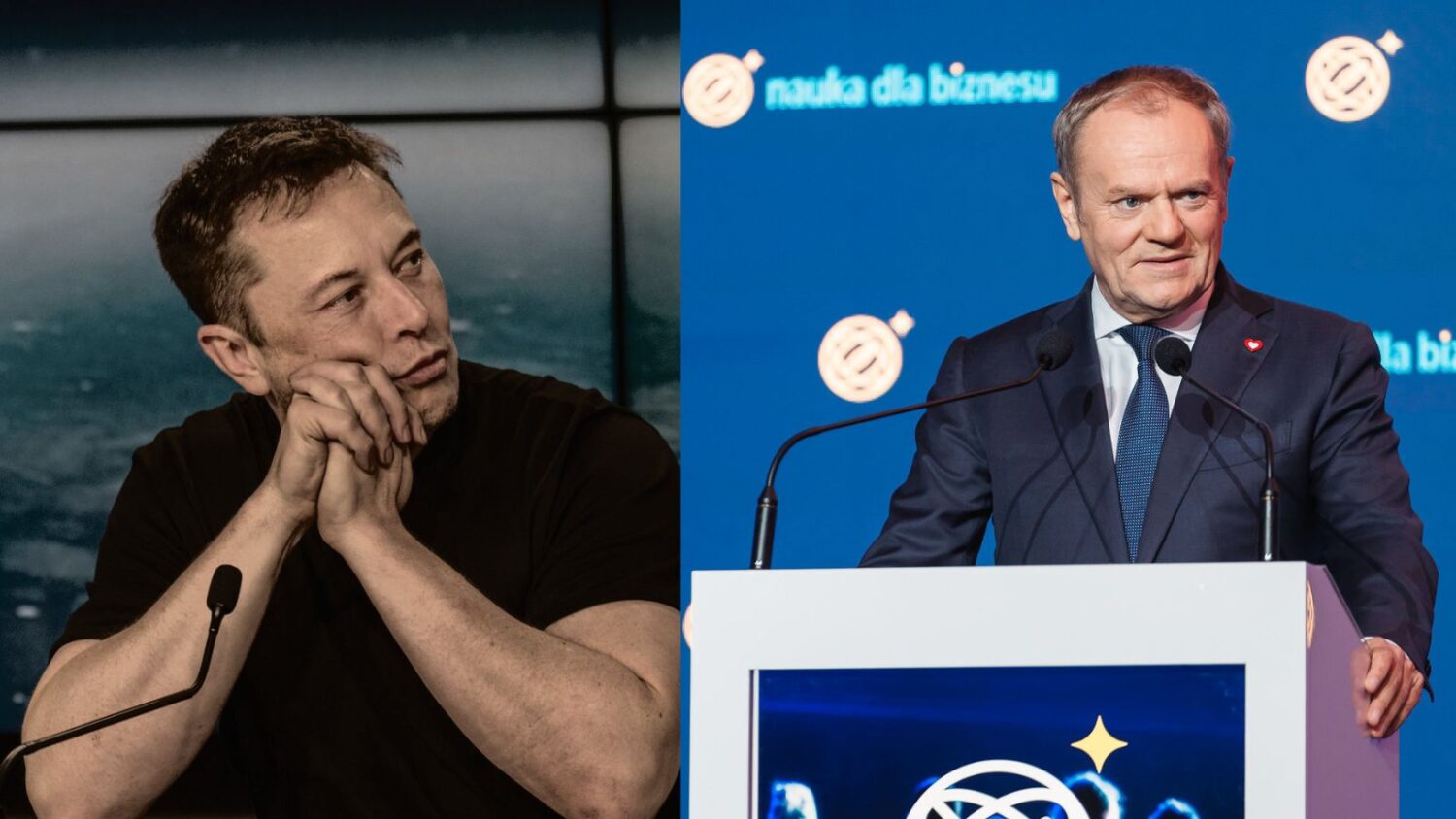
In the era of fast social media, where one interaction can change the scope of the communication, the post of Polish Prime Minister Donald Tusk became a global hit. On December 6, 2025, an entry on the X platform (formerly Twitter) reached over 36 million users. All thanks to Elon Musk's witty answer, billionaire and owner X, who not only quoted Tusk but also added his own comment, causing a stormy discussion. But what's this really about? Let us take a closer look at the context that concerns transatlantic relations, criticism of the European Union and the new US foreign policy under Donald Trump.
Content of Tusk's Post and Muska's Answer
Donald Tusk, Prime Minister of the Republic of Poland, directed his message directly to "American friends". In his post, he wrote:
"Dear American friends, Europe is your closest ally, not your problem. And we have common enemies. At least that's been the case for the last 80 years. We have to stick to this, this is the only sensible strategy of our common security. Unless something has changed."
This entry quickly gained popularity, but the real boom followed Elon Musk's intervention.
Musk, quoting Tusk, added a humorous comment:
"If you connect Donald Trump and Elon Musk, you will receive... 😂".
This is an allusion to the similarity of names – Donald Tusk sounds like Trump and Musk. The billionaire then clarified his position:
"I love Europe, but not the bureaucratic monster of the EU."
This discussion attracted millions of attention, making Tusk's post one of the most watched at that time. According to X-platform data, the premier's entry reached 36.6 million views, and the discussion under it collected thousands of comments, including politicians, analysts and regular users.
Background: New US security strategy and criticism of Europe
The issue Tusk and Musk discussed has deeper geopolitical background. Tusk's post appeared in response to a new national security strategy of the United States, announced under the Donald Trump administration. This document strongly criticises Europe for insufficient defence spending within NATO and calls for "strategic stability" with Russia, which for many European leaders sounds like a potential weakening of the transatlantic alliance. Trump, who returned to the White House after the 2024 election, repeatedly announced that the U.S. would no longer "subsidise" Europe's security by threatening customs tariffs on EU goods and revision of its obligations in NATO.
Tusk, as Prime Minister of Poland – a country strongly dependent on the alliance with the US and NATO – calls for unity to be maintained. Poland, lying on the eastern flank of Europe, sees a direct threat in Russia, especially in the context of the ongoing war in Ukraine. His words "unless something has changed" may be a subtle allusion to change in Washington's politics, where Trump and his surroundings, including Musk, promote a more isolative attitude towards Europe.
On the other hand, Musk, Trump's close associate (he was head of the Department of Government Efficiency in Trump's administration), often criticizes the European Union for excessive bureaucracy and regulation. His comment was hot: just a day before the EU imposed a €120 million penalty on platform X for breaching the Digital Services Act (DSA) transparency rules. The punishment concerned, among others, problems with the system of account verification (blue tags) and advertising reporting. Musk reacted harshly by calling for "the abolition of the EU and the restoration of sovereignty to individual countries so that governments can better represent their citizens". This is not the first time a billionaire has attacked Brussels – he has previously accused the European Commission of trying to censor X, claiming that the EU has offered him a "secret arrangement" for silent content moderation in exchange for avoiding penalties.
Broadening the impact of discussions
This exchange of views on X not only increased the coverage of Tusk's post, but also lit up a debate on the future of the US-EU relationship. On the one hand, Trump and Muska supporters see an "open prison" in the EU full of bureaucracy that suppresses freedom of speech and innovation. On the other hand, European leaders, such as Tusk and Polish Foreign Minister Radosław Sikorski (who advised Musk to "go to Mars because there is no censorship of Nazi salute there), defends European integration as a guarantee of security and stability.
The discussion highlights the growing transatlantic tensions. Trump announces tariffs on EU products, which could hit the economies of countries such as Poland, Germany or France. At the same time, Musk, as an influential player in the U.S. administration, strengthens the anti-EU narrative, which may affect trade and security policies. For Poland, which is one of the largest beneficiaries of EU funds and NATO alliance, this issue is an emergency signal – it is necessary to strengthen dialogue with Washington to avoid isolation.
In summary, Tusk's post became a symbol of the defence of the European-American alliance in the face of changes in the US. Thanks to Musk he reached millions, but the discussion reveals deeper cracks: between the vision of a united Europe and the criticism of bureaucracy, between NATO solidarity and isolationism. Has anything changed in transatlantic relations? Time will tell, but the debate on X is already shaping public opinion.