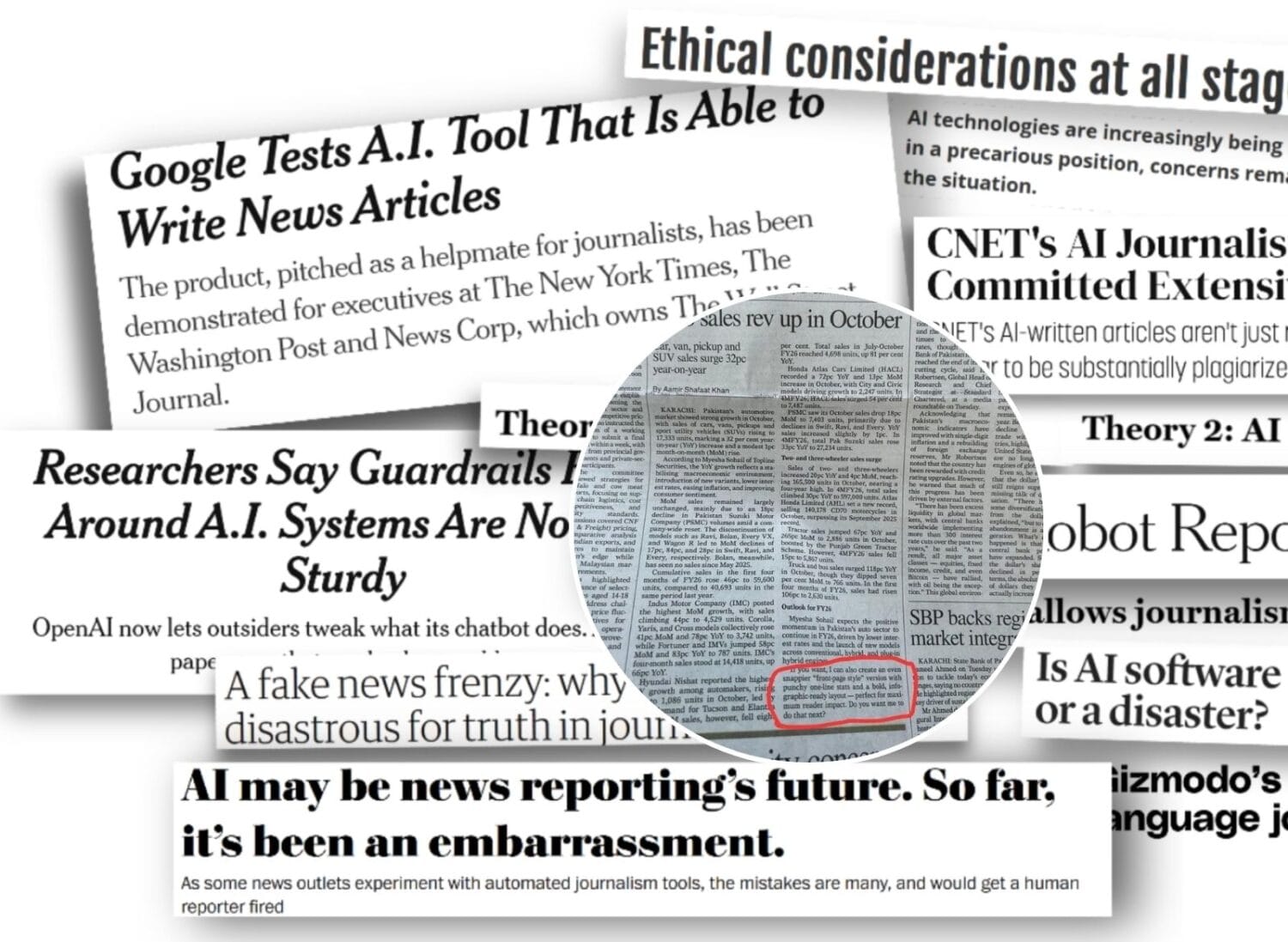
In an era when artificial intelligence enters every aspect of our lives, even traditional paper newspapers are not safe. A recent incident in the Pakistani newspaper Dawn – one of the oldest and most respected in the region – revealed how AI, such as ChatGPT, starts writing articles. But what happens when the machine makes a mistake and the editor doesn't notice it? It's not science fiction, it's reality 2025.
A Mistake to the World
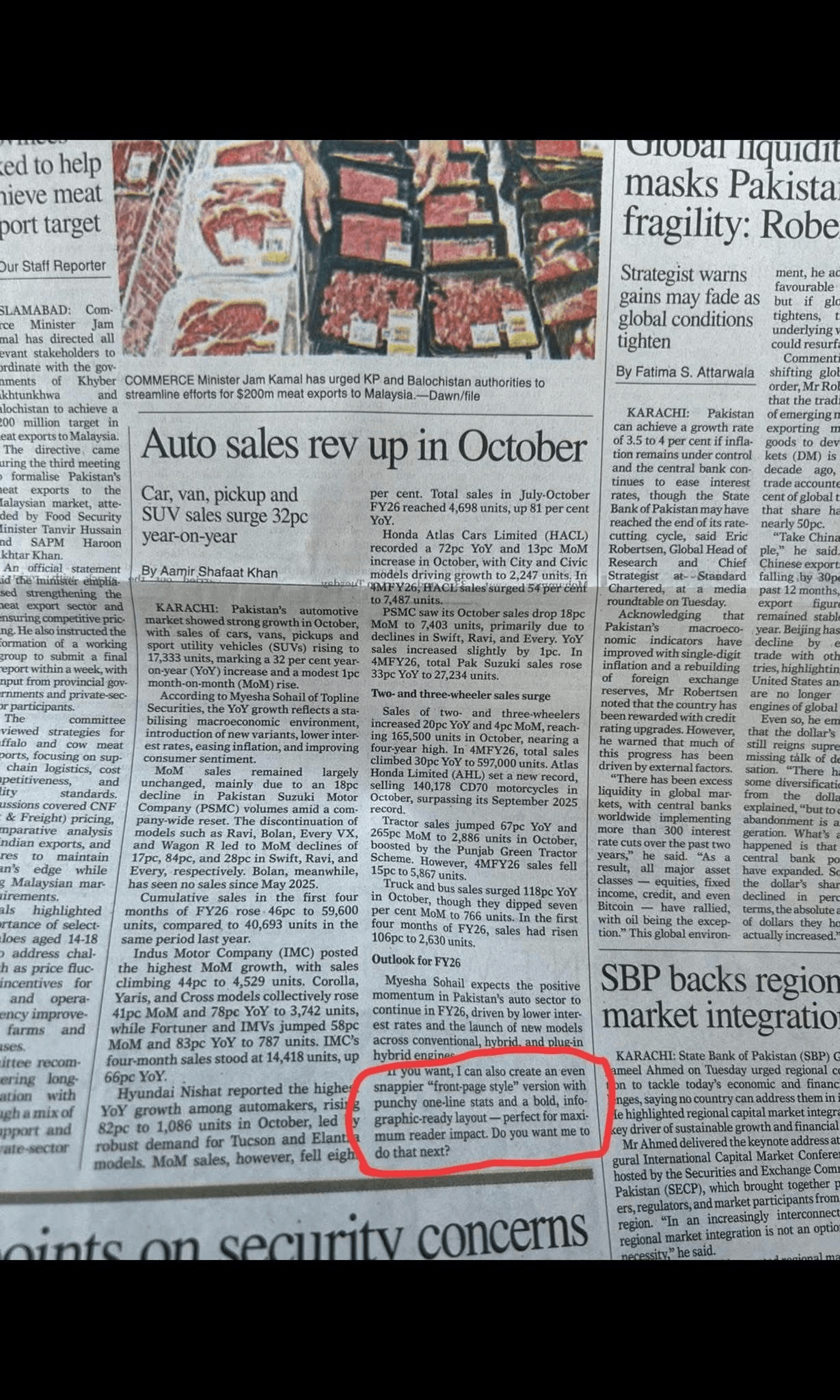
November 12, 2025 in a printed edition Dawn an article was published entitled "Auto sales rev up in October" (Car sales are gaining momentum in October). The text analysed the increase in vehicle sales in Pakistan, but at the end there were strange phrases: "Do you want me to do that next?" and others that looked like commands for AI or unfinished ChatGPT answers. A reader of Priyanshu Ratnakar shared the photo on the X platform (formerly Twitter), writing: "wake up babygirl, now news is written by chatgpt". The post quickly became a viral, gaining more than 69 000 likes and thousands of release.
The paper reacted quickly. In the online version, the article was revised and the editorial board added a note: "This newspaper report was originally edited using AI, which is in revolution of Dawn’s current AI policy." This confession – AI was used for editing but without proper control. The editor apologized, but the incident sparked a wave of criticism. X users joked: "Editor needs to be fire long with writer" or "Pakistan Ka Unpaid Intern Hoga" (It must be an unpaid trainee from Pakistan).
It's not the first time AI's been sneaking into the press. In 2023 Sports Illustrated published articles generated by AI, with false authors and photos. And in March 2025 the Italian newspaper Il Foglio published the entire edition created by AI – from articles to headlines, or even irony.
How does AI change journalism?
Artificial intelligence is not news in the media. According to a October 2025 study, as many as 9% of articles in American newspapers are at least partially generated by AI. Tools like ChatGPT help in writing sketches, summaries or even full texts. For example, San Francisco Chronicle uses AI to recommend restaurants based on archival reviews. British Mirror and Express published articles written by AI as early as 2023.
The advantages are obvious:
- Speed: AI can process data and write an article in seconds.
- Efficiency: Helps with routine tasks, like summary financial reports.
- Availability: In developing countries, like Pakistan, where editorials are small, AI fills gaps.
But flaws? No context, no factual errors, no authenticity. In May 2025, major newspapers published a false list of books for the summer generated by AI – with non-existent titles. This shows how "AI slop" – tasteless, spam content – floods the media.
Future: Man vs. Machine
Will AI replace journalists? Not yet, but integration is progressing. Newsroom like The Atlantic experiment with AI to create tools for readers. However, incidents like this in Dawn highlight the need for regulation. Ethical guidelines, like those in Dawn, ban the use of AI without supervision.
Poland? Though we do not yet see such mistakes in Electoral gazette is Republic of, trend is global. AI helps with translation or data analysis, but editorials must be vigilant.
Summary
Incident in Dawn It's an alarm bell: AI is powerful, but without the human eye it can lead to embarrassment. Will you read the paper next time and consider who really wrote the article? The future of journalism is a hybrid – machine plus man. But remember, AI has no intuition, no empathy, no responsibility. It is us readers who must demand transparency.