Did you know that in one day — 13 April — history has recorded on its pages both the triumph of human scientific genius and one of the greatest tragedies of the 20th century? This day in history is a true mosaic of groundbreaking events, discoveries and dramatic twists of action that shaped our world. Welcome to the journey for centuries — See what happened that day, and see how much is hidden on April 13 in the historical calendar.
What happened on April 13th? Major events in history
1883 – The first nitrogen condensation in the world
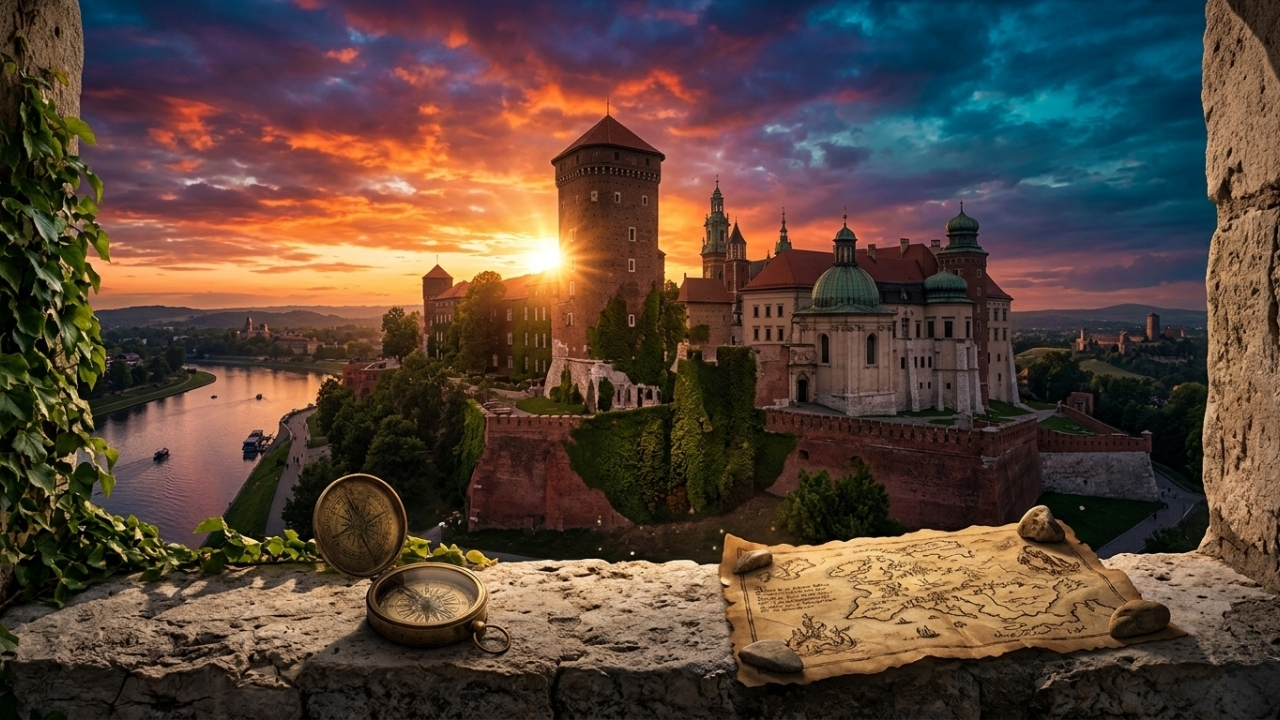
On that day in history, Polish scholars have done something that has not been achieved so far. Professors of the Jagiellonian University, Zygmunt Wróblewski and Karol Olszewski, were the first to melt nitrogen in the world — a gas which for a long time seemed to be completely unchanged in the state of focus. This achievement opened the way to the entire cryogenic field and was fundamental to chemistry, physics and industry. The Krakow laboratory became the world's scientific center for a moment.
1943 – Announcement of the discovery of the Katyn crime
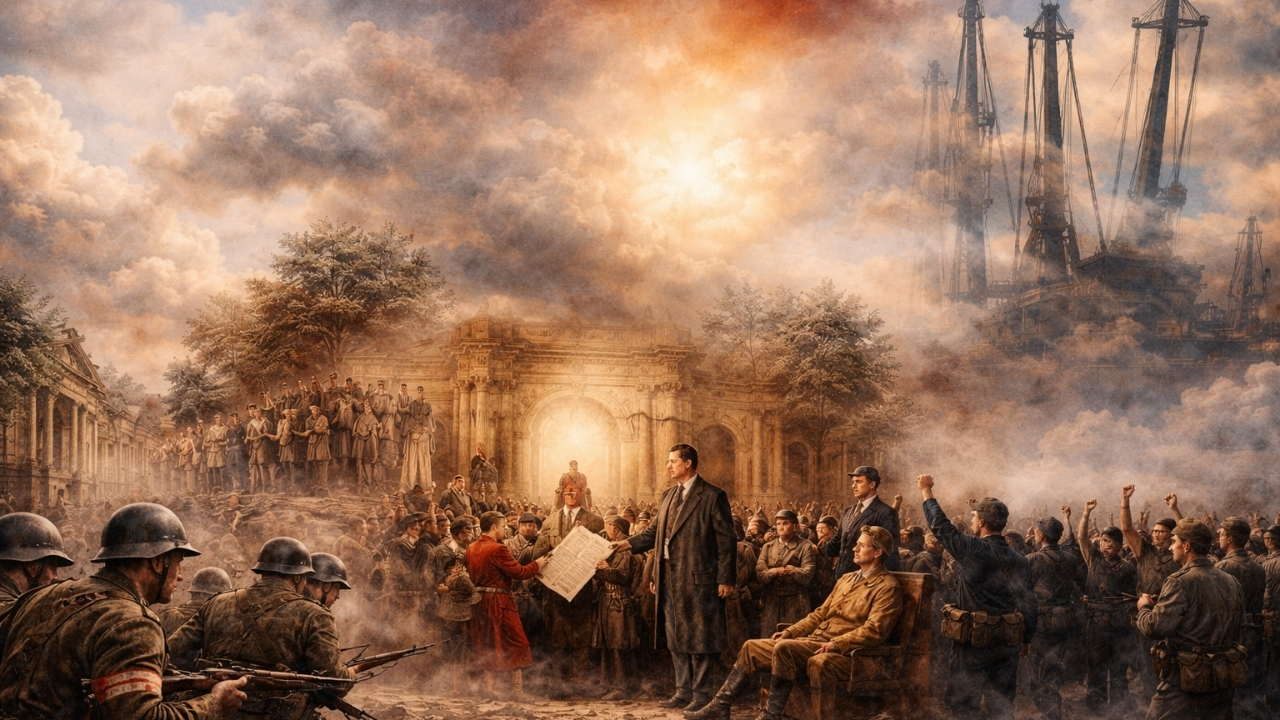
On that day, Berlin radio provided shocking information: mass graves of Polish officers were discovered in the Katyń Forest. A press conference was held in the German Ministry of Foreign Affairs, during which 150 corpses were identified — and there is no doubt that these are Polish officers murdered three years earlier. The Katyn crime, in which the NKVD murdered thousands of Polish prisoners of war, was hidden by the Soviet Union for decades. Poland celebrates 13 April as the Day of Memory of Katyń Crime Victims — which makes the historical calendar particularly touching.
1598 – Nantian Edition and the End of Religious Wars in France
King Henry IV of France Bourbon announced that day one of the most important documents of religious tolerance in the history of Europe. The Nantian Edict granted Huguenots — French Protestants — the right to profess faith and civil equality, thus ending decades of bloody religious wars. Although the document was cancelled almost a hundred years later, it became a model for the idea of freedom of religion. This is one of those moments when the ruler with his signature changed the fate of millions of people.
1953 – CIA launches MKUltra program
On April 13, 1953, the United States Central Intelligence Agency launched one of the most controversial research projects in the history of special services. The MKUltra program, covered in strict secrecy, was to explore the ability to control the human mind — e.g. using psychoactive agents, hypnosis and psychological torture. Over the years, experiments have been conducted on unconscious participants, including soldiers and patients in psychiatric hospitals. The program was officially completed in 1973, but the full truth of its size came to light only later, and until today it is scary.
1970 – An explosion aboard Apollo 13
"Houston, we have a problem" — That's the sentence that went into the legend that day. On April 13, 1970, as the Apollo 13 spacecraft was heading for the Moon, a major explosion of the oxygen tank in the service module occurred. The landing mission had to be aborted, and the whole world froze in anticipation of a three-man crew returning to Earth. In dramatic circumstances, thanks to the extraordinary work of NASA engineers and the cold blood of astronauts, the flight ended with a happy return. This story has become a symbol of courage and human ingenuity in the face of disaster.
1986 – John Paul II visits the synagogue
This day in history has been recorded as a breakthrough in Christian-Jewish dialogue. John Paul II was the first pope since St Peter’s day to visit the synagogue — in the Great Synagogue of Rome. He called the Jews "older brothers in faith" and emphasized the spiritual bond between the two religions. This gesture was not only religious but also deeply political — was a sign of reconciliation after centuries of persecution and anti-Semitism, which the Church was not always free.
1742 – Prime Minister of "Messiah" Händla
The first public presentation of Georg Friedrich Händla's "Messiah" oratory was held in Dublin that day. — one of the most famous classical music works in history. The song, composed in just 24 days, sparked a sensation and almost immediately became a cult work. The famous "hallelujah" is still performed standing by the audience — a tradition that is supposedly derived from King George II, who was to stand up during his first performance in London. What happened that day in the world of music, we still feel in every Philharmonic.
2022 – Flooding of the cruiser "Moscow"
On 13 April 2022, during Russia's ongoing invasion of Ukraine, the Ukrainian armed forces hit two anti-ship missiles maneuvering Neptune into a Russian missile cruiser "Moscow" — Black Sea Fleet flagship. The damaged cruiser sank the next day. It was one of the most spectacular strikes of this war and a huge symbolic and military loss to Russia. This event has shown that modern technology and determination of defenders can change the course of conflict.
Born 13 April
Thomas Jefferson (1743) – the third president of the United States, head of the Declaration of Independence, one of the founding fathers of the United States.
Garri Kasparov (1963) – Russian chess player recognized as one of the most prominent in the history of this game, a longtime world champion and an active opposition activist against the Kremlin.
Samuel Beckett (1906) – Irish playwright and writer, Nobel Prize laureate in literature, creator of the cult "Waiting for Godot".
Seamus Heaney (1939) – Irish poet, Nobel Prize laureate in literature, one of the most important voices of 20th century English-language poetry.
Brigitte Macron (1953) – French pedagogues, French first lady, known for her active role alongside President Emmanuel Macron.
World events
1919 – Massacre in Amritsar – British soldiers opened fire on Indian demonstrators in Amritsar, killing 379 people and wounding more than 1100 — This event became one of the symbols of colonial brutality and accelerated the independence movement in India.
1829 – The emancipation of Catholics in Britain – Catholics in Britain and Ireland received electoral rights, ending centuries of religious and political discrimination.
1912 – Royal Flying Corps Uprising – Royal Flying Corps, the predecessor of today's Royal Air Force, was established in the UK, one of the most famous air forces in history.
1990 – Gorbachev admits the USSR's fault for Katyń – During the visit of President Wojciech Jaruzelski in Moscow, Mikhail Gorbachev officially admitted that the Katyn crime was done by the NKVD, passing on documents from Soviet archives to Poland.
2017 – USA drops "mother of all bombs" – from the plane Lockheed C-130 Hercules Americans first used GBU-43/B MOAB bombs for combat purposes — the largest conventional air bomb in the US arsenal — destroying the Islamic State tunnel complex in Afghanistan.
April 13 is proof that history does not sleep for one day — is a historical calendar full of dramas, discoveries, reconciliations and disasters that have changed the course of the world. Looking at what happened that day over the centuries, it is easy to see how much the past still lives in the present. Come back tomorrow. — Because on April 14th there are equally fascinating stories.