Do you know that one day in history can contain the birth of a genius, the destruction of a legendary ship, the assassination of the president and the technological revolution — Everything at the same time? This is the day of April 15, and if you are wondering what has happened to that day in history over the past centuries, you have a unique journey ahead of you through a historical calendar full of dramas, discoveries and phrases that have changed the world. Get ready. — This review won't let you get bored for a while.
What happened on April 15? Major events in history
1452 – The Birth of Man of the Renaissance of All Time
That day in history in the small village of Vinci near Florence, Leonardo da Vinci was born — painter, sculptor, architect, anatomy, inventor and philosopher in one person. The man who designed flying machines forever before the Wright brothers painted "Mona Lisa" and "Last Supper", and his notebooks filled with observations about almost every field of knowledge. It is difficult to identify a second person in history whose mind was equally versatile and ahead of an era.
1865 – The Death of Abraham Lincoln and the End of an Era
On April 15, 1865, the United States lost one of the most important presidents in its history. Abraham Lincoln, shot last night by John Wilkes Booth at the Ford Theatre in Washington, D.C., died in the morning. — without regaining consciousness. This was the first successful assassination of the President-in-Office of the United States. His death coincided with the end of the Civil War, and the country faced a difficult process of rebuilding a divided nation.
1912 – The Titanica disaster shocks the world
It was on April 15, 1912, at night and early morning, that RMS "Titanic" sank in the icy waters of the Atlantic. — The world's largest and recognized as an unsinkable transatlantic. As a result of the collision with the iceberg during a maiden voyage from Southampton to New York City, more than 1500 people were killed. The tragedy revealed dramatic deficiencies in maritime safety procedures and forever changed standards of rescue on the oceans. To this day, it is one of the most recognizable disasters in human history.
1955 – First McDonald’s opens the doors
Who would suppose that this day in history would also be recorded as the birth of a global fast food empire? On April 15, 1955, in Des Plaines, Illinois, Ray Kroc opened the first McDonald’s restaurant, starting a revolution in the catering industry. Today, the network has more than 40,000 locations in more than 100 countries, and its gold arches are one of the most recognizable logotypes on the planet. It is hard to imagine a contemporary popular culture without that sign.
1989 – Tragedy on Hillsborough and protests on Tiananmen
On April 15, 1989, the story recorded two dramatic events almost simultaneously. In Sheffield, during the semi-final England Cup match between Liverpool and Nottingham Forest at Hillsborough Stadium, 96 people were killed as a result of fatal piston and organizational errors — This is one of the biggest tragedies in the history of British football. On the same day in Beijing, students gathered in Tian’anmen Square, starting protests that in a few weeks were brutally suppressed by the military and shaken the conscience of the whole world.
2013 – Explosions at the marathon finish in Boston
One of the most shocking events of the 21st century related to terrorism in the United States took place on April 15. During the finish of the famous Boston marathon, two bombs exploded near the finish line, killing 3 people and injuring 264 runners and fans. The assassination was done by the Carnaive brothers motivated by Islamic extremism. The event echoed worldwide and launched a discussion on the safety of mass sporting events.
2019 – Notre-Dame Cathedral fire in Paris
What happened that day in 2019? The whole world held its breath, watching one of the most important works of Gothic architecture burn live — Notre-Dame de Paris Cathedral. The fire, which broke out in the afternoon, digested the roof and collapsed the famous needle, but thanks to heroic fire brigade action managed to save most of the priceless works of art and relics. The restoration of the cathedral, completed in 2024, became one of the largest conservation projects in European history.
1864 – End of the Polish Kingdom
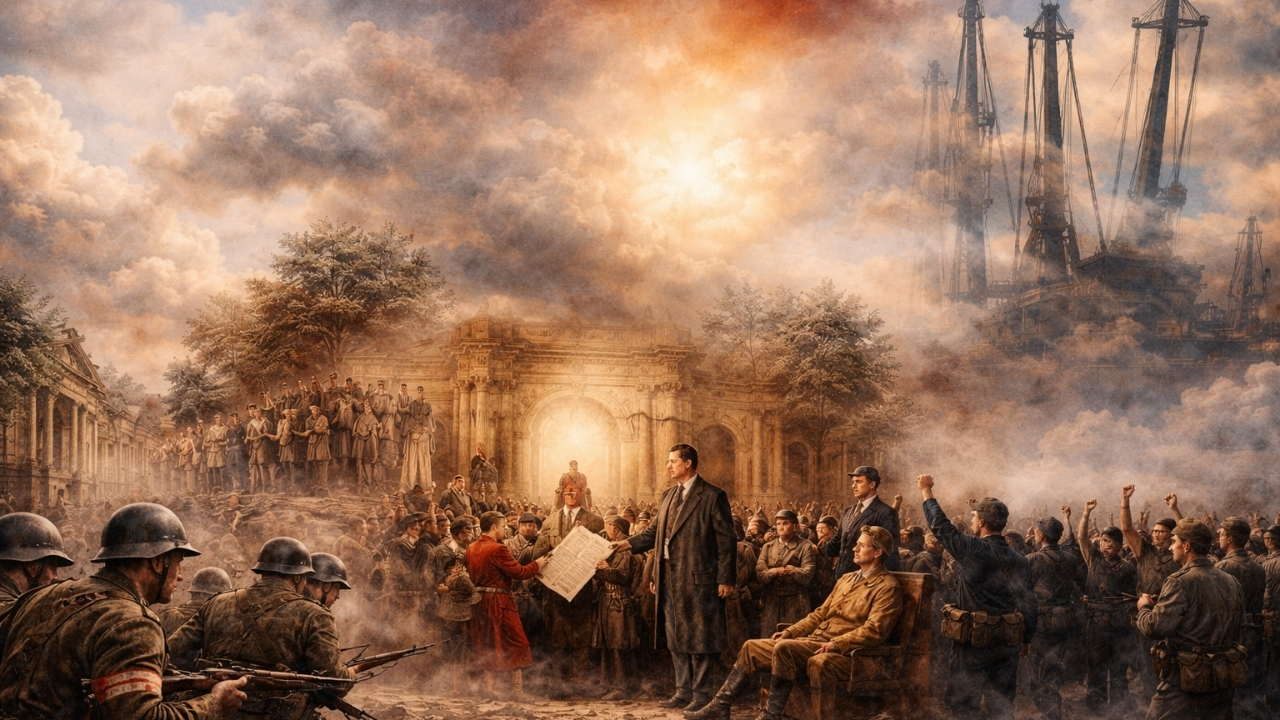
This historical calendar must not miss a date that is extremely important for Poles. On April 15, 1864, the Tsar's command of the misdemeanor of peasants abolished the state in the Kingdom of Poland. Although this decision was part of a Russian policy aimed at weakening the Polish nobility after the fall of the January Uprising, its social consequences were enormous — millions of peasants gained personal freedom and the right to the land they cultivated. It was one of the most important social breakthroughs in the Polish history of the 19th century.
1952 – Flying bomber Boeing B-52 Stratofortress
On April 15, 1952, the prototype strategic bomber Boeing B-52 Stratofortress was first blown up. — A machine that remains in the service of the United States Air Force until today. It's one of the longest-exploited military aircraft in aviation history. Originally designed to carry nuclear charges during the Cold War, the B-52 took part in successive armed conflicts for over seven decades and is still being upgraded.
1986 – American raids on Libya
In retaliation for the bombing of the Berlin disco "La Belle", in which, among others, American soldiers were killed, the U.S. Air Force carried out bombing of military and infrastructure targets in Libya on April 15, 1986, including Tripoli and Benghazi. The operation, approved by President Ronald Reagan, was controversial internationally, but set a new standard of response to acts of terrorism sponsored by the states. Libyan leader Muammar Gaddafi survived, though his adopted daughter died.
Born 15 April
Leonardo da Vinci (1452) – Italian painter, sculptor, architect and inventor, recognized as one of the greatest minds in human history, author of "Mona Lisa" and "Last Supper".
Emma Watson (1990) – British actress and social activist, best known for her role as Hermiony Granger in the Harry Potter film series, as well as the UN ambassador of goodwill.
Beata Szydło (1963) – Polish politician, former Prime Minister of the Republic of Poland in 2015–2017 and then MEP of the European Parliament.
Alła Pugaczowa (1949) – Russian singer and composer, one of the most popular singers in the history of Soviet and Russian music, icon of popular culture in Eastern Europe.
Nikita Khrushchev (1894) – Soviet political leader, I Secretary of the KC KPZR and Prime Minister of the USSR, who announced destalination and faced the US during the Cuban crisis.
World events
1896 – Conclusion of the first modern Olympic Games – The 1st Summer Olympics in Athens ended, which started one of the largest sporting phenomena in the history of the modern world.
1920 – Sacco and Vanzetti case – In South Braintree, Massachusetts, there was a double murder charged with Italian anarchists Sacco and Vanzetti — The case has become a symbol of the fight for human rights and of the justice of justice.
1945 – The Liberation of Bergen-Belsen – British troops reached Bergen-Belsen concentration camp in Lower Saxony, where they found thousands of exhausted prisoners and tens of thousands of bodies of victims of Nazi terror.
1994 – Conclusion of the WTO Agreement "Marrakesh in Morocco signed a historic agreement to create the World Trade Organization, which revolutionized the principles of global exchange of goods and services.
2010 – Closure of airspace in Europe by Eyjafjallajökull volcano "The eruption of the Icelandic volcano Eyjafjallajökull caused airspace to close over most of Europe, paralyzing aviation on an unprecedented scale and grounding millions of passengers.
April 15 is a day that in its historical calendar hides incredible diversity — From the birth of brilliant minds, through civilizational breakthroughs, to tragedies that are still moving. Each year brings further chapters of this endless story about man and history. Look at us tomorrow — What happened on April 16 may surprise you just as much.