Do you know that one day in the calendar can hide hundreds of stories that shape the fate of entire nations? If you ever wondered what happened that day in history and why the 3rd of May is special, you have an answer ahead of you. From passing a groundbreaking constitution to the birth of legends of music, sport and science — This day in history offers a journey through the centuries that will surprise even a well-read lover of the past. Stay with us and discover a full history calendar on May 3.
What happened on May 3rd? Major events in history
1791 – Adoption of the Constitution 3 May
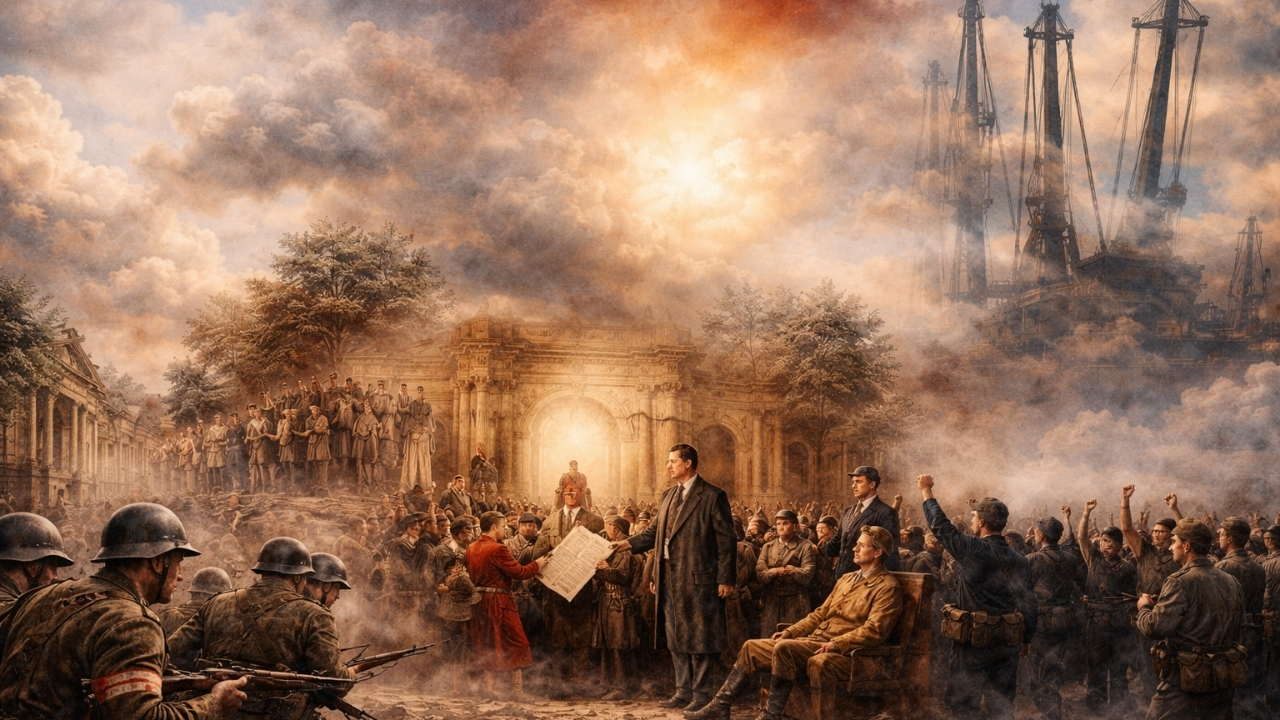
This is undoubtedly the most important Polish event, which has been recorded in the historical calendar forever. The four-year-old parliament passed the Constitution on 3 May that day — the second in the history of the world and the first in Europe of this kind, thus preceding the French Constitution. The basic law introduced a tripartition of power, abolished the veto liberal and strengthened the rights of the townspeople, becoming a symbol of the Polish desire for modernity and sovereignty. Today this day is the National Saint of the Republic of Poland and a day free of work, and its anniversary is celebrated both in the country and by Polonia worldwide.
1660 – Olive Room between Poland and Sweden
When signings under the peace treaty were placed in Podwarszawska Oliwa, one of the most dramatic cards of Polish history ended — the Swedish flood. Poland and Sweden made peace that day, under which Jan II Kazimierz Waza renounced his pretension to the Swedish throne, and Poland retained part of Inflant. The Olive Agreement ended decades of dynastic conflicts and set a new political map of the Baltic region for decades to come. Interestingly, the place of peace — Today's Oil in Gdansk — is today a popular neighborhood with a famous cathedral, where you can admire the historical monuments of that era.
1815 – Division of the Duchy of Warsaw at the Vienna Congress
It was one of the darkest days in the history of Polish independence aspirations. At the Vienna Congress, Russia signed conventions with Prussia and Austria, deciding on the division of the Duchy of Warsaw. The Russian Empire seized the central and eastern part as the Kingdom of Poland, Prussia took over the Grand Duchy of Poznań, Austria — Wieliczki district, and Kraków became the so-called Free City. This day in history sealed the long-term demolition of Polish lands and dismissed the chances of rebuilding an independent state by over a hundred years.
1978 – Launch of the Fiat Polonez series production
For many Poles it is one of the more sentimental entries in the entire historical calendar of that day. On May 3, 1978, the FSO Car Factory launched a series production of Polonaise — The car that became the icon of Polish automotive industry for the next quarter of a century. The car designed to modernise the home car park has been awarded many varieties and for years it was one of the most popular vehicles in Poland. Polonez did not leave the production line until 2002, witnessing the entire political transformation of the country.
1927 – First radio advertisement in Poland
This little known fact from the Polish historical calendar deserves special attention. On May 3, 1927, a radio commercial was aired on the Poznań radio station of Polish Radio for the first time in Poland. It's hard to overestimate the symbolic meaning of this moment — This was the beginning of the commercialisation of electronic media in the country and the origins of the industry, which today is worth billions of PLN. It is worth remembering what happened that day when we listen to commercials sharing our favorite broadcasts today.
1952 – First landing in the North Pole
Before the astronauts captured the Moon, there were still places on earth where man never set foot by plane. On May 3, 1952, Lieutenant Colonel Joseph O. Fletcher and Lieutenant William P. Benedict of the US Air Force landed first on the North Pole aboard the Douglas C-47 Skytrain aircraft. This achievement opened a new chapter in the history of arctic exploration and scientific research in the most accessible place on Earth. So this day in history marked not only the chronicles of military, but also the annals of geography and discovery.
1979 – Margaret Thatcher becomes Prime Minister of Great Britain
The Conservative Party with Margaret Thatcher at its head won Parliamentary elections in Britain on 3 May 1979, opening a new era in politics not only British but also global. Thatcher, as the first woman to be Prime Minister of the United Kingdom, has carried out deep economic reforms, privatizations and restrictions on trade union powers, building a model of politics that historians today call thatcherism. Her governments continued until 1990 and imprinted a lasting mark on European and Atlantic politics for decades to come.
1973 – Sears Tower becomes the world's highest building
Chicago Tower Sears Tower — known today as Willis Tower — It went into history on May 3, 1973, becoming the world's highest building measured to the roof line. Its height was impressive 442.3 metres, thus surpassing the northern World Trade Center tower in New York City. For decades, the Chicago giant was a symbol of American thinking about architecture — The higher the better. To this day, the building remains one of the most visited viewpoints in the United States.
Born 3 May
Nicolò Machiavelli (1469) – Italian thinker, diplomat and writer, author of the "Prince", works that forever changed understanding of politics and power.
Golda Meir (1898) – Israeli politician and fourth Prime Minister of Israel, one of the most important figures in the history of the Jewish state and world feminism.
Bing Crosby (1903) – legendary American singer and actor, one of the most popular 20th century artists, known among others for the iconic hit "White Christmas".
James Brown (1933) – American singer, composer and instrumentalist, hailed as "the godfather of soul", who revolutionized music popular worldwide.
Sugar Ray Robinson (1921) – American boxer widely recognized as one of the greatest fighters in the history of sport, the world champion in both the light middle and medium categories.
World events
1830 – First regular rail passenger line in England – In England that day, the first regular rail passenger line began operating, opening a new era of land transport in the world.
1947 – Entry into force of the Japanese Peace Constitution – The new Constitution of Japan, dictated by General Douglas MacArthur, entered into force, prohibiting the country from maintaining armed forces and conducting wars.
1960 – Opening of Anna Frank's House in Amsterdam "The Anna Frank House was opened in Amsterdam, a museum where a Jewish girl hid during World War II and wrote her famous journal.
1999 – Tornado with record wind speed over Oklahoma – Over Oklahoma, it passed a tornado with the highest wind speed of 484 km/h measured so far, recording permanently in the annals of meteorology.
1921 – Creation of Northern Ireland "On that day, Northern Ireland was officially established as a separate political entity within the United Kingdom, starting decades of tension and conflict in the region.
May 3 is a day that with extraordinary regularity attracted history — from diplomatic salons to factory halls, from the icy northern pole to the seismic hall where modern Polish state was born. Looking at this historical calendar, it is difficult to resist the impression that some dates have something special in them, as if history itself chose them for its favorite scenes. Look tomorrow, because what happened on that day in May 4th history may be equally surprising.