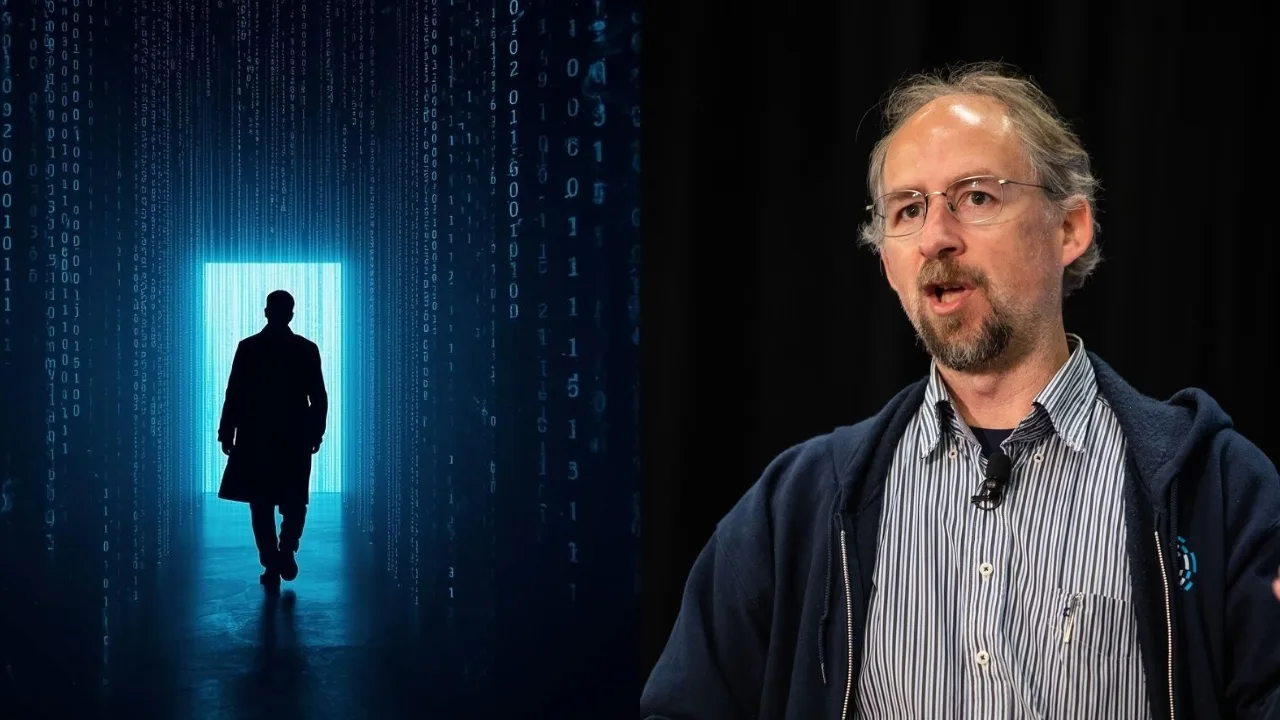
On 8 April 2026 The New York Times published a sensational report which, after more than a year of journalistic investigation, points to 55-year-old British cryptographer Adam Back as the most likely author of Bitcoin, the mysterious Satoshi Nakamoto.
Journalist John Carreyrou, known for exposing fraud in the technology industry, analysed thousands of pages of archived emails, posts from the Cypherpunks mailing lists and stylometric comparisons of texts. According to his findings, Back, the creator of Hashcash in 1997, a proof-of-work system cited in the Bitcoin white paper, left too many traces for this to be considered a coincidence.
The key evidence cited by the NYT includes:
Style and language: Satoshi and Back used identical punctuation errors (e.g. „proof-of-work”), alternated between writing „e-mail” and „email”, „cheque” and „check”, and ended sentences with the word „also”. An AI analysis of 620 people on the Cypherpunks list identified Back as the only one of 67 who made the same errors.
Ideas from the 1990s: As early as 1997–1999 Back described on the Cypherpunks lists exactly the same concepts that later appeared in Bitcoin: private electronic currency, no reliance on trusted third parties, scarcity, the Byzantine generals problem and hash trees for timestamps.
The timing puzzle: Back remained publicly silent about Bitcoin until 2011, which is exactly when Satoshi disappeared from the forums. He then suddenly began actively taking part in debates about block size, opposing „big blocks”, just as Satoshi had in his final emails.
Confrontation: In January 2026 Carreyrou recorded a conversation with Back in El Salvador. The Briton denied it, but his reactions and a slip (repeating an almost verbatim phrase of Satoshi’s, „I’m better with code than with words”) raised further doubts.
Bitcoin’s founder, Satoshi Nakamoto, has remained hidden for 17 years. A trail of clues — and a year of digging by our reporter, John Carreyrou — led us to a 55-year-old computer scientist in El Salvador named Adam Back. https://t.co/s6Jy00IDdk
Adam Back consistently denies it. „Clearly I’m not Satoshi, that’s my position” he stated in an interview. However, he has not made the metadata of his old emails available, which could ultimately settle the matter.
The NYT stresses that there is no definitive proof and there never will be, as only Satoshi could provide it by moving at least one satoshi from their wallet. Nevertheless, the article has caused a storm in the cryptocurrency world. Back is co-founder and CEO of Blockstream, a company worth billions of dollars that has strongly influenced the development of Bitcoin (including sidechains and Lightning).
If the theory is confirmed, it would mean that the creator of the world’s largest cryptocurrency hid behind a pseudonym for 17 years, protecting himself from government repression.
The NYT investigation does not end the search for Satoshi, but it takes it to an entirely new level. The cryptocurrency community is now waiting for a reaction from Back himself and any further material. For now, Bitcoin is reacting calmly, with the price remaining stable above $70,000.
Adam Back commented on the whole matter on his X profile. He denied the reports that he is Satoshi Nakamoto and published an explanation:
I am not Satoshi, but from the very beginning I have focused on the positive social effects of cryptography, privacy online and electronic money, hence my active interest, going back to roughly 1992, in applied research on e-money and privacy-protecting technologies on the cypherpunks list, which led to the creation of hashcash and other ideas.
@JohnCarreyrou in his research published in the „New York Times” discovers, much like @AaronvanW. in his book „Genesis Block”, many interesting analogies to bitcoin in the early attempts to create decentralised e-money – these are in fact prototype concepts aimed at developing a solution similar to bitcoin, involving peer-to-peer technologies, BGP and proof of work.
regarding his statement: „I don’t claim to have a gift for words, but I did indeed talk a lot on those lists” – the broader context concerned my remark that, since I was talkative on the list and known for my active interest in e-cash, in the assessment of my
I often write about topics related to e-money; given the number of my posts, I would probably comment on a given thread more often than other people with similar interests who publish 20 times fewer posts. I presented this to John as an explanation of why it can be seen as a form of confirmation bias, which should be corrected statistically.
The rest is a combination of coincidences and similar statements by people with similar experience and interests – one can conclude that Satoshi needed specific skills and experience to discover bitcoin, whereas I and others were „so close, and yet so far” in the design discussions held over the previous decade.
I also don’t know who Satoshi is, and I think that is good for bitcoin, because it means it is seen as a new asset class – a mathematically limited digital commodity.
The stone with the inscription „We are all Satoshi” comes from the high-budget short special-effects film „Block 170, the first transaction” by @ThibaultZeller @jonathanplesel
i'm not satoshi, but I was early in laser focus on the positive societal implications of cryptography, online privacy and electronic cash, hence my ~1992 onwards active interest in applied research on ecash, privacy tech on cypherpunks list which led to hashcash and other ideas.