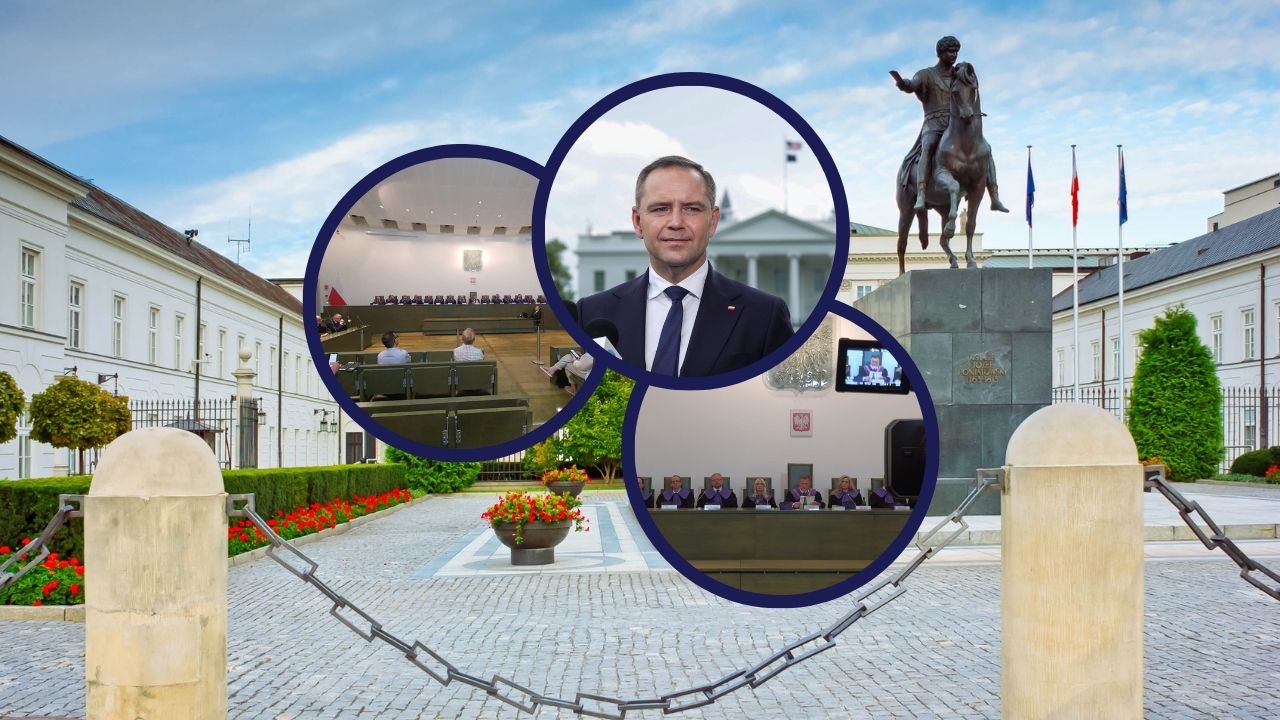
Great emotion, thousands of protests and hot debate – this was the last weeks after the 2025 presidential election. Today the Supreme Court officially declared the validity of the elections, ending one of the most turbulent political periods of recent years.
How does the Supreme Court decide the validity of the presidential election?
The Supreme Court plays a key role in the electoral process. It is he who, after examining the report of the State Electoral Commission and considering all the electoral protests, decides on the validity of the elections. The Supreme Court received over 54 thousand protests concerning this year's presidential election – a large number although not as record-breaking as in 1995. Most of these protests were replicated according to publicly available designs in this model of the Roman Giertych Election Protest.
1995 Election Protest Record
In the 1995 presidential election, a record number of electoral protests were received at the Supreme Court – exactly 593 238 in the statutory deadline. In addition, 25 protests were submitted before the deadline, and after the 1700 deadline, which gave a total of over 595 000 applications. Most of them concerned the allegation that Alexander Kwasniewski provided false information on higher education.
Conduct of the sitting
The meeting of the House of Extraordinary Control and Public Affairs was public and broadcast online. It was attended by representatives of PKW, the Attorney General and the media. The final decision was made after a few hours of sitting and a meeting of the judges.
Election protests – scale and importance
The presidential election of 2025 has aroused enormous social emotion. The scale of the protests was unprecedented – over 54 thousand were affected. However, the Supreme Court considered only 21 protests to be legitimate, which did not affect the outcome of the election.
The judges stressed that the duplication of the same allegations did not increase their legal significance.
Most common allegations
- Irregularities when counting votes
- Charges for malfunctioning of electoral committees
- Requests for recalculation of votes in selected districts
It is worth adding that 13 committees recalculated the votes – irregularities were detected and reported to the PCW, but did not affect the final outcome.
Controversy around the Extraordinary Control Chamber
This year's elections are not only social emotions but also a legal dispute. Attorney General Adam Bodnar questioned the composition of the Extraordinary Control Chamber, demanding that the case be transferred to another Supreme Court chamber. However, the Court of First Instance has left these applications unexamined, citing the existing rules.
Election result and social reactions
In the second round of elections on 1 June 2025, Karol Nawrocki (supported by the Law and Justice), defeating Rafał Trzaskowski (KO) by 50.89% to 49.11%, was victorious. The difference was over 365 thousand votes, which, with such a large turnout, shows how equal the fight for the presidency was.
The Supreme Court decision formally closes the electoral process. Karol Nawrocki is declared the legally elected President of Poland. Despite numerous controversy, the Polish legal system has shown resilience to social and political pressures.