


In recent days, the topic of the “coalition of the willing” and Poland’s role in international efforts supporting Ukraine has been stirring public opinion. Could Donald Tusk’s activity lead to Poland being drawn into armed conflict? We examine what the reality looks like and what the government’s recent decisions mean.
What is the "coalition of the willing"?
The “coalition of the willing” is a group of 33 countries, mainly European but also including Japan, Australia and Turkey, formed on 2 March 2025 on the initiative of UK Prime Minister Keir Starmer. Its aim is to develop effective support for Ukraine, ensure its access to weapons and work towards ending the war. The United States, Hungary and Slovakia, among others, did not join the coalition.
Importantly, the coalition allows NATO states to cooperate outside the Alliance’s formal structure, which helps avoid decisions being blocked by less engaged countries. This solution offers greater flexibility, but it also raises questions about the scope and form of involvement of individual states.
Poland at the centre of events
Diplomatic activity
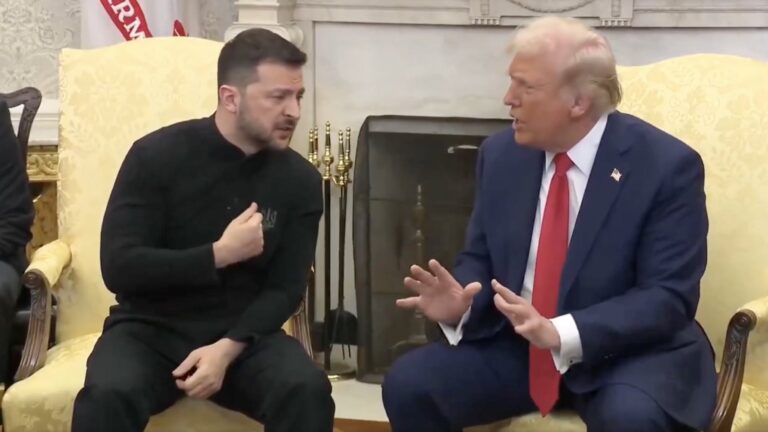
In recent days, Prime Minister Donald Tusk took part in a series of meetings of the “coalition of the willing” leaders, first in Rzeszów and then in Kyiv, where together with French President Emmanuel Macron, German Chancellor Friedrich Merz and UK Prime Minister Keir Starmer he held talks with Ukrainian President Volodymyr Zelensky.
The aim of the talks was to develop a proposal for a 30-day ceasefire that would serve as a test for both Ukraine and Russia. The leaders stressed that they were committed to achieving a genuine suspension of hostilities.
A new alliance with France
An important step was also the signing by Donald Tusk and Emmanuel Macron of a new Polish-French treaty, containing a clause on mutual assistance, including military assistance, in the event of a threat. Prime Minister Tusk stressed that the treaty is being treated “deadly seriously” and that its provisions will be followed by concrete actions, including in the defence industry and crisis preparedness.
Will Poland be drawn into the war?
Facts and concerns
Contrary to some concerns, Poland’s membership in the “coalition of the willing” does not automatically mean participation in military operations. The coalition currently focuses on diplomatic, logistical and military support for Ukraine, but it does not provide for direct combat involvement without broad political and social consent.
Prime Minister Tusk has repeatedly stressed that Poland is building a strong army not to provoke conflict, but to be a reliable ally and a guarantor of security in the region.
How does the coalition work?
- The coalition enables joint action by selected countries, bypassing NATO’s formal procedures.
- Each country decides the scope of its own involvement.
- The main current goal is to work towards a ceasefire and support Ukraine with weapons and logistics.
Poland’s presence in the “coalition of the willing” and Donald Tusk’s activity are primarily an expression of solidarity with Ukraine and a commitment to ending the war through diplomacy. Although Poland is strengthening its security and military cooperation, there are currently no grounds for it to be directly drawn into the war. Decisions are being made cautiously, with the national interest and regional stability in mind.



Komentarze